
Abstract:
After Nvidia founder Jensen Huang resigned as CEO, the controversy surrounding his future has not subsided. There have been voices in Silicon Valley pushing for Huang to return to the helm of Nvidia, and there are even reports that he himself is considering returning to the company's top management position. At the same time, Megaspeed International, a Singaporean company involved in the entire turmoil, also issued the latest statement in an attempt to clarify the employment situation of its former executive Alice Huang, but the statement instead raised more questions.
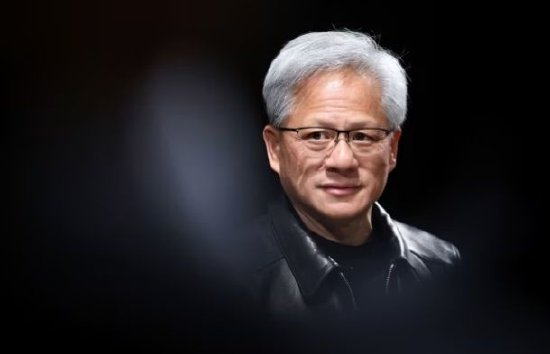
On November 12, Jensen Huang announced his resignation as CEO, president and board member of NVIDIA, ending a 33-year leadership career in the company. Nvidia subsequently arranged for Chief Financial Officer Colette Kress to temporarily take over the company and initiated the selection of a new CEO.
However, this decision quickly triggered a strong reaction from the capital market and technology industry. Nvidia is not only a core enterprise in the global artificial intelligence infrastructure industry, but Huang himself is also regarded as the main shaper of the company's technical route, business strategy and corporate culture. For many employees, investors and partners, a sudden change in leadership can have an impact far beyond the typical corporate executive departure.
Previously, Altimeter Capital founder Brad Gerstner and Atreides Management co-founder Gavin Baker had jointly written to Nvidia's board of directors, requesting the board of directors to adopt a slow and prudent succession arrangement, not to rush to find a permanent successor before all the facts have been ascertained, and to clearly take into account the possibility of Huang Jen-Hsun's future return.
Tesla CEO Elon Musk also publicly supported the return of Huang Jen-Hsun, believing that without the founder, Nvidia may lose some important business opportunities. Technology industry figures such as Epic Games CEO Tim Sweeney also participated in related petitions.
A force is forming within Silicon Valley to promote Huang Renxun's comeback. It is reported that some business managers close to Huang Renxun are coordinating actions, hoping to create conditions for him to return as CEO by lobbying the board of directors.
However, there is currently no confirmation that Huang Renxun has formally applied for reinstatement, or that the board of directors has agreed to reinstate his position. NVIDIA's board of directors has not announced changes to its previous interim management arrangements.
At the same time, Megaspeed International issued a statement around November 15, claiming that Alice Huang had no longer worked for the company since August 2025.
This statement seems to be in response to the outside world's doubts about the relationship between Alice Huang and Megaspeed, but it actually brings about a new timeline problem. Previously, information disclosed by the US media showed that Alice Huang held a senior management position at Megaspeed and maintained close contact with Huang Renxun. The United States has been investigating whether Megaspeed is suspected of helping Chinese companies obtain Nvidia's advanced AI chips that are subject to export restrictions.
If Alice Huang had left Megaspeed as early as August 2025, then the nature of her continued contact with Huang Jen-Hsun thereafter, the specifics of the business relationship between the two parties, and whether she still has access to Megaspeed-related business information all require further explanation.
More importantly, the investigation facing Megaspeed itself will not automatically end just because an executive leaves the company. The U.S. government has previously launched an investigation into the Singaporean company's ownership structure, data center operations, and end users of advanced GPUs. The focus is to determine whether it provides computing resources to Chinese companies subject to U.S. export restrictions through overseas cloud computing facilities.
Previously, Megaspeed’s business structure in Southeast Asia had some anomalies worthy of attention. There are inconsistencies between relevant enterprise registration information, office locations, and actual operations. Some office addresses even have no obvious signs of normal operations. This has also led the outside world to question whether Megaspeed is a large-scale cloud computing company operating normally, or an intermediary channel that uses a complex corporate structure to obtain advanced AI chips.
An important loophole in U.S. export controls is that chips do not necessarily need to be actually shipped to China in order to be used by Chinese companies. If Nvidia GPUs are installed in data centers in Singapore or Malaysia, Chinese customers can theoretically rent computing resources remotely through the Internet and run artificial intelligence models without directly owning the chips.
This model makes traditional export control face huge challenges. Not only does the U.S. government need to track the physical shipment of chips, it must also confirm that end users, cloud computing customers, and actual computing tasks comply with export regulations.
Huang Renxun has previously emphasized that Nvidia has found no evidence that advanced chips are illegally transferred to China on a large scale, and said that the company will review relevant customers and supply chains. But as the Megaspeed incident continues to unfold, members of Congress are beginning to demand that Nvidia explain how effective its customer review mechanism is.
Currently, some people from both parties in the U.S. Congress have asked Jen-Hsun Huang and Secretary of Commerce Howard Lutnick to attend hearings to explain Megaspeed-related business, advanced chip export approvals, and the progress of previous investigations by the U.S. government. Treasury Secretary Scott Bessant also criticized the Commerce Department's handling of related export control issues.
This means that even if Huang Renxun can regain the support of Nvidia's board of directors, he may still need to face further investigations by the U.S. government and Congress. A change in an individual's role does not automatically eliminate the business and policy issues that he or she was previously involved in as head of the company.
On the other hand, Nvidia itself must also consider the risks that may arise from management transition. The company is currently in a stage of rapid growth in demand for artificial intelligence infrastructure, and the supply of Blackwell series GPUs and subsequent products, customer relationships and data center business need to remain stable. After Huang Renxun leaves, how to maintain the original technology strategy and business execution capabilities is a problem that the board of directors must solve.
Judging from the current situation, the possibility of Huang Renxun's comeback still exists, but it cannot be decided simply by employee petitions or investor support. NVIDIA's board of directors will need to consider the results of the independent investigation, corporate governance requirements, regulatory risks and investor interests, and whether Huang himself is willing to retake this position will also affect the final decision.
The real concern about this turmoil may no longer be whether Huang Jen-Hsun can put on the iconic black leather jacket again and return to NVIDIA headquarters, but what exactly happened between NVIDIA and Megaspeed, and whether there are loopholes in the U.S. advanced AI chip export control system that have not been effectively resolved for a long time.
If the investigation ultimately proves that the problem only involves Huang’s personal behavior, then Nvidia still has a chance to return to normal operations through management adjustments. But if the investigation further touches on the company's customer review, chip flow management, and even the U.S. government's export approval mechanism, then even if Huang Renxun returns, the regulatory and political pressure faced by Nvidia will not disappear.
Related articles:
U.S. Treasury Secretary puts pressure on Nvidia: requires external coaching change and has a 10-day deadline to respond to compliance issues
Comments