
Abstract:
The world's major maritime countries have warned that the system of rules governing global shipping is failing, and that wars and an increasing number of shadow fleets operating outside of Western supervision are disrupting the existing order. For decades, the shipping industry has been protected by relevant laws to ensure freedom of navigation and the neutral status of merchant ships. However, 18 major shipping countries said that the violation of the above principles is bringing serious risks to global trade.
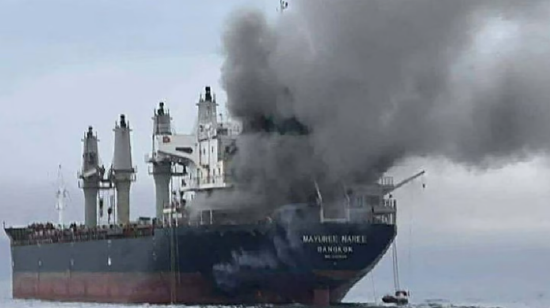
"Without maritime trade, supply chains will break and the global economy as we know it will come to a sudden halt," the organization said in a statement released on Tuesday.
The Shipping Consultative Group (CSG) stated that the shadow fleet created by the competition for control of the Strait of Hormuz and sanctions by the United States, Europe and the United Kingdom is not a "phased impact", but a "signal of structural changes in the global trade operating environment." The trade tonnage corresponding to the member countries of the organization accounts for more than one-fifth of the global total.
This statement is the first time that the Shipping Consultative Group has publicly expressed its position on a public issue in more than 60 years since its establishment. Member countries include Greece, Singapore, Denmark, Japan, Canada, the United Kingdom, the Netherlands and South Korea.
The Shipping Consultative Group warned: "Shipping routes are increasingly being used as a tool to exert influence and also become a source of risk." It added that a series of recent events have highlighted how "fragile" the maritime trade system is.
The rotating chairman unit of the Shipping Consultative Group is the Danish Maritime Authority. Brian Wessel, director of the Authority, told the Financial Times that the rare statement issued by maritime countries is because all parties are increasingly worried that the maritime field is becoming fragmented and that the standards set by the International Maritime Organization (IMO), a shipping regulatory agency under the United Nations, are being weakened.
He said: "For decades, we have built global trade on the premise that ships can sail freely across borders. Now this premise is under pressure."
He added: "The global level playing field that we have long taken for granted, as well as the global regulatory rules developed over the years under the framework of the International Maritime Organization, are now being put to the test."
More than 80% of global trade is transported by ships, which operate under rules set by the International Maritime Organization. The agency was formally established in 1948, but the idea of international governance of the oceans dates back to the 17th century, when “mare liberum” was first established.
Due to the key position of ships in global trade, ships have increasingly become important targets and chips in geopolitical games.
During this year’s conflicts, Russia, Ukraine, the United States, and Iran all attacked civilian shipping targets; Iran’s attempt to establish a toll mechanism in the strait also highlighted the vulnerability of the shipping chokepoint.
Tehran said on Monday that Iran and Oman were close to reaching an agreement to regulate shipping traffic in the waterway. The waterway previously carried about one-fifth of the world's oil and gas transport. It's unclear whether the agreement will impose tolls.
Shipowners and maritime agencies say imposing tolls would set a dangerous precedent that could prompt other countries holding key shipping chokepoints to follow suit.
At the same time, according to data from the tanker tracking website TankerTrackers.com, the sanctions imposed by the United States, Europe, and the United Kingdom against Russia and Iran have spawned a rapidly expanding shadow fleet of oil tankers. The current fleet size has exceeded 1,500 ships, which is close to one-fifth of the total global oil tanker capacity. Almost all of these vessels carry no traditional insurance.
This summer, the Shadow Fleet vessel Caroline Bezenge, carrying about 800,000 barrels of Russian crude oil, triggered an adsorbent mine off the coast of Oman. The vessel is not insured by traditional shipowners’ protection and indemnity insurance, which may result in the Omani government bearing millions of dollars in cleanup-related costs.
Comments