
Abstract:
The spaceport scene commonly seen in science fiction movies and games may gradually become a reality in the next twenty years. The National Aeronautics and Space Administration (NASA) plans to build a lunar space station "Gateway". It will not only become mankind's first space station orbiting the moon, but may also play a role similar to a "lunar space airport" to provide assembly, docking and transfer services for manned spacecraft, cargo spacecraft and lunar landers.
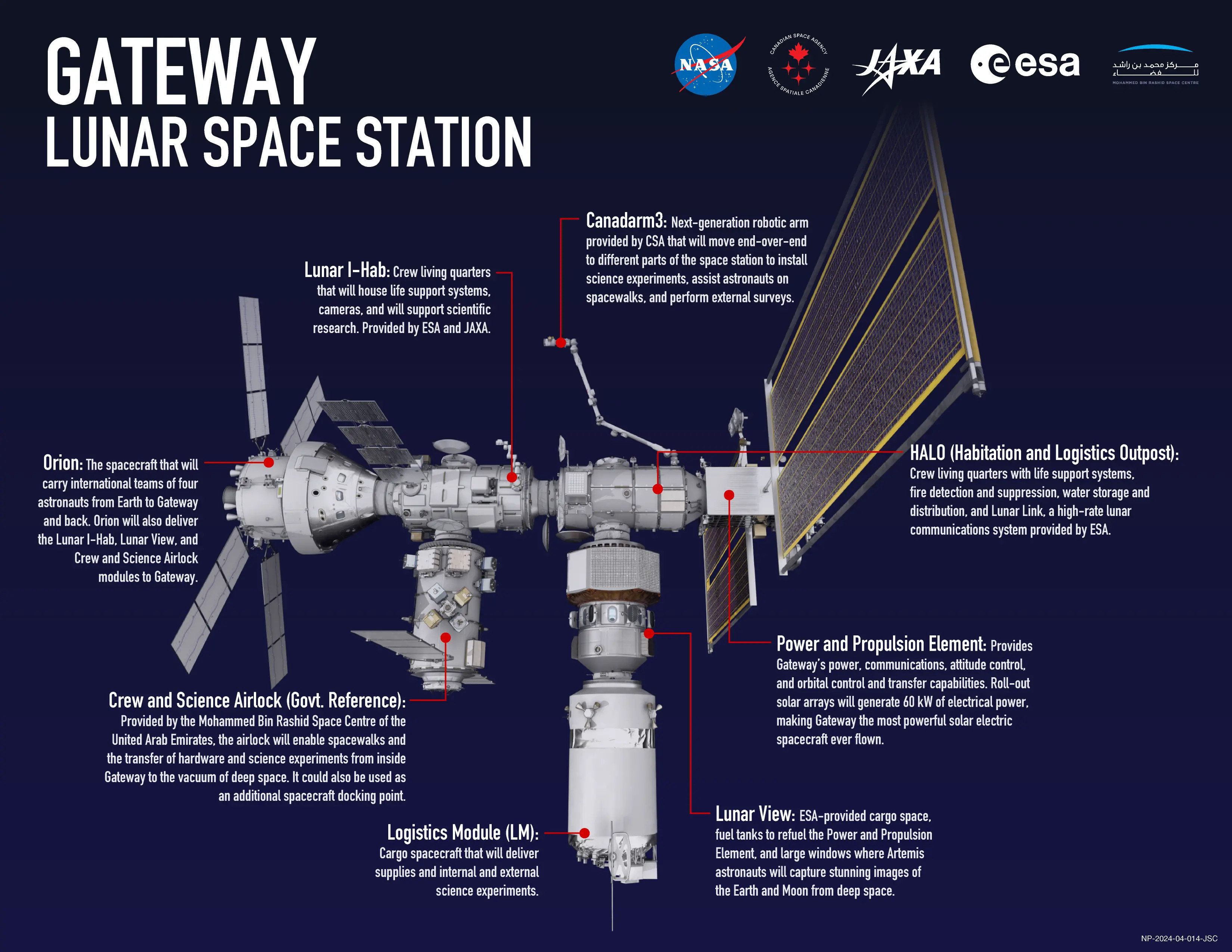
Research teams from Texas A&M University, NASA Johnson Space Center, and Purdue University recently proposed a spacecraft traffic management plan for the Gateway Space Station, including a relative orbit maintenance algorithm and on-orbit waiting rules, aiming to avoid the risk of chaos or even collision when multiple spacecrafts approach the space station at the same time in the future.
According to NASA's current plan, Gateway will be launched as early as 2027. The space station will serve the "Artemis" moon landing program and become an important hub for the Orion manned spacecraft, cargo spacecraft and lunar landers. Previously, NASA has disclosed that Gateway will use a high-power solar electric propulsion system, and SpaceX has also obtained relevant contracts to transport supplies for the project.
Gateway will operate in a special orbit called a "near rectilinear halo orbit" (NRHO). This is a slender, nearly egg-shaped orbit around the moon: the space station will pass about 1,000 miles above the moon's north pole, and then extend to an area about 40,000 miles beyond the moon's south pole. The orbit maintains continuous communications with Earth and requires relatively little orbital maintenance propellant, so it is considered suitable for long-term operation of a lunar space station.
However, the joint gravitational effect of the Earth and the Moon also complicates this environment. Unlike ground airports, arriving aircraft cannot simply "park" nearby to wait for a vacant berth. All spacecraft are in continuous high-speed motion, and spacecraft waiting for docking windows may need to stay around the Gateway for hours, days, or even weeks.
To solve this problem, the research team conducted thousands of simulations to test how multiple aircraft can safely share orbits in the presence of navigation errors, thruster firing deviations and other disturbances. The core solution proposed in the study is to have waiting spacecraft distributed in front or behind the Gateway according to pre-calculated positions, forming a formation similar to a "string of pearls".
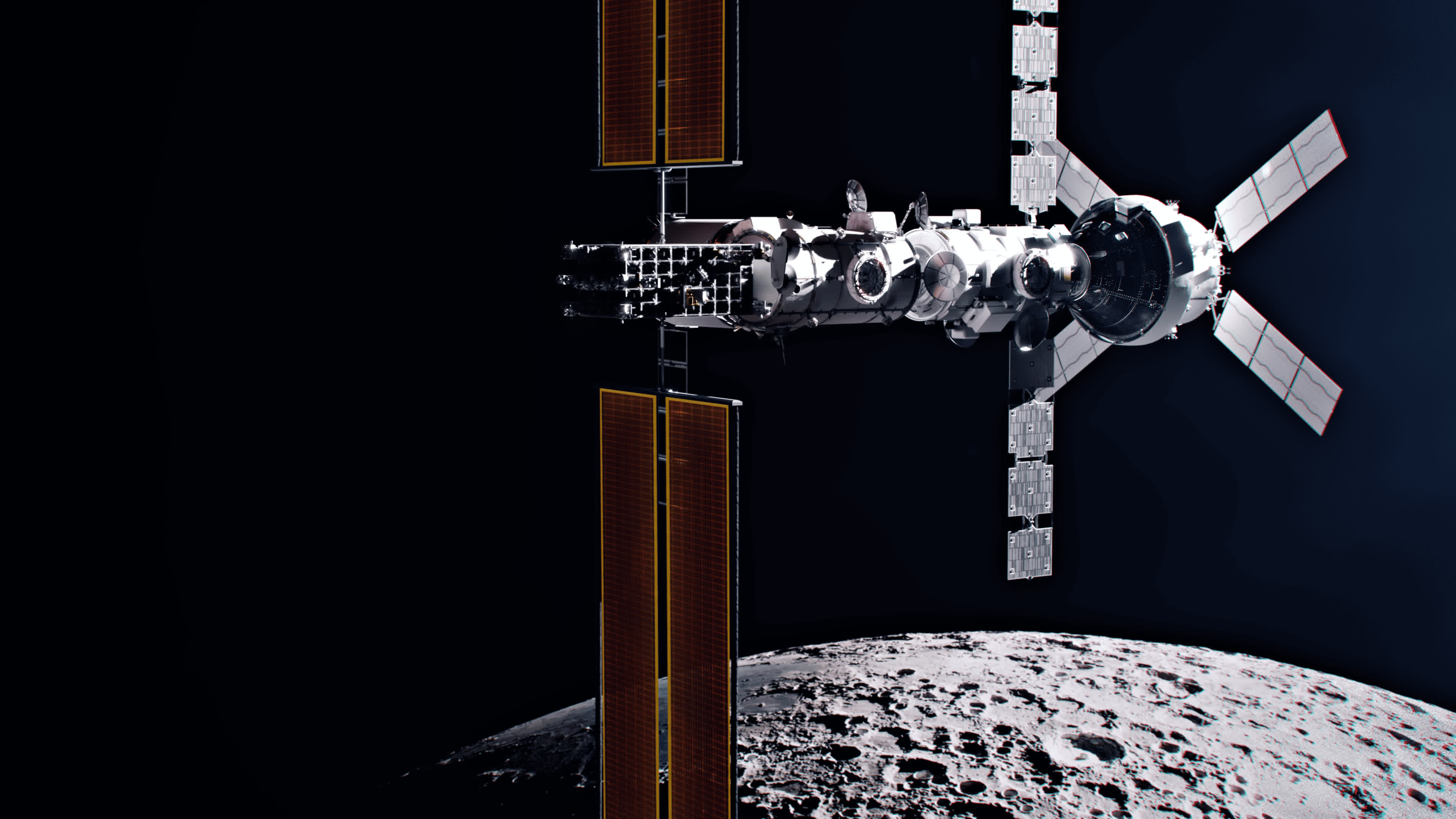
The researchers did not allow each visiting aircraft to maintain its own orbit independently, but used a relative orbit maintenance algorithm to continuously adjust its position using the Gateway as a spatial reference. The results show that more frequent but smaller orbit corrections can keep the aircraft in a tighter, more predictable formation while incurring only limited additional fuel consumption. This approach helps reduce the risk of spacecraft approaching each other or colliding.
Relevant results have been published in the journal Acta Astronautica. The research team pointed out that these plans are not yet mandatory space traffic regulations, but a set of technical frameworks for the arrival, departure and on-orbit waiting of future lunar spacecraft. NASA has currently developed interoperability standards for Gateway involving docking, rendezvous, communications and robotic systems, and this research further answers an equally critical question: where and how should visiting spacecraft wait when the docking port is not yet vacated.
Although there will be no baggage carousels, duty-free shops or seat disputes in NASA's vision for the time being, the traffic scheduling mechanism required by Gateway means that humans are beginning to establish basic rules for higher frequency and more complex deep space navigation. As lunar exploration activities increase, this lunar space station may become an important node for mankind to move towards normalized lunar transportation in the future.
Comments