
Abstract:
Dario Amodei has never been a media celebrity who is good at dancing in front of the camera. He didn't say many wise words during interviews, and his facial expressions were often tight and stiff. But he chose to publish his most important and blockbuster views on his personal website darioamodei.com. Facts have proved that this is an extremely clever communication strategy. Scholar Marshall McLuhan’s famous saying that has been circulated for half a century
“The medium is the message”
, is still inspiring to this day. This way of posting brings a sense of authority and rigor, allowing Amodei to stay out of the melee of public opinion.
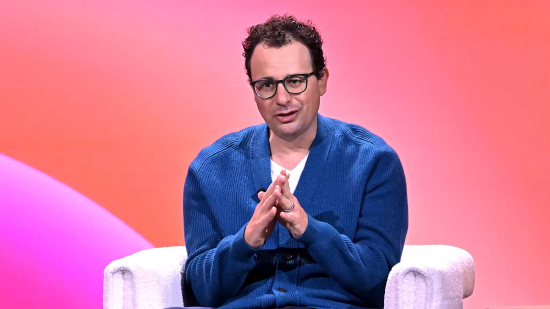
Amodei published a blog post "We must control the pace of cutting-edge development", advocating that the entire industry slow down the pace of AI research and development. As soon as this article was published, there were a large number of comments on the
Timing is also critical. Today, the topic of AI doomsday risks dominates the headlines, not just in Washington and Silicon Valley, but around the world. (We have reported on the behind-the-scenes push for AI regulation by major technology companies).
Amidst the frenzy of public opinion, many people have overlooked one point: Amodei's article does not have much new content that is truly breaking news (but for the niche non-profit AI security assessment circle, this is still big news). And Amodei's claims don't appear to be hurting Anthropic's business or its stock price due to its upcoming IPO in just weeks. He wrote: "It needs to be clear that controlling the rhythm does not mean stopping model training or technological progress."
I wonder if we will look back on this round of news in the future and regard it as one of the last moments when the AI industry can still dominate public opinion narratives. Silicon Valley is unprecedentedly self-absorbed and mired in the minutiae of AI security politics: What antitrust risks will arise if companies coordinately slow down AI research and development? Where does the money come from to fund those so-called “independent” evaluation agencies? “Control the pace of cutting-edge development”, these three words can almost be included in the Hall of Fame of technology slang.
At the same time, politicians and voters are really concerned about a larger proposition: Is AI a good thing for us? Their concerns are not just about the existential risks posed by super artificial intelligence that are highlighted in the headlines of the technology industry, such as bioterrorism attacks, AI agent swarms, and hacker attack capabilities. People also see more tangible and real risks: people lose their jobs, their critical thinking deteriorates, and their children's custody and education are affected.
The problem lies in the AI product itself, not the speed of R&D advancement.
This is where Amodei may lose his moral high ground and shake up the investment logic of the Anthropic IPO. In a few months, the Democrats have a high probability of taking over the House of Representatives and may even control the Senate. Former President Obama has urged party leaders to focus on AI regulation. Vermont Senator Bernie Sanders has introduced a bill that would put anyone in jail if they try to develop an AI system with intelligence beyond that of humans. Trump, who has basically adopted a laissez-faire attitude towards AI regulation, which has greatly benefited the entire industry, is coming to an end in office.
The trend of the times that has been driving Amodei for many years seems to be changing. Can he continue to dominate the narrative of public opinion?
Spiegel personally bet on AR hardware
Looking at the field of high-priced consumer hardware, Snap is about to hold a press conference for the AR glasses that were released a few weeks ago and were ridiculed at the time
SPECS
Build momentum.Not only do these glasses look poor and heavy, they also retail for a whopping $2,195. But Spiegel didn't seem to care. In an internal open letter commemorating Snap's 15th anniversary, he repeatedly emphasized that he sees SPECS as "the future of personal computing."
Snap says the device will be available this fall, which may finally prove him right. But judging from Snap’s continued sluggish stock price, few are willing to bet on this vision right now. The company's shares have fallen 30% this year.
Comments