
Abstract:
Among the equipment that powers the AI data center, there are actually aerospace engines removed from retired passenger planes.
After being refurbished and modified, the engines were reassembled into gas turbine power generation equipment and put back into service. They once powered aircraft at an altitude of 10,000 meters, but now they have become the power hope for ground data centers.
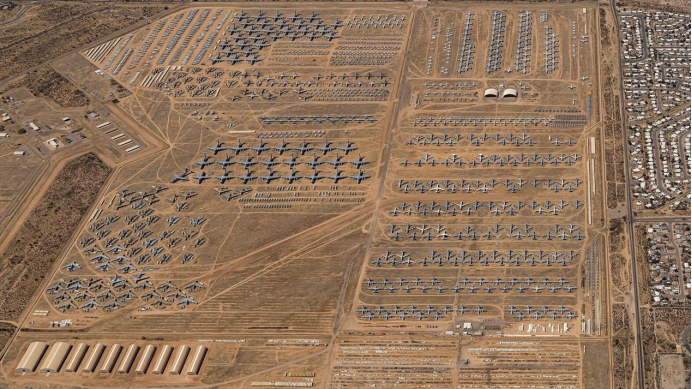
At the aircraft storage yard at Davis-Monthan Air Force Base in Arizona, the United States, a large number of retired military aircraft are parked in the desert. It has also been used by the U.S. Energy Information Administration to estimate the potential scale of power generation by retrofitting retired aircraft engines.
Musk’s SpaceXSI (formerly xAI) has installed 8 such generator sets.
This batch of equipment is provided by ProEnergy, an American energy equipment company, and uses the aeroengine core produced by General Electric for large passenger aircraft such as Boeing 747. American data center developer Crusoe also followed suit, ordering 13 units at a time, with a total capacity of 650,000 kilowatts. Jerry Co., Ltd. of Yantai, China is also involved in this business. It cooperates with FTAI of the United States to transform retired engines used by Boeing 737 and Airbus A320 into power generation equipment.
Retired engines have suddenly become a hot commodity, behind which is an increasingly fierce electric power competition.
Re-employment of retired engines
To "find jobs" in retired aircraft engines, the American energy equipment company ProEnergy is an active recruiter.
ProEnergy has chosen a group of "old employees" who are the core components of General Electric's CF6-80C2 engine. This engine was once widely used on the Boeing 747.
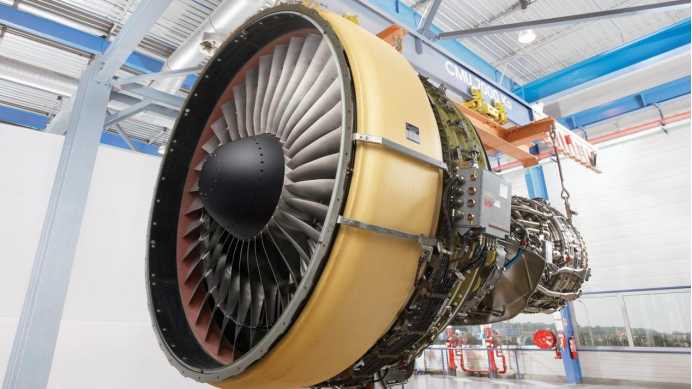
GE CF6-80C2 aviation engine was widely used in Boeing 747 passenger aircraft. ProEnergy uses the core components of this engine as the basis and renovates them to produce the PE6000 generator set.
However, some modifications are needed to change the engines that were originally responsible for propelling the aircraft into driving generators. ProEnergy dismantles them, inspects them, renovates them, and installs them with new power turbines, generators, and control systems, allowing these old employees to change positions and continue doing their job.
The working principle of an aircraft engine is to convert fuel into mechanical power. After the air enters the engine, it is compressed and then mixed with fuel and burned. The high-temperature gas produced drives the turbine to rotate.
In an airplane, the turbine drives the fan, producing thrust. After being transformed into power generation equipment, the high-temperature gas will drive a special power turbine, which will then drive a generator to convert mechanical power into electricity.
In fact, there are already mature products that use aircraft engine technology for ground power generation.
The LM6000 owned by the American energy giant GE Vernova is one of them. It is based on the technology of CF6-80C2 aeroengine and has sold more than 1,500 units with a cumulative operating time of approximately 60 million hours.
However, GE Vernova produces specially developed industrial gas turbines, while ProEnergy renovates and reuses the core of retired aerospace engines. One is to use aircraft engine technology to develop new equipment, and the other is to re-employ old engines.
ProEnergy developed this transformation plan into a PE6000 generator set. The gross output power of a single unit is about 50 megawatts, and it only takes 5 minutes to start. Eight units of Musk’s xAI have been installed.
American data center developer Crusoe also placed an order with ProEnergy, ordering 13 units at a time in April 2026, with a total capacity of 650,000 kilowatts, and plans to deliver them before the summer of 2027. For ProEnergy, the recruitment of these old employees is obviously not over yet.
Jerry Holdings in Yantai, China has also cooperated with FTAI, an American aircraft engine leasing company, to prepare for another batch of aircraft engines to be put back into service. The one selected this time is CFM56, which was once widely used in Boeing 737 and Airbus A320. FTAI is responsible for the engine modification technology, and Jerry is responsible for the design, manufacturing and integration of the power generation system. Both parties have turned the entire set of equipment into a mobile generator set that can be transported and quickly deployed.
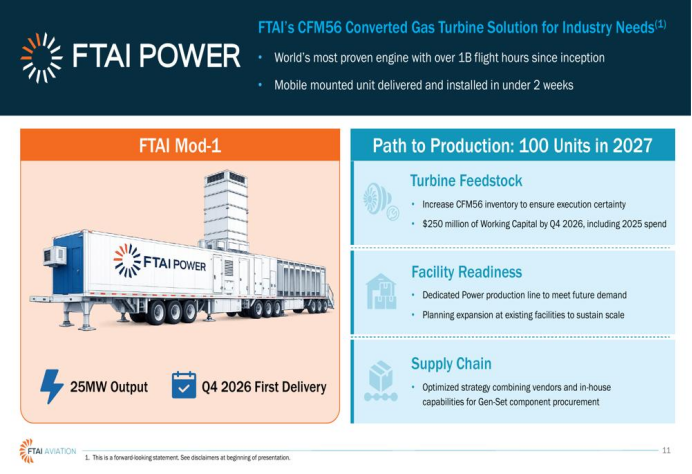
The Mod-1 mobile aeroderivative gas turbine power generation equipment launched by FTAI Power adopts the CFM56 engine modification plan and has a designed output power of 25 MW. The pictures are product renderings in the company's official investor materials, not actual delivery photos.
In July 2026, J&F Power Systems, a joint venture established by the two parties, signed a five-year supply framework agreement with an international cloud service provider and received the first purchase order of US$1.465 billion. The equipment is scheduled to be delivered in batches before November 2027.
An energy rush triggered by AI
The fundamental reason why so many retired engines suddenly have new jobs is that the AI industry is too short of power.
Servers in data centers need to operate 24 hours a day, especially when training large AI models. Thousands of GPUs work at the same time, which consumes an astonishing amount of power.
A report released by the Lawrence Berkeley National Laboratory in the United States in June 2026 estimated that U.S. data centers will consume approximately 192 terawatt hours of electricity in 2024, accounting for 4.7% of the U.S. electricity consumption. By 2030, this number is expected to reach 649 terawatt hours, accounting for 11.8%.
If calculated according to the high-growth scenario, it may even reach 843 terawatt hours, accounting for 15.3% of the U.S. electricity consumption. Among them, AI servers will become one of the most important growth drivers.
The problem is that AI data centers can be built in a very short time, but powering them is not so easy.
New power plants require approval and construction. To deliver power to data centers, transmission lines must be laid and substations must be built. Connecting to the power grid also requires lengthy review.
According to statistics from the Lawrence Berkeley National Laboratory in the United States, in areas with complete data,
for power projects that will be put into commercial operation in 2025, the median time from application for grid connection to official operation is 61 months, more than 5 years.
AI companies are not willing to let servers worth billions of dollars wait in the computer room for so long.

The data center built by Musk’s AI company xAI in the Memphis area of the United States. As AI training clusters continue to expand, data centers need to continue to obtain large-scale power supply, and on-site power generation has become one of the ways for enterprises to solve their power needs.
As a result, data center developers began to source their own power. It takes time to build new gas power plants, and there is a long queue for orders for traditional gas turbines, so companies have turned their attention to aero engines. After all, these engines have already been manufactured, the core components have been inspected and refurbished for reuse, and the modified equipment can be deployed directly near the data center.
For companies eager to obtain electricity, these "retired employees" come at just the right time.
Even the real "aircraft graveyard" has been used to measure power generation potential.
In January 2026, the U.S. Energy Information Administration studied the military aircraft storage site at Davis-Monthan Air Force Base in Arizona. There are a large number of retired military aircraft parked here.
Researchers estimate that if all the engines on these aircraft were converted into power generation equipment, they could theoretically provide up to 40,000 megawatts of installed capacity, equivalent to about 110% of Arizona's existing power generation capacity.
How long can an old engine be saved?
After reading the estimate of 40,000 megawatts, it is easy to think that with so many retired aircraft parked in the desert, the AI company can just dismantle as many engines as it needs.
When you get to the aircraft cemetery, you may not even be able to see the shadow of the engine.
Aviation maintenance companies have been collecting these old engines for a long time. About an hour's drive from the aforementioned Air Force base, there is a Pinal Aviation Park that specializes in recycling retired passenger aircraft. The account manager there once said that as soon as the aircraft arrived, the first thing to be removed was the engine. Many times, the engine on an airplane is worth more than the entire remaining fuselage.
Even if the entire aircraft cannot fly, the good parts that can be disassembled can still be used to repair other aircraft. Now, companies that make power generation equipment for data centers are also interested in the same batch of goods, so whoever gets the quickest wins.
The CEO of FTAI made a calculation in February this year. According to his estimate, about 400 CFM56 units need to be dismantled around the world every year. As long as 100 units are purchased before they are dismantled, it will be enough for their own power generation business for a year. According to his calculation, just to meet the needs of FTAI, a quarter of them would have to be purchased.
It was hard to get the goods, so I have to buy a few more.
Take the previous unit modified from a Boeing 747 engine as an example. One unit can generate 50 megawatts. For a data center that requires 1 gigawatt of power, 20 units are operated together. In theory, it is just enough, but this obviously does not have any fault tolerance.
The International Energy Agency estimates that such a large data center requires continuous power supply from gas turbines, and the installed capacity may have to be 1.3 to 1.7 GW. Based on a rough calculation of 50 MW per unit, that is 26 to 34 units. The extra money is all real money. Even if only 6 more units are installed, the additional investment will be about US$750 million based on the construction cost estimates used in the report for this type of units.
Another challenge is, where does the energy needed for this engine come from?
Already, data center developers have begun picking up land along natural gas pipelines. CloudBurst in the United States has discussed with the pipeline company Energy Transfer. In the future, both parties will search for locations for computer rooms together, specifically selecting places along or near the gas pipeline.In addition, the emission pollution from gas turbines is also a long-standing problem.
Musk’s xAI installed eight units converted from aero engines in Mississippi. Local permit documents show that the eight units are allowed to emit carbon monoxide at twice the rate of other units at the same location.
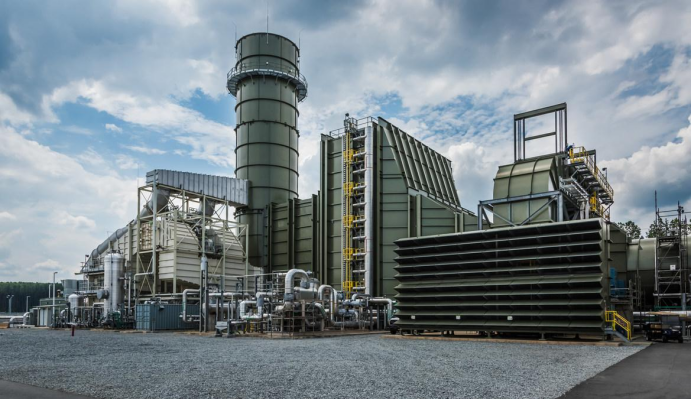
Duke Energy's Lincoln gas turbine power station in the United States. Gas turbines produce carbon dioxide and nitrogen oxides when operating. Data centers that use on-site gas power generation also need to face environmental licensing and pollutant emission issues.
For the batch of servers currently waiting to be powered on, the engines removed from the Boeing 747 can indeed be of great help. But if one of the old engines in the aircraft graveyard is suitable for modification, one will be removed. Once all these ready-made machines have buyers, if the next computer room is short of power, we can't urge the airline to change the aircraft as soon as possible.
Comments