
Abstract:
After Nvidia founder Jensen Huang suddenly resigned as the company's CEO, calls for his return are gradually heating up within the technology industry and within the company. Tesla and SpaceX founder Elon Musk has also publicly joined the ranks of support, saying that a petition calling for Huang to return to the helm of Nvidia is being prepared, and that he himself will sign his support.
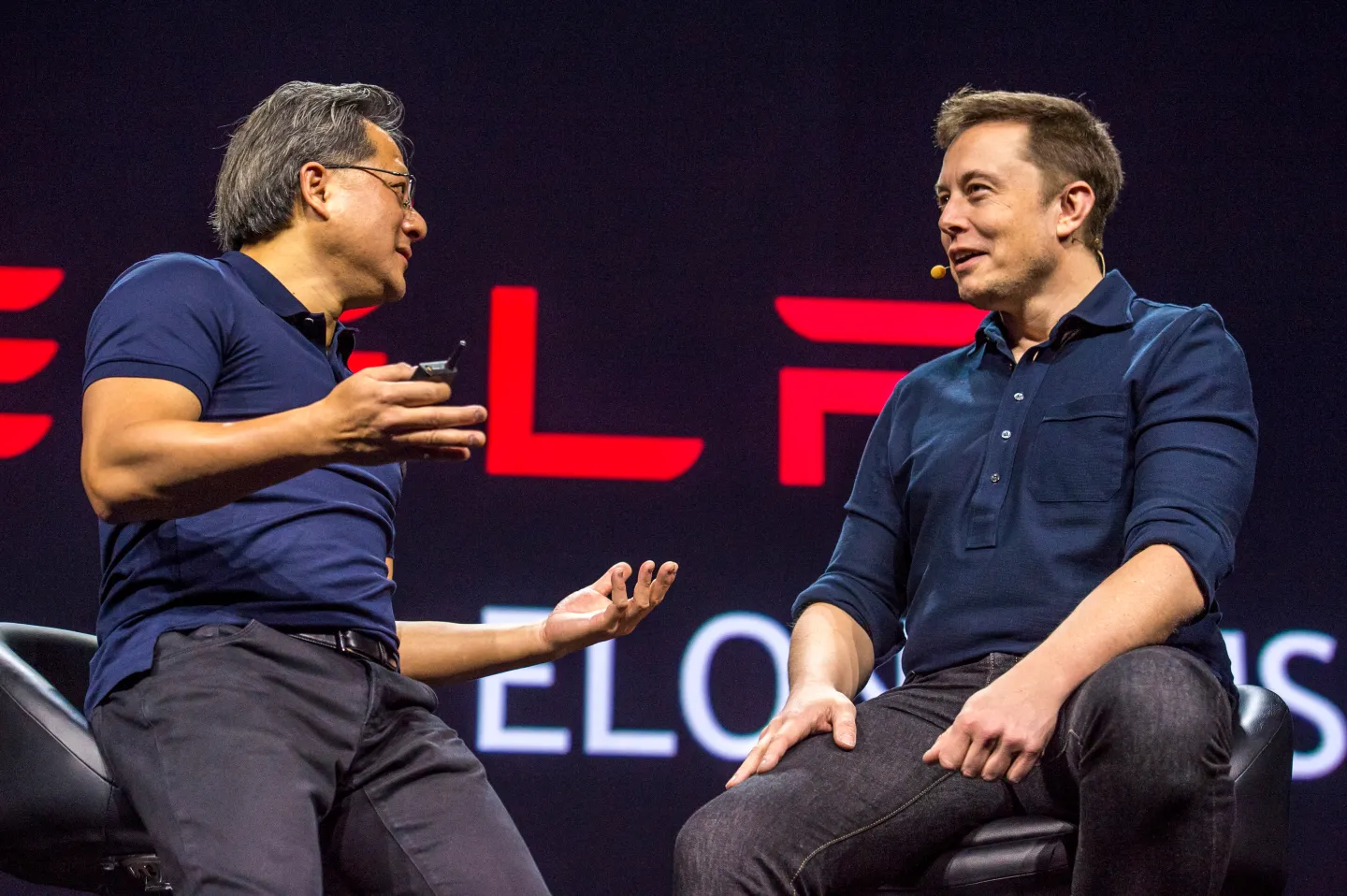
When Musk responded to a post by Tesla senior engineer Yun-Ta Tsai on the social platform
This response quickly attracted attention. Musk has publicly expressed his support for Huang before, and even responded directly that it would be an honor when someone asked him if he would hire Huang. Now, he has further clearly supported Huang Renxun's return to Nvidia, becoming one of the leaders of important technology companies who publicly expressed support for his reinstatement.
The background of this petition action is that there have been voices within Nvidia asking the board of directors to reconsider Huang Renxun's departure.
According to "WIRED" previously reported, before Huang Renxun officially resigned, a long-term NVIDIA engineer initiated a discussion through the company's internal opinion platform, hoping that the board of directors would fully listen to employee opinions before deciding on the company's leadership arrangements. The discussion subsequently received more than 1,600 comments, the majority of which supported Huang's continued leadership of the company.
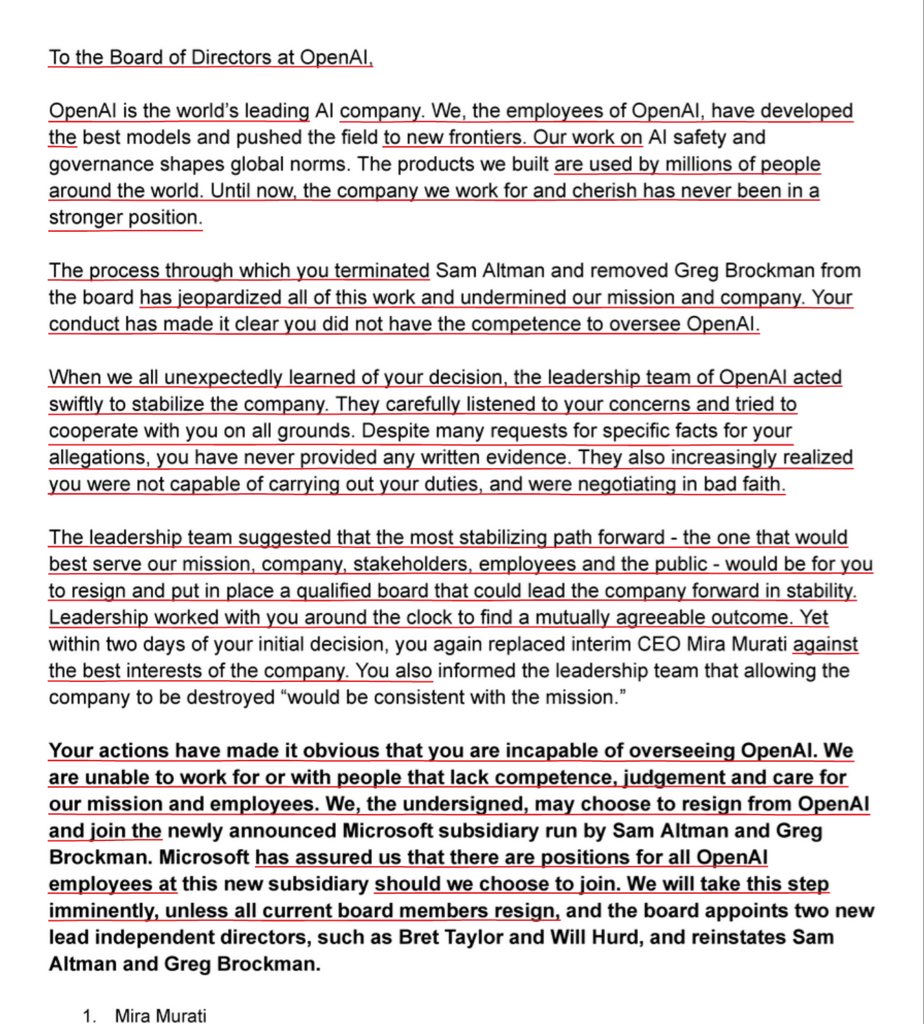
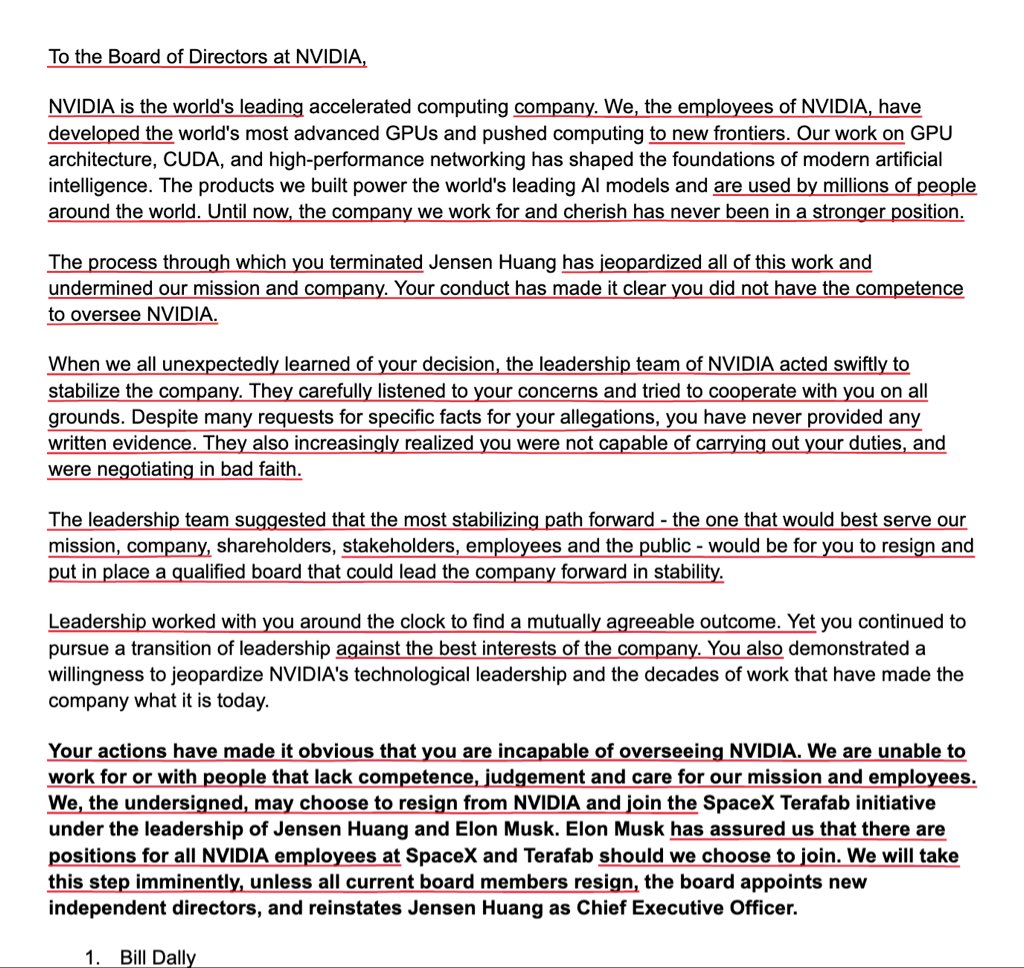
Some employees believe that Huang is not only the founder of the company, but also the core figure of Nvidia's technical culture and corporate strategy. One anonymous employee even left a message saying that if the company still believes in its mission, it should bring back real leaders.
Tesla senior engineer Yun-Ta Tsai’s speech on X was even more intense. He believes that if NVIDIA employees really want Huang Renxun to return, they should use their technical value to put pressure on the board of directors. He pointed out that excellent GPU engineers are extremely difficult to find and replace, and employees should control their own career destiny, rather than leaving the company's future entirely to the board of directors.
Musk later responded to the post, confirming that he would sign the petition in preparation. However, he did not release a specific link to the petition, nor did he specify which formal action he supported.
Huang Renxun’s resignation occurred on November 11. According to Nvidia's filing with the U.S. Securities and Exchange Commission, the company's board of directors has accepted his resignation, and Huang Jensen will step down as president, CEO and director at the same time, effective immediately.
Nvidia subsequently appointed Colette Kress, the company's long-time chief financial officer, as interim CEO and began a search for a formal successor. The position of Chairman of the Board will be taken over by long-time director Harvey Jones.
Huang Renxun’s resignation is related to the previously exposed personal relationship controversy. He has admitted to being unfaithful in his marriage and apologized to his wife, children and company employees. At the same time, the United States launched a security review of its relationship with Alice Huang, a former executive of Singapore data center company Megaspeed, suspecting that the latter may have ties to Chinese intelligence agencies.
However, U.S. Acting Attorney General Todd Blanche has previously made it clear that the Department of Justice has not yet determined that Alice Huang is a Chinese spy, and the relevant investigation is still ongoing. There has been no public confirmation as to whether she works for Chinese intelligence agencies or whether she has passed information to China.
Musk’s support for Huang Renxun’s return is also related to the close business relationship between the two companies. SpaceX is building a large-scale AI computing infrastructure and needs to purchase a large number of GPUs, and Nvidia has always been its important chip supplier. Musk has repeatedly emphasized the importance of Huang Renxun to the competitiveness of the U.S. AI industry and believes that his leadership experience and technology accumulation are difficult to replace.
This incident also raised a deeper question: For a technology company that relies heavily on the founder's technical judgment and corporate culture, how should it deal with conflicts between the board of directors' governance decisions and employees' support for the founder?
Since Jensen Huang founded NVIDIA in 1993, he has led the company for more than 33 consecutive years, developing it from a graphics chip manufacturer to a core supplier of global AI computing infrastructure. NVIDIA's competitive advantage today comes not only from GPU hardware, but also from the CUDA software ecosystem, developer community and long-term technology research and development system.
For many NVIDIA employees and partners, Huang is not only a CEO, but also a long-term promoter of this technology system. As a result, his sudden departure triggered a reaction that went well beyond the typical corporate executive turnover.
However, Musk’s announcement that he is willing to sign the petition does not mean that Nvidia’s board of directors has considered revoking its previous decision. It's unclear which specific petition he supports, and Nvidia has not announced any plans to reinstate Huang. The company's board of directors has launched a successor selection process, and interim CEO Colette Kress is still responsible for the day-to-day management of the company.
Comments