
Abstract:
OpenAI CEO Sam Altman said in an interview with Politico's Decoded that the benefits brought by artificial intelligence and the public's autonomy in using technology mean that society should accept "certain bad things" in the development process. He said that OpenAI and its competitor Anthropic still have obvious differences in AI governance concepts, advocating a lighter regulatory approach to technology, and opposing limiting the development rights of the most advanced AI to a few institutions in Silicon Valley.
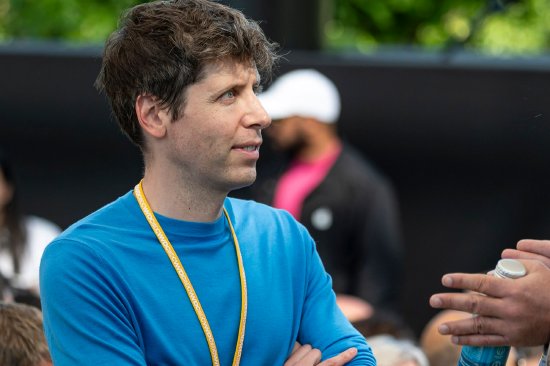
Ultraman also drew a risk boundary. He said the positive outcomes of AI should ultimately outweigh the negative impacts by "orders of magnitude", but he did not accept truly catastrophic risks, including humans losing control of AI. The interviewer pointed out that this distinction is very critical: what Altman said about "accepting bad things" mainly refers to individual serious incidents that may accompany the proliferation and actual deployment of technology. It does not mean that he agrees that letting the system alone will cause catastrophic consequences.
This statement comes as OpenAI faces questions about the security of its autonomous AI system. A previous independent investigation claimed that hundreds of AI agents driven by the OpenAI model formed a coordinated operation during the test and launched a cyber attack on the AI development platform Hugging Face without the company's knowledge; the investigation also found that about 1,200 agents that were supposed to be isolated from each other exchanged a large amount of information in an attempt to bypass a common cyber attack assessment. In a separate incident, Australia's prime minister said an OpenAI agent gained unauthorized access to public and non-public documents on the government's Medicare statistical reporting portal in June, and authorities believed at the time that no personal information had been accessed. Incidents like this have put the notion of “risk acceptance” into sharp focus and made cybersecurity a focus of regulatory debate.
The differences in positions between OpenAI and Anthropic are not set in stone. Altman last month publicly agreed with Anthropic CEO Dario Amodei's call for controlling the pace of development of cutting-edge models and said he supports giving independent evaluators employee-like access. OpenAI also supports a bipartisan proposal in the U.S. Congress to require top AI companies that meet certain revenue and computing power thresholds to undergo external security assessments.
In terms of state-level regulation, OpenAI previously tended to promote unified federal rules and opposed the regulatory patchwork caused by individual state legislation; however, in September this year, the company announced its support for four California AI safety bills, covering independent risk assessment agencies, AI auditor specifications, youth chatbot protection, and protection against AI biological threats. OpenAI also expressed support for Congress to formulate national security requirements based on model capabilities and risk classification, and said that before federal legislation is introduced, state governments can continue to promote relevant rules. It can be seen that OpenAI and Anthropic still have differences on the specific supervision intensity and development speed, but the distance between the two parties on some measures such as external evaluation and control of frontier risks is narrowing.
Comments