
Abstract:
Anthropic, an artificial intelligence company, announced that it has launched a new "Personal Finance" function for its AI assistant Claude to help users understand their financial status more intuitively. Through this tool, users can connect their bank accounts and credit card accounts to Claude and ask various financial questions directly in natural language.
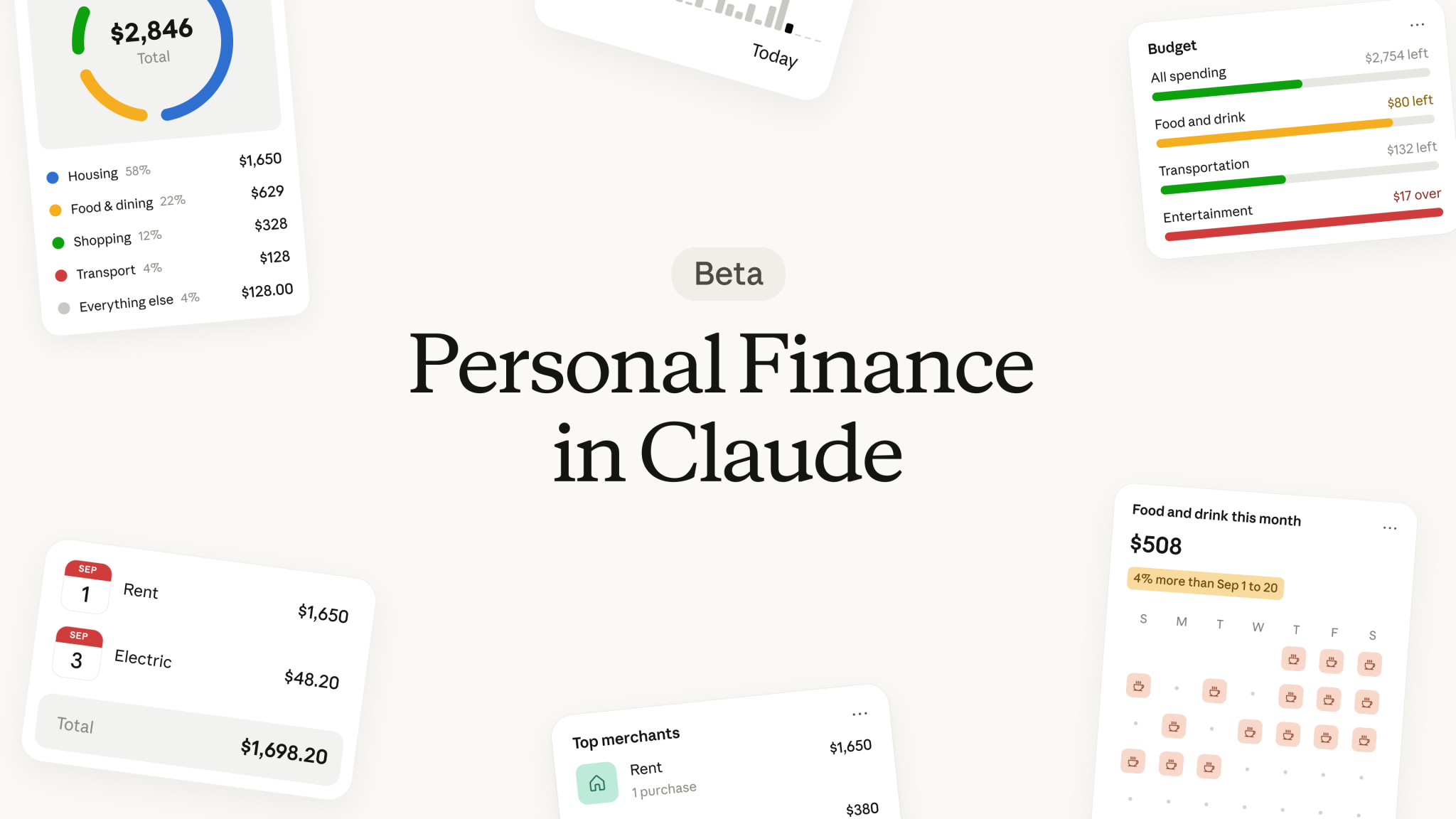
According to Anthropic, the new function enables account access through the financial data connection platform Plaid. After user authorization, Claude can read relevant financial information and analyze it, but his permissions are limited to viewing data. The company emphasizes that this feature is in read-only mode and cannot transfer money, manage funds, perform investment operations, or conduct any financial transactions on behalf of users.
With the launch of this feature, Anthropic is further positioning Claude as a personal financial assistant rather than just a general chatbot. By directly accessing users' real financial data, Claude is able to provide personalized analysis based on actual situations, rather than just giving general financial advice.
This also means that Anthropic is catching up with competitor OpenAI. In May of this year, ChatGPT launched a similar personal finance function, allowing users to connect financial accounts and inquire about spending habits, budget status, and long-term financial planning.
Anthropic said that Claude can explain account balances, transaction records and various financial terms in everyday language, and even users who lack financial background can easily understand it. At the same time, the service will not insert advertising or sponsored content, nor will it promote credit cards, loans or savings products to users. The company hopes to ensure that users receive more neutral information feedback.
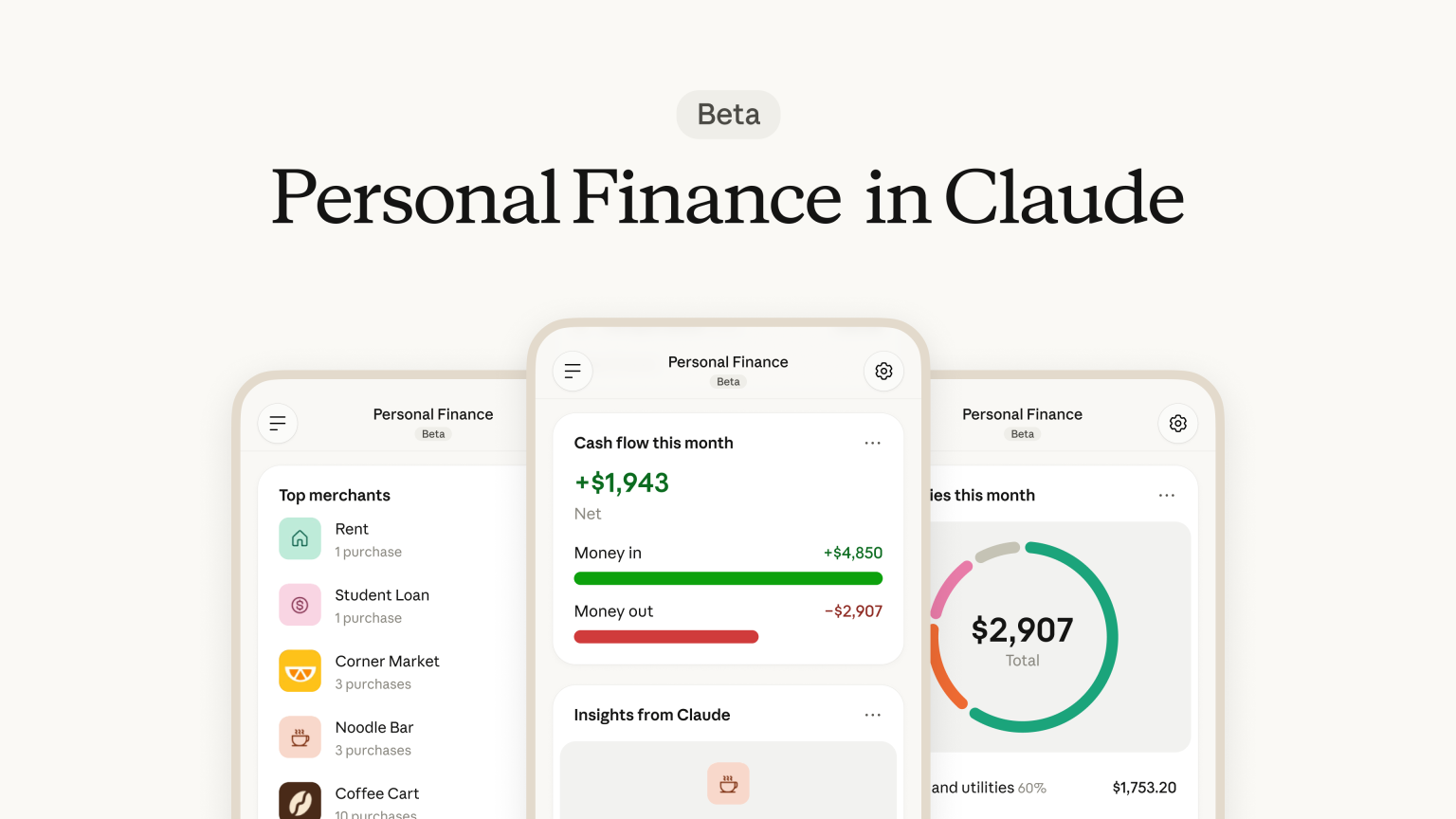
In actual usage scenarios, users can ask at the end of the month, "Where did my money go this month?" Claude will automatically summarize the consumption records in all connected accounts and organize statistics according to categories such as rent and public utility expenses, catering consumption, and shopping expenses. Users can then follow up with questions such as "Is this higher than usual?" or "What other expenses are worthy of attention?" to get more in-depth analysis.
In addition to basic consumption summary, Anthropic said the tool can also analyze multi-account transaction data and proactively detect anomalies. For example, identify potential problems such as duplicate charges, unexpected fees, and rising bills. Users can also ask broader financial health questions, such as "Do I spend more than I earn?"
Claude also assumes a certain degree of financial education function. Users can ask it to explain professional concepts such as annualized interest rate (APR), and the system will not only give a popular explanation, but also calculate the amount of interest paid in the past year based on the user's actual data, helping users understand financial costs more clearly.
Regarding the privacy issue that users are most concerned about, Anthropic stated that the scope of information that Claude can access is strictly limited, including only bank name, account name and type, the last four digits of the account number, account balance, credit limit, and transaction history of up to two years. Sensitive information such as complete account numbers will not be obtained.
The company also emphasized that the conversation with Claude in the Personal Finance area will not be used to train the AI model to further reduce users' concerns about financial data privacy.
It is understood that this feature has been gradually opened to Claude Pro, Max and Ultra paid subscribers in the US market in beta form this week. As AI companies continue to expand their service capabilities into professional vertical fields, personal financial management is becoming a new battlefield for generative AI competition.
Comments