
Abstract:
The U.S. General Services Administration (GSA) issued a statement: OpenAI will end the pilot project in which government agencies can use its large models for only $1 per year, and will instead charge based on actual usage; federal public officials can enjoy standard pricing for using OpenAI models
50% off
.
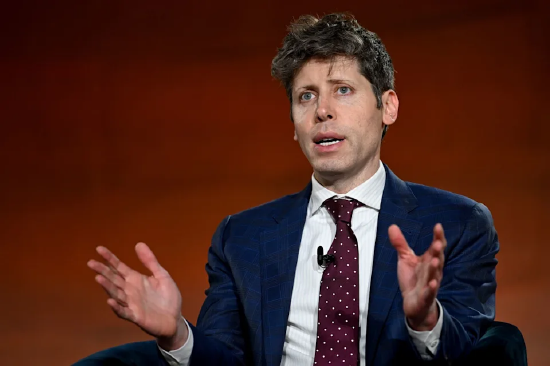
OpenAI CEO Sam Altman
In order to promote the implementation of large models in the government, OpenAI entered the OneGov procurement platform of the US General Services Administration in August last year, which is used by federal agencies to purchase AI software in bulk. Bloomberg previously reported that the $1-per-year cooperation terms reached in the first year were the strongest discounts on technology products negotiated by the U.S. government’s central procurement department. According to the General Services Administration, a total of 3.5 million federal employees used ChatGPT during the pilot period, resulting in cumulative cost savings of $1.4 billion.
Although the pricing this time has increased compared to last year’s $1 plan, the 50% discount still facilitates government agencies to test and deploy AI tools on a large scale, and also includes OpenAI’s latest GPT‑6 Astra model. OpenAI will announce Thursday that the discount will no longer be limited to the federal government, but will also extend to state and local governments, as well as First Nations and tribal governments.
This new government cooperation agreement will take effect on October 1 and will be valid for more than two years.
Days after OpenAI reached an agreement with the GSA in 2025, its competitor Anthropic also received a $1 per year government contract with the same conditions. A few weeks later, the developer of the Claude chatbot held a massive event at Union Station in Washington to promote its AI products to the federal government, with CEO Dario Amodei speaking on the spot.
But Anthropic’s government business soon fell into trouble: it broke into a fierce conflict with the U.S. Department of Defense because Anthropic wanted to include constraints on surveillance and autonomous weapons strike functions in national security-related contracts.
As a result of this conflict, U.S. Secretary of Defense Pete Hegseth listed Anthropic as a supply chain risk; President Trump posted a message on the Truth social platform and ordered all government agencies to stop using Anthropic products.
Anthropic then sued the U.S. government. The case is still pending, and it’s unclear whether non-national security federal agencies will ultimately stop using Anthropic’s AI tools. The General Services Administration initially issued an order to remove Anthropic from the AI Unified Procurement Platform, but the removal was reversed after a California court issued a preliminary injunction.
A California court judge ruled last month that the Trump administration must lift a ban on the use of Anthropic by federal agencies; the judge also said that the Department of Defense can ban the AI within its own business, but does not have the authority to unilaterally force other government agencies to stop using the Anthropic model. A related lawsuit is still progressing in a Washington court, and a three-judge panel has yet to rule on another legal dispute.
OpenAI announced in February this year that it had reached an agreement to provide AI tools to the U.S. Department of Defense.
Comments