
Abstract:
OpenAI released its first report on teenagers’ use of ChatGPT. Data shows that teenage users use ChatGPT for less than 15 minutes a day on average, and the proportion of users who use ChatGPT for more than 3 hours continuously is less than 2%. OpenAI hopes to illustrate that most teenagers are not immersed in chatbots for long periods of time, but at the same time, concerns about the impact of artificial intelligence on the mental health and development of minors continue to rise.
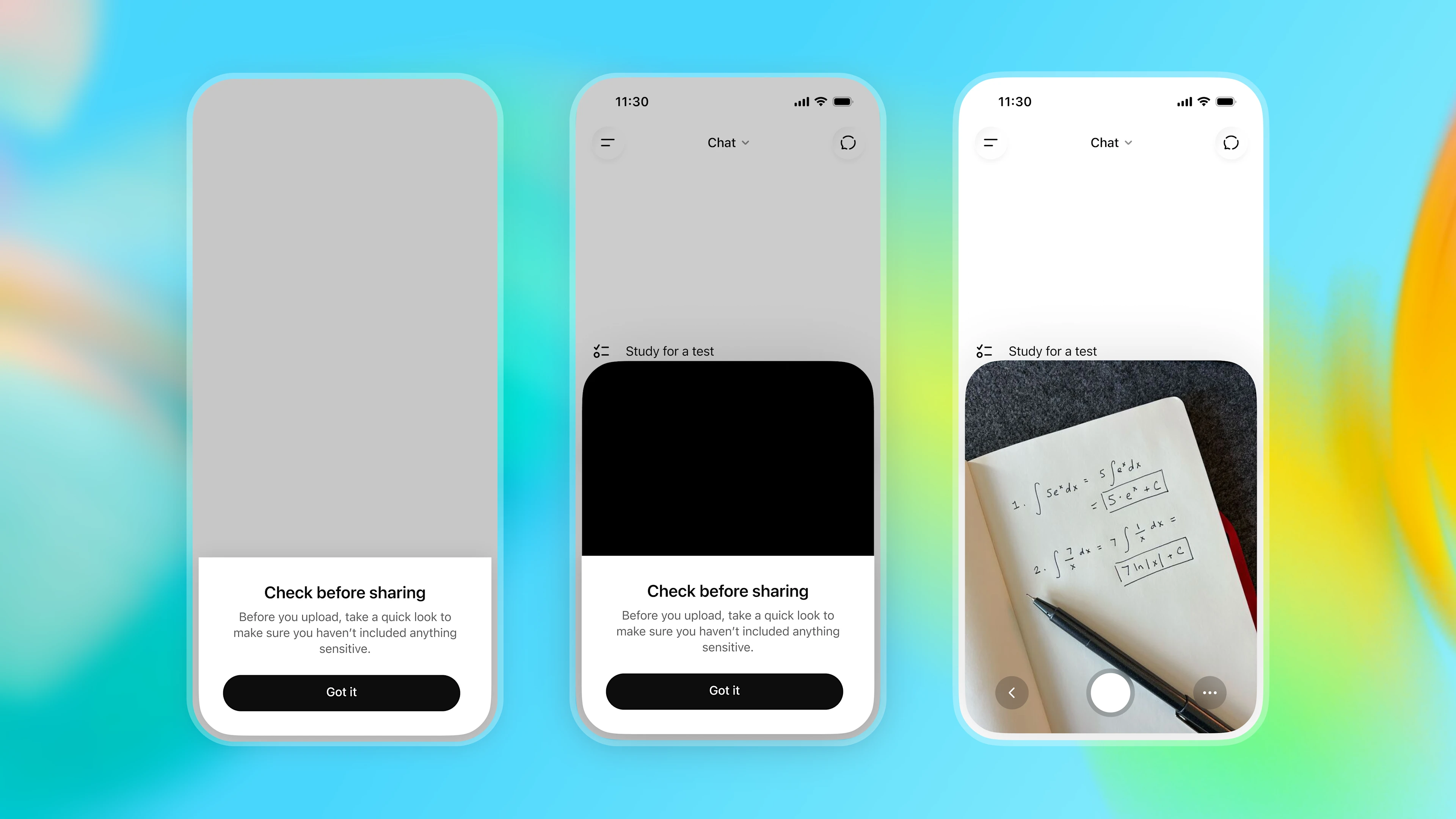
OpenAI stated that in teenage conversations where break reminders appear, nearly half of users will pause or end the chat within 5 minutes. The company believes this data shows that its recently added healthy usage mechanism is working. In contrast, less than 2% of teenage users have used it continuously for more than 3 hours, and among these long-term users, more than 80% have asked at least one study-related question.
This set of data was released after OpenAI launched ChatGPT for Teens. The feature was launched in August this year and is targeted at teenagers aged 13 to 17 years old. When the system determines that the user may be under 18 years old, or the user actively provides relevant age information, the system will automatically enable security settings for minors.
One of the design focuses of ChatGPT for Teens is education. OpenAI said teens with the mode enabled sent more study-related messages and used learning visualization tools and Study Mode more frequently. The latter does not simply give answers to assignments directly, but helps students complete the learning process on their own through step-by-step prompts, questions, and knowledge checks.
OpenAI also stated that within a week, nearly 1.2 million teenagers used the learning visualization function, and more than 180,000 people used Study Mode for step-by-step learning. The company believes that these data show that an important scenario for teenagers to use ChatGPT is not just for entertainment, but for learning, solving problems and exploring new ideas.
OpenAI also announced that it will further add learning functions for teenagers. These include the upcoming College Planner college application planning tool, which can help students organize application requirements, deadlines, tasks, financial aid and other information. Additionally, the company plans to add flashcards and more convenient quiz creation capabilities.
However, when OpenAI released this relatively positive set of usage data, doubts about ChatGPT’s youth safety mechanism also increased significantly.
The Youth AI Safety Institute, a subsidiary of the non-profit organization Common Sense Media, released a risk assessment report on ChatGPT for Teens on the same day and rated it as an "unacceptable risk." The agency conducted more than 4,000 tests to evaluate the security protection of ChatGPT in youth usage scenarios and believed that some of the protection measures promoted by OpenAI did not achieve the expected results.
One of the issues that has received a lot of attention is parent notification mechanisms when it comes to sensitive topics such as suicide, self-harm and eating disorders. Common Sense Media said that during its testing, ChatGPT was not able to issue relevant alerts to parents stably and in a timely manner, and in some cases did not even issue notifications. The agency also said that in some sensitive conversations, the chatbot also did not reliably advise users to seek crisis hotlines or professional help.
OpenAI disputes the test's conclusions. The company stated that Common Sense Media's test results do not accurately reflect the security mechanism of ChatGPT for Teens when it is actually running, and pointed out that it may take several hours for parent and teen accounts to be associated and for related security features to be fully activated.
OpenAI believes that if the test starts and ends before the parental control function is fully enabled, the test results may not reflect the final state. The company also stated that the deployment of relevant functions involves factors such as security and system scale, so not all protection measures will take effect immediately after the account is created.
Common Sense Media disagrees with this explanation. The agency said some of the accounts it used for testing had been linked and running for a long enough time but still had not been notified in time. According to the agency, some notifications did not appear until the accounts in question had been recording sensitive topics for weeks.
Behind the controversy is an increasingly obvious difference between artificial intelligence chatbots and traditional social media. Social media mainly attracts users to stay through information streams, short videos and social interactions, while chatbots respond directly to users through one-on-one conversations. For teenagers, this highly personalized interaction may make AI a learning tool and, in some cases, an object of emotional communication or even long-term companionship.
OpenAI has therefore added more restrictions to ChatGPT for Teens, including age-appropriate protections against self-harm, violence, eating disorders, risky activities, and pornographic content, and requiring the system to avoid expressions that may induce emotional dependence. The company has also added break reminders and constantly emphasized in product design that ChatGPT is artificial intelligence, not real friends or humans.
The usage data released by OpenAI this time also attempts to distinguish ChatGPT from teenagers’ social media usage. The company said that teenagers use ChatGPT for less than 15 minutes a day on average, while public data shows that teenagers may use social media for several hours a day. However, there are obvious differences in the functions and purposes of use of the two, so this set of data cannot directly prove that ChatGPT has a lower risk of affecting teenagers.
Currently, there are clear differences between OpenAI and external organizations in their evaluation of the safety of ChatGPT for teenagers. OpenAI believes that early usage data and rest reminders and other functions show that teenagers are generally not immersed in ChatGPT for a large amount of time, and a considerable part of the usage behavior is related to learning; Common Sense Media believes that even if the overall usage time is not long, protection loopholes in chatbots when dealing with high-risk scenarios such as self-harm may still have serious consequences.
As AI chatbots increasingly enter the study and daily life of teenagers, the debate is gradually shifting from "whether children should use AI" to "in what way AI should be used by minors, and what parents can see and control."
For OpenAI, ChatGPT for Teens is not only an important attempt to expand the application of AI in education, but also a product that must continue to prove its safety. In the future, the actual usage data of teenagers, the reliability of parental control functions and the safety performance in high-risk conversations will become important basis for judging whether this mechanism is truly effective.
Related articles:
OpenAI youth version of ChatGPT has been questioned: Common Sense Media said it has "unacceptable risks"
Comments