
Abstract:
The rapid improvement of artificial intelligence capabilities in the field of mathematics is having a profound impact on the teaching methods of colleges and universities. Recently, a mathematics course at the California Institute of Technology in the United States has attracted attention. Yi Ni, a mathematics professor who has taught for 17 years, said that because students can easily use artificial intelligence to complete homework, he no longer grades based on whether the answers are correct, but only gives grades based on whether students submit homework.
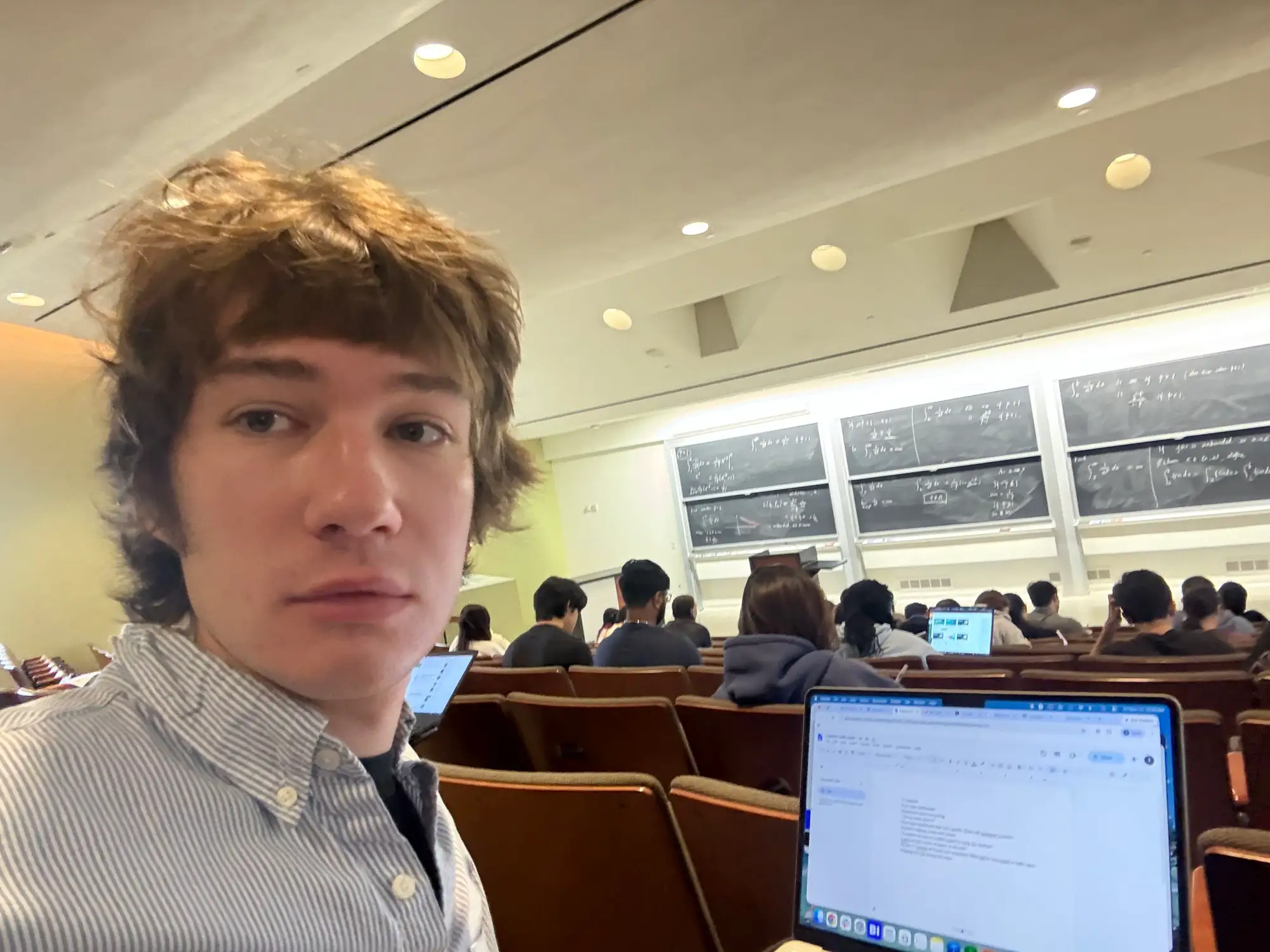
The report stated that this mathematics course adopted a rather traditional teaching method. There is no projector or computer-assisted teaching in the classroom. The professor uses chalk to continuously derive formulas and explain examples on multiple blackboards. However, although the teaching environment looks very "retro", the impact of artificial intelligence has always enveloped the entire classroom.
Ni Yi said frankly that college mathematics education is facing new challenges today. With the development of artificial intelligence technology, most college mathematics assignments can already be completed by AI. He believes that this has brought obvious impact to the traditional education model, because it is increasingly difficult for teachers to accurately assess students’ true learning levels through homework.
Chatbots that were once ridiculed for being unable to complete even simple word statistics tasks are now capable of reaching graduate-level abilities in mathematical reasoning. The impact of this improvement is particularly evident in math courses that rely on extensive practice exercises. Some students are even beginning to rethink whether they should continue to major in mathematics or engage in related research.
However, in this class, the reporter did not find students using tools such as ChatGPT on the spot. The classroom atmosphere is not much different from traditional university courses: some students hurried into the classroom after being late, while others sat in the front row with full concentration and asked questions; many students used iPads to record notes, while a few students barely took notes and even closed their eyes for long periods of rest during class.
Since this course is a core required course at Caltech, students must complete it regardless of their future major. Students interviewed after class came from a variety of disciplinary backgrounds, but most were reluctant to speak publicly.
Then Sathvik Redrouthu, a sophomore mathematics major who had taken the course the previous academic year, shared his thoughts. He said that he did not use AI to complete his homework at that time, because truly understanding the course content is the key to learning. If you rely entirely on artificial intelligence to complete exercises, it will be equivalent to "digging yourself a hole" when you face the on-site exam.
In his view, students who are interested in the course itself will usually take the initiative to learn and understand the knowledge points, while for those who just want to complete the task, using AI is obviously more tempting. In most cases, they are even able to successfully pass their daily homework checks, and their true abilities are not revealed until the official exam comes.
Ni Yi also admitted that currently, as a teacher, it is difficult to judge whether a math assignment is completed by a student independently or generated with the help of artificial intelligence. Unlike articles written by AI, mathematical answers mainly consist of numbers, formulas and derivation, which are exactly one of the things that artificial intelligence is best at processing.
The report pointed out that in the face of the rapid penetration of AI into the classroom, Caltech has not yet issued unified guidelines explaining how mathematics teachers should adjust course design and evaluation systems. Different teachers are looking for solutions based on their own understanding, and the reduced weight of homework scores and the increased importance of on-site exams are becoming realistic choices for some courses.
As artificial intelligence continues to improve mathematics and reasoning capabilities, how to rationally utilize AI tools while ensuring learning effects has become a new topic that the higher education sector has to face. The traditional assessment model that relies on homework exercises to measure student mastery may be undergoing its biggest change in decades.
Comments