
Abstract:
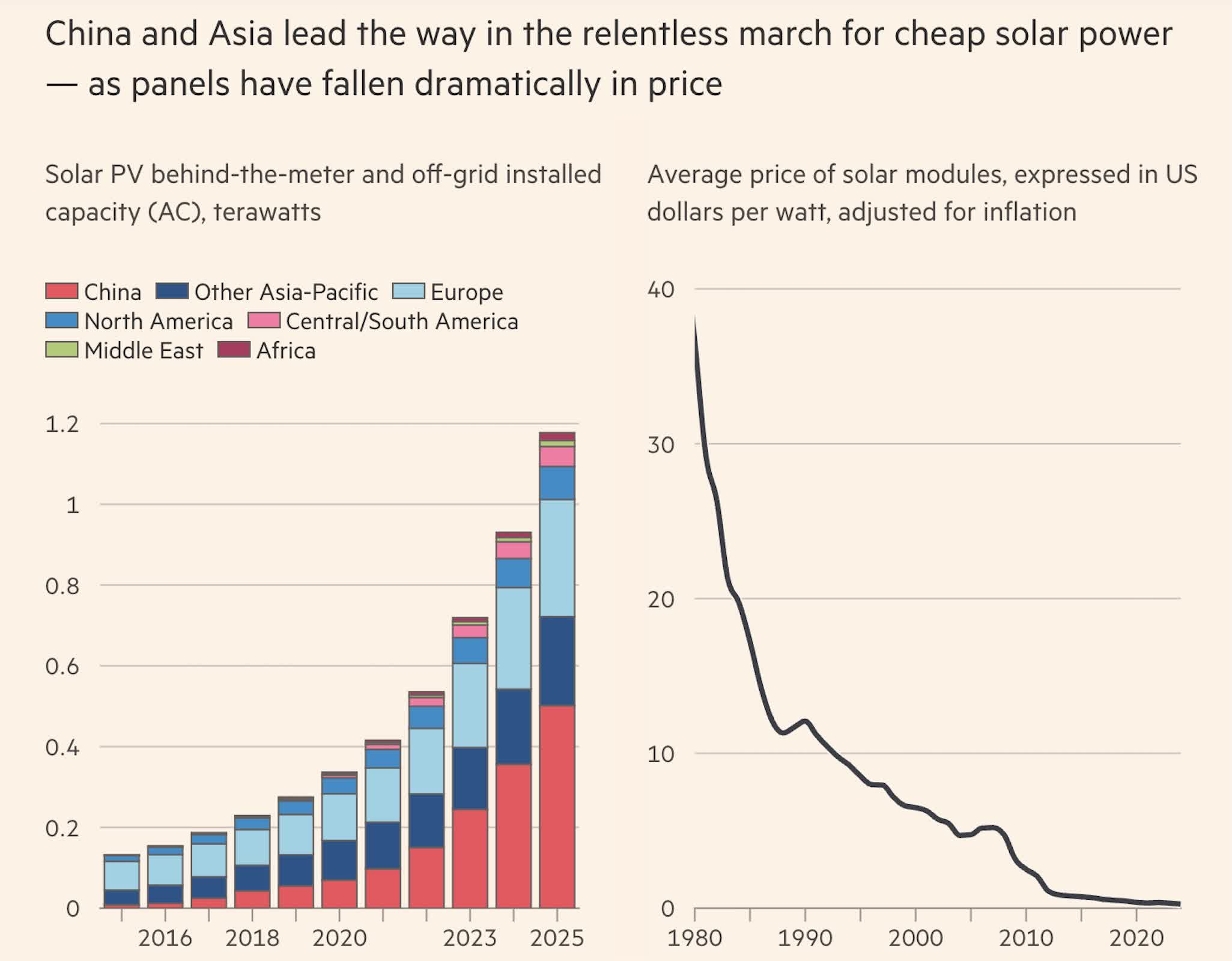
Solar panel prices have experienced an incredible decline over the past two decades. Around the year 2000, solar panels cost about $5 to $6 per watt. Today they have dropped to about 12 cents per watt. Dramatic price drops are pushing solar energy from a costly, largely subsidy-based energy technology to a cheap source of power that more and more homes and businesses around the world can tap directly into, while also starting to change the way traditional power grids operate.
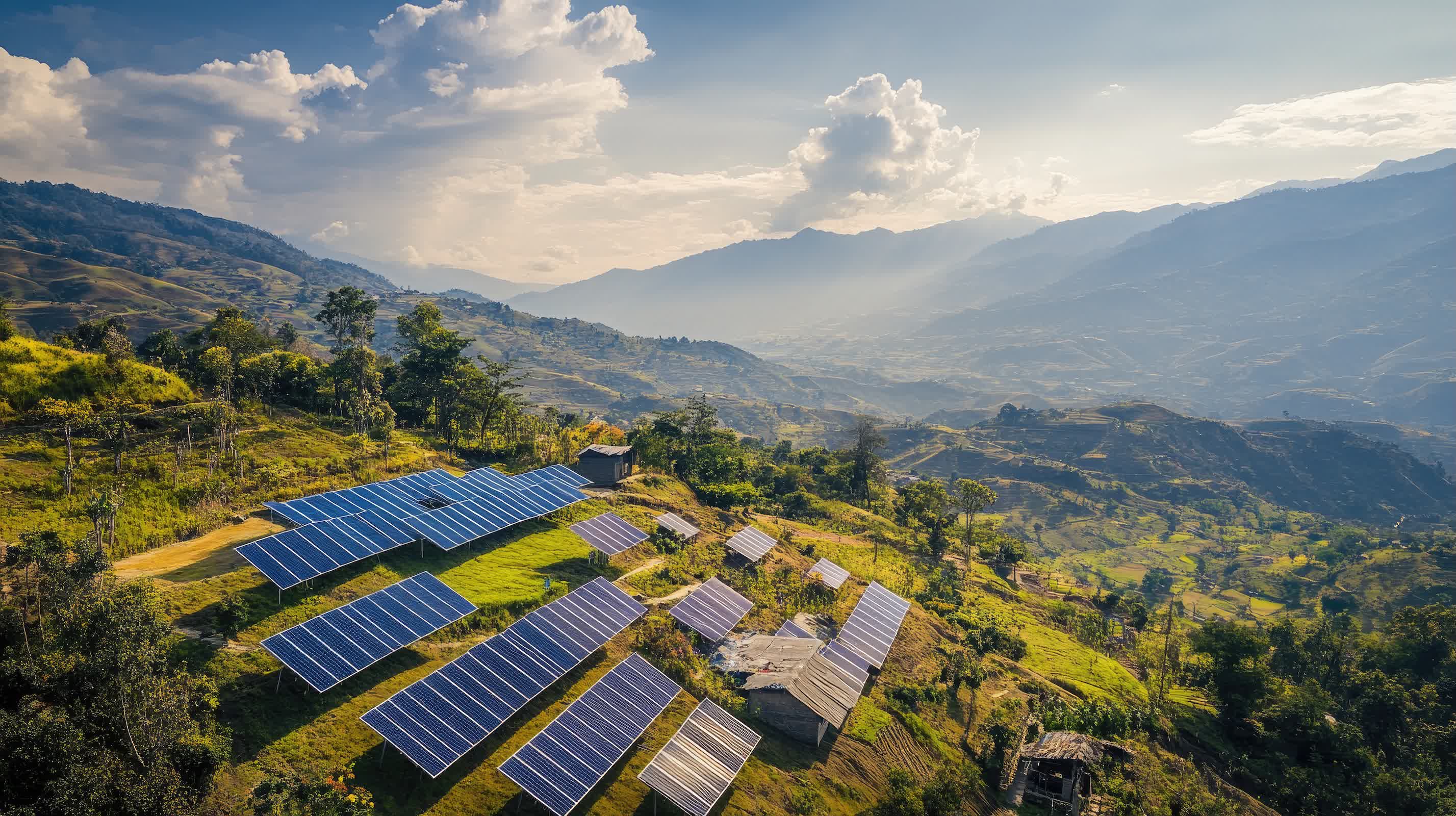
At a Bestway cement factory in Chakwar, Pakistan, solar power generation can currently meet more than a quarter of the factory's electricity needs. The business has installed 26 MW of solar power capacity and plans to add another 6.34 MW by the end of this year. Factory management said that in a highly competitive market environment, the use of solar energy has become an important means to reduce production costs, and competitors are also taking similar measures.
The rapid decline in solar energy costs is largely due to the rapid expansion of China's photovoltaic manufacturing industry. Ember co-founder Dave Jones said solar panel prices have dropped from $5 to $6 per watt around 2000 to about 12 cents today. Wood Mackenzie estimates that China's current solar manufacturing capacity has reached about 1.36 terawatts.
Cheap photovoltaics also make rooftop solar power and company-built solar power plants increasingly attractive in countries where electricity is expensive or power grid supply is unstable. By the end of 2025, the global cumulative installed capacity of small solar power systems will be close to 1.2 terawatts. Although solar power generation cannot maintain full load operation around the clock like nuclear power and other power sources, in terms of installed capacity alone, the total capacity of small solar power systems in the world is already approximately three times that of global nuclear power installations.
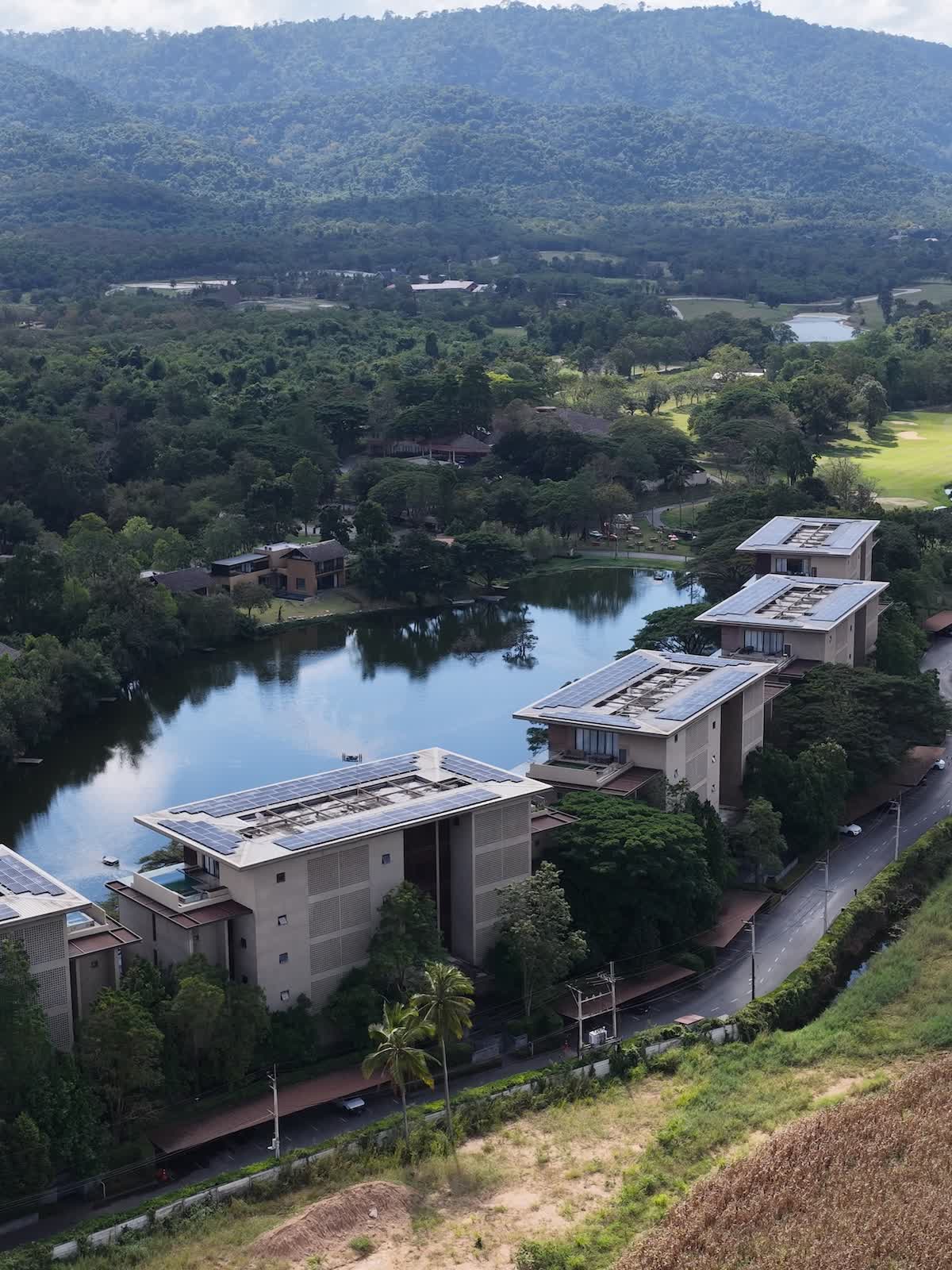
Businesses have been one of the main drivers of the rapid spread of solar energy, because peak power consumption in factories, shopping malls and office buildings often happens to occur during the day when the sun is the brightest. Ember expects about 17 gigawatts of new solar capacity in Africa this year, with a large portion coming from small solar systems installed in factories and commercial facilities.
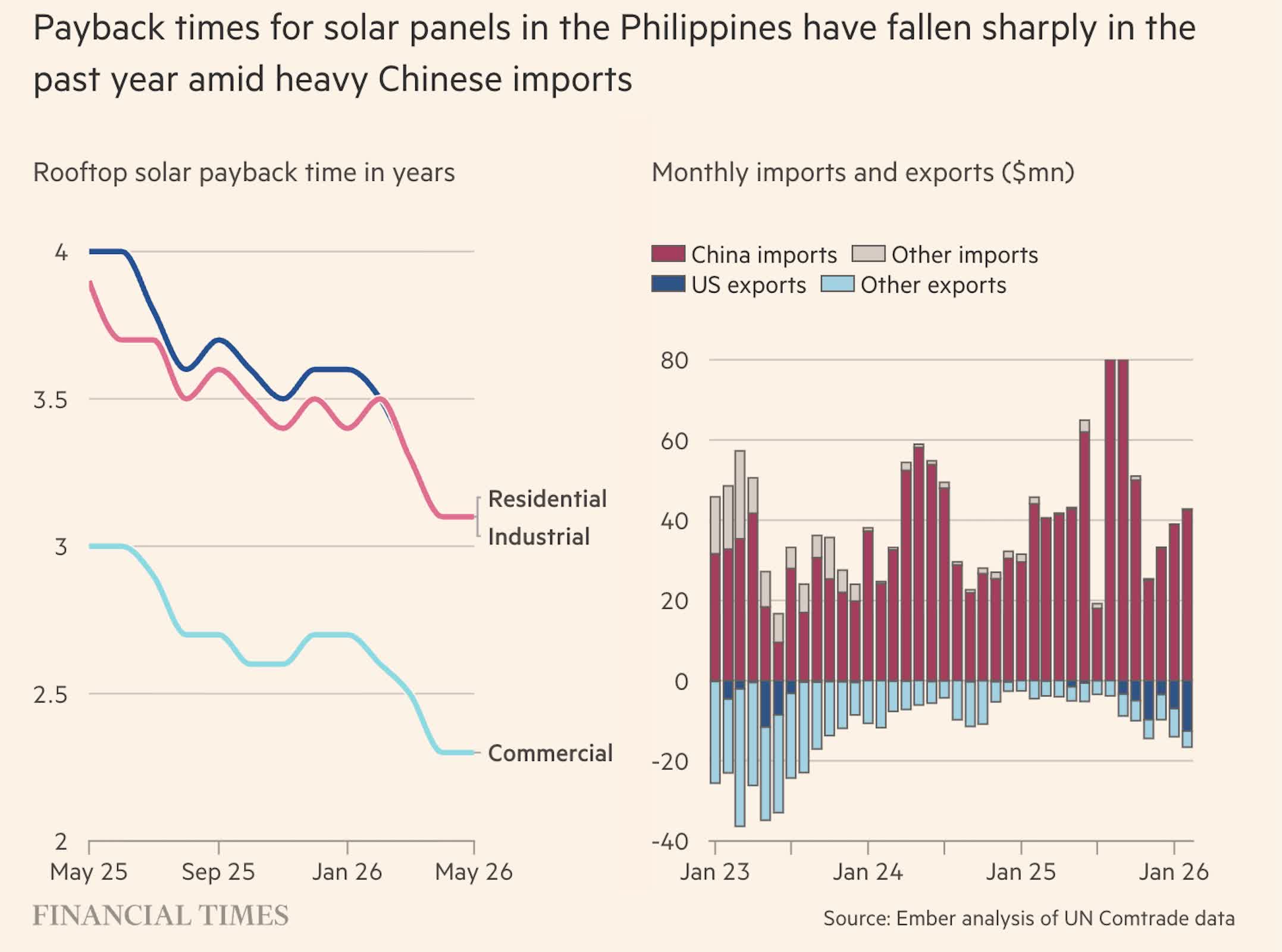
Rooftop solar is also growing rapidly in the Philippines. Ember data shows that the country's rooftop solar capacity may have nearly doubled in the past 12 months to April this year. Philippine electricity distributor Meralco said rooftop solar systems had generated 372 gigawatt hours in the first six months of this year. Ember estimates that at current cost levels, the payback period for residential solar systems in the Philippines has shortened to just over three years.
India further promotes household rooftop solar power through government subsidy programs. The scheme, which was launched in February 2024, has already installed solar panels on more than 5 million households and is currently adding around 500,000 households every month, according to Tata Power CEO Praveer Sinha. As installation costs continue to fall, solar energy is evolving from a technology available to a few businesses and wealthy households to a more ubiquitous home energy solution.
However, falling solar energy prices and the rapid growth of distributed generation have also brought new pressures to traditional power companies. Homes and businesses that can afford solar panels and energy storage batteries use a lot of their own electricity during the day, reducing the amount of electricity they buy from the grid. But these users still need to rely on the power grid at night, on cloudy days, or when their batteries run out. This means that power companies must continue to maintain power plants, transmission lines and distribution networks, but may receive less electricity bill revenue from some high-value customers.
The situation in Karachi, Pakistan, exemplifies this contradiction. Rooftop solar is rapidly gaining popularity in the Defense Housing Authority, a wealthy local neighborhood. Syed Muhammad Taha, CEO of local power company K-Electric, described solar energy as both a "blessing" and a "curse" because it is often the company's prime paying customers who install solar, but these customers buy less and less power after installing the system.
At the same time, low-income residents who cannot install solar may be saddled with higher electricity costs. K-Electric said that in Lyari area of Karachi, the company may lose Rs 30 to Rs 40 for every Rs 100 worth of electricity supplied. A local mechanic who rents a house said that his electricity bill accounts for more than half of his income.
Similar changes have occurred in South Africa. Retailer Shoprite has been installing solar systems on buildings and vehicles in South Africa and Namibia since 2015. It already has a peak generating capacity of about 43 megawatts and is considering adding further battery storage.
For South Africa's state-owned power utility Eskom, reduced power use by businesses and wealthy customers means less revenue from operating power plants and maintaining the grid. Eskom estimates that rooftop solar and battery storage accounted for about 7% of its 11.7 billion kWh decline in electricity sales in the year to March.
In addition to the pressure on the business model, the large-scale integration of solar energy also brings technical challenges to the power grid. Traditional power grids typically schedule power generation according to relatively predictable demand, but solar power generation can change rapidly with the weather. This change is particularly pronounced in areas where rooftop solar is highly prevalent.
Australia is a typical example. After a large amount of rooftop solar power is concentrated at noon, the power demand that the grid actually needs from large power plants may be reduced to a very low level, thereby making it more difficult for traditional generators to maintain stable operation of the grid.
At the same time, rooftop solar has the potential to generate large amounts of excess electricity. When the local distribution network cannot fully absorb this power, the energy can flow back into high-voltage transmission lines, causing grid voltage to rise and limiting the ability of households to send more power to the grid. For grid operators, accurately predicting the power generated by millions of small solar systems has become an increasingly complex task.
Pierluigi Mancarella, a professor of power systems at the University of Melbourne, pointed out that in areas where rooftop solar energy is highly concentrated, the passage of a large cloud layer may cause a sudden and significant drop in solar power generation, and the impact may even be close to the sudden loss of a large nuclear power plant on the power grid.
In response to these changes, power companies in various countries are adding energy storage facilities, adjusting electricity price mechanisms, and using artificial intelligence and machine learning to improve solar power generation forecasts. UK power network operator UK Power Networks recently completed a £389,000 study using machine learning models to estimate the actual solar capacity connected to its grid. Solar forecasting company Amperon retrains forecast models hourly to adapt to changing weather and power generation conditions.
This shift driven by falling solar costs is unlikely to stop anytime soon. Solar energy has gradually become a regular means of reducing energy costs for businesses and households, but at the same time, the traditional power grid is also transforming from a system that transported power in one direction in the past to a complex energy network that must handle the flow of power in both directions at the same time. Cheap solar energy is not only changing who generates electricity, it is also changing the operating logic of the entire power system.
Comments