
Abstract:
Yao Shunyu, chief AI scientist at Tencent and former OpenAI researcher, recently attended a scientific seminar in Hong Kong and said that cutting-edge artificial intelligence models are rapidly moving into the field of biology, and their capabilities will soon reach a critical point that may cause real-life harm. Although this change is expected to promote new drug research and development and medical innovation, it may also bring new safety challenges and raise industry concerns about biosafety risks.
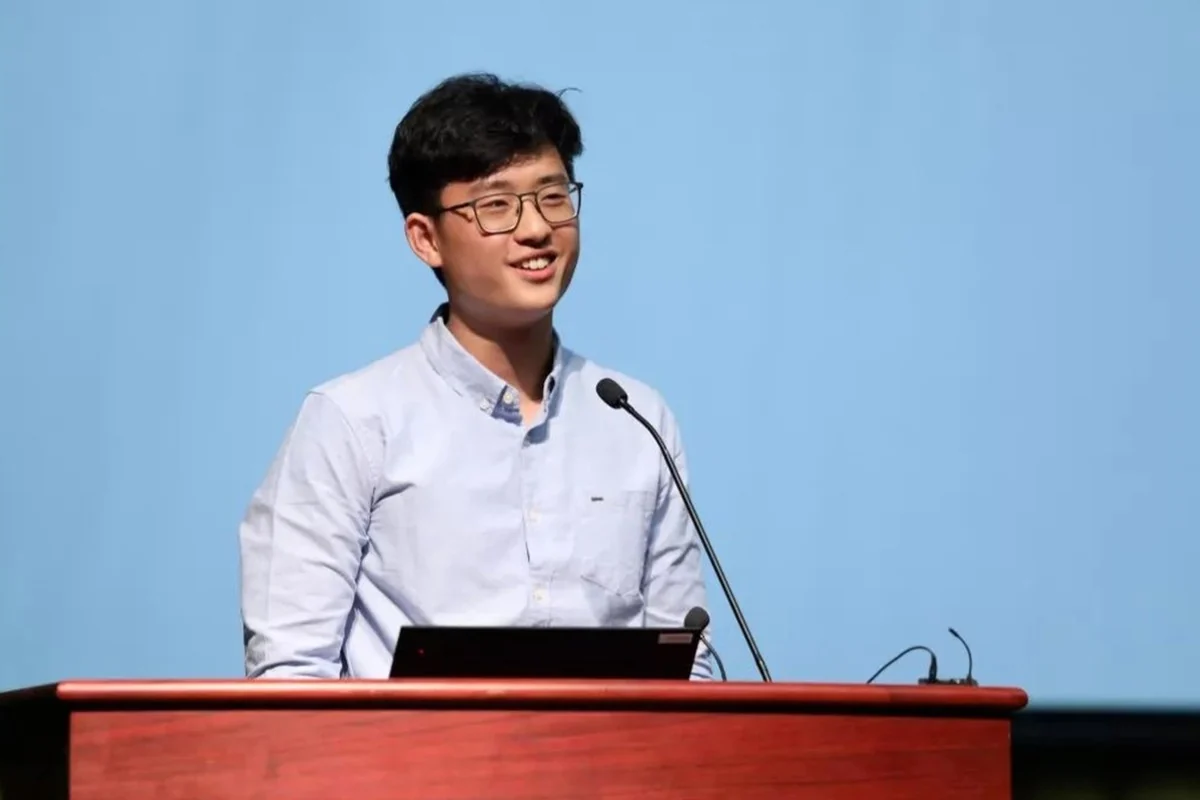
Yao Shunyu said that artificial intelligence has demonstrated enough capabilities to have a real impact in the field of network security, and biological capabilities are approaching similar levels. He warned that the future development of AI in the field of biology may be more difficult to manage than in the field of cybersecurity, so both Chinese companies and other companies adopting the open model route must take relevant security issues seriously.
In recent years, more and more cutting-edge AI systems have begun to be applied to life sciences, medical research, and drug development. It is generally believed in the industry that AI is expected to significantly shorten the drug screening and research and development cycle and speed up the discovery of treatment options. However, experts also pointed out that these capabilities have "dual use" characteristics. While promoting scientific research progress, they may also be abused by criminals, thus bringing new biosecurity risks.
Yao Shunyu’s speech comes at a time when Tencent is accelerating its AI strategy. Tencent officially released the new generation flagship model Hy4 on November 4 and positioned it as one of the company's most important basic models. According to data from Artificial Analysis, an artificial intelligence evaluation agency, Hy4 is currently ranked as one of the strongest performing AI models in China.
When talking about future development directions, Yao Shunyu revealed that Tencent is exploring the possibility of building an "autonomous scientific laboratory" and hopes to use AI systems to independently complete complex scientific research processes, including some biological research tasks. He believes that from a technical perspective, most problems can eventually be solved. The real bigger challenges lie in social governance, organizational coordination and the construction of safety supervision systems.
In order to reduce potential risks, Tencent has adopted a series of safety measures during the training process of Hy4. The company said it deliberately eliminated data related to software vulnerability exploitation and attack behavior, retaining only defensive network security knowledge, hoping to reduce attack capabilities while retaining protective capabilities. Regarding the field of biology, Tencent's internal assessment believes that although Hy4 has strong basic biological knowledge, there is still a clear gap between being able to independently formulate experimental procedures and form high-risk capabilities.
Yao Shunyu particularly emphasized that compared with the field of network security, it is often more difficult to clearly distinguish between "offensive capabilities" and "defensive capabilities" in the field of biology. This means that researchers will face more complex situations when assessing model risks, so models must undergo more rigorous testing and validation before release. Tencent is currently cooperating with the company's top security laboratory to conduct a systematic assessment of relevant capabilities.
As for the controversial "open source versus closed source" debate in recent years, Yao Shunyu said that American companies such as Anthropic advocate keeping the most advanced models closed to reduce potential social risks. This view has certain rationality. But he also believes that open models can also help defenders improve their capabilities, so in the future the industry may need to seek a balance between openness and closure, rather than relying entirely on a single route.
As artificial intelligence gradually expands from programming, mathematics and content generation to the field of life sciences, biology is being regarded as one of the most important AI frontiers in the next stage. Analysts pointed out that once AI truly has the ability to deeply understand and apply biological knowledge, related technologies may not only change drug research and development and the medical industry, but also prompt global regulatory agencies to re-examine the artificial intelligence governance framework to deal with the subsequent new safety challenges.
Comments