
Abstract:
Microsoft CEO Satya Nadella’s recent interview about the future work model of artificial intelligence has attracted renewed attention. He proposed that Microsoft may have 2 million or even 20 million AI agents working together with about 200,000 human employees in the future. This idea occurred less than two weeks after Microsoft offered a voluntary severance package to about 60,000 employees, triggering discussions about whether artificial intelligence is changing Microsoft's personnel structure.
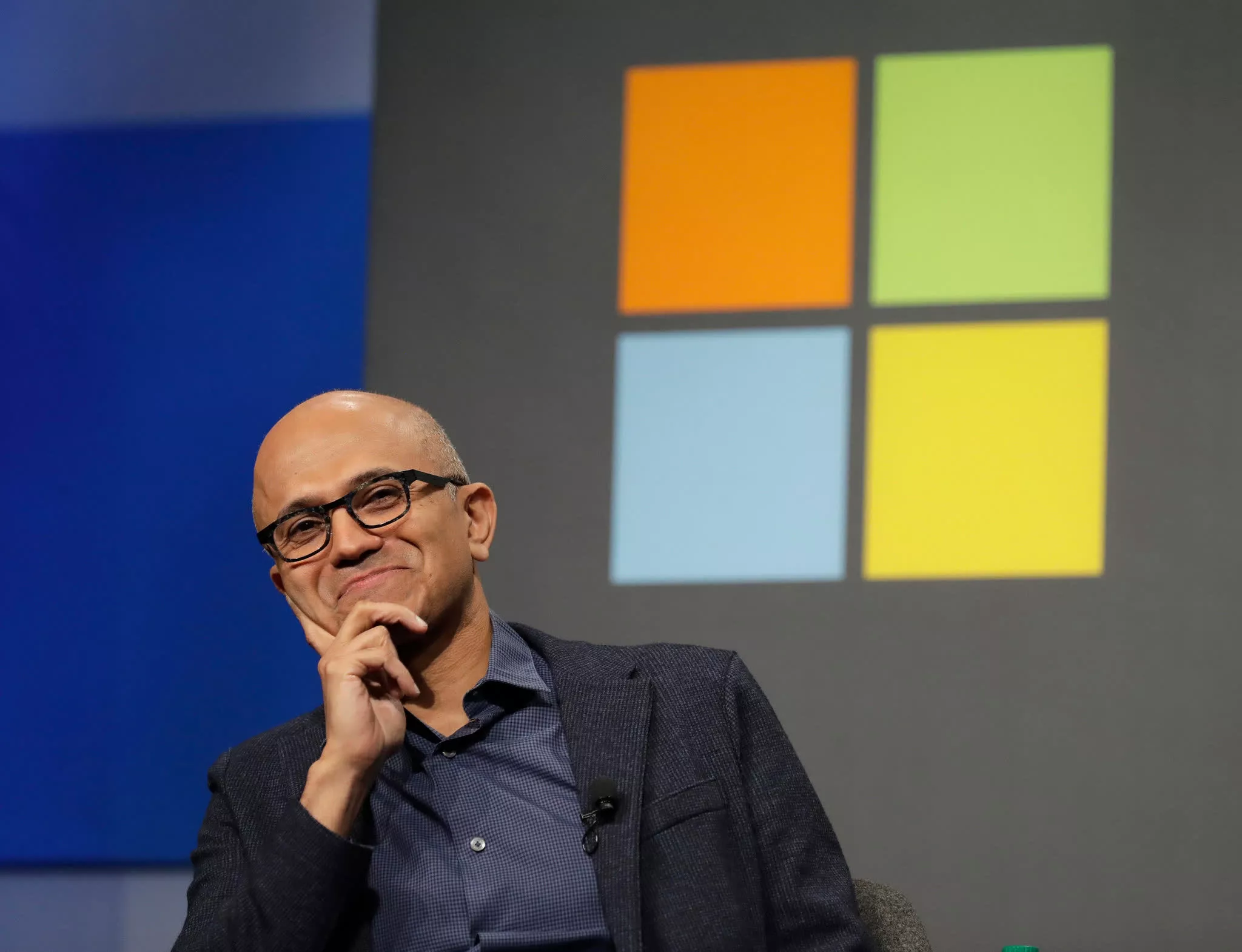
Nadella expressed the above views in the podcast Possible hosted by LinkedIn co-founder Reid Hoffman, which was broadcast on June 5 this year. He envisioned that in the future, Microsoft might have 200,000 employees running 2 million or even 20 million AI agents at the same time, allowing them to form a continuous collaborative work system with human employees.
Nadella believes that the changes brought about by artificial intelligence are not just about improving the work efficiency of existing employees, but may fundamentally change the organizational structure of enterprises. He compares the change to how office typists worked in the 1980s. At that time, large enterprises often required a dedicated team of typists to process documents. However, with the popularity of personal computers and word processing software, such positions gradually disappeared and the related work was transferred to ordinary employees.
He believes that the changes taking place in the field of software development today will also extend to other knowledge work fields in the future. AI initially just helped programmers complete code, and then developed to be able to complete tasks through conversations, and then to intelligent agents that can autonomously execute complex workflows. Users only need to propose higher-level goals, and the AI agent can complete the entire process from task planning to code submission on its own. Humans only need to check and accept the final results.
Nadella even revealed that he is already running about 100 command line AI agents at the same time. As the number of agents managed simultaneously increases, how to monitor their working status, check execution results, and coordinate different tasks has gradually become a new challenge.
To this end, Microsoft is developing an agent development environment called Agentic Development Environment. The design of Microsoft's new GitHub Copilot application has also begun to move closer to an email inbox. Users can view and process the work results submitted by multiple AI agents just like managing emails.
However, Nadella emphasized that the intelligent agent cannot just be able to perform tasks autonomously, but must also have complete inspectionability and audit capabilities. Since these systems may write and run code directly, each agent needs an independent identity, an isolated operating environment, and a clear permissions policy to avoid security issues caused by automated systems without supervision.
Microsoft launched Agent 365 for this purpose, extending Entra identity management, Defender security protection and Purview data governance capabilities to AI agents, priced at $15 per user per month. The goal is to enable companies to manage AI agents like employee accounts, controlling the data they can access, the operations they perform, and the tasks they undertake.
At the same time, Microsoft is undergoing a sizable personnel adjustment. On October 26, Amy Coleman, the company’s chief human resources officer, announced that Microsoft would provide voluntary severance packages to employees in some business units in the United States, the United Kingdom, Canada and India, involving approximately 60,000 people, equivalent to about a quarter of the company’s total global employees.
This program is open to employees within Microsoft at level 70 and below, up to the vice president level, but not all departments are participating. The businesses involved include AI experience, Copilot, finance, human resources, Xbox, and Windows and device departments; marketing, commercial business, and security departments are not covered by this plan.
Microsoft emphasized that this is a voluntary separation arrangement, not a layoff plan that requires all 60,000 employees to leave. A company spokesperson told the media that the proportion of employees expected to accept the plan is less than 5%, which means that the final number of resignations may be less than 3,000. Eligible employees need to decide whether to accept it before early December, and specific separation arrangements are planned to be completed before the end of the year.
This plan is different from the retirement incentive plan Microsoft launched earlier this year. The previous program was mainly open to about 8,750 U.S. employees who met certain age and length of service conditions. In the end, more than 30% of eligible personnel accepted the program. Coverage has been expanded this time to about 60,000 people, but the take-up rate is expected to be significantly lower.
Microsoft currently has approximately 223,000 employees. As of the end of June 2026, the company's number of employees has decreased by approximately 5,000 from the previous year. This is the first time in ten years that Microsoft has experienced a year-on-year decrease in the total number of employees throughout the year. Previously, the company also laid off approximately 4,800 positions in July this year, involving departments such as Xbox and commercial sales teams.
While personnel adjustments are being made, Microsoft is still significantly increasing investment in artificial intelligence infrastructure. The company's capital expenditures reached $45.2 billion in the last quarter, about three-quarters of which were spent on relatively short-life assets such as chips. Microsoft also predicts that capital expenditures for the entire year of 2026 may reach US$175 billion, mainly for the construction of data centers, servers and AI computing infrastructure.
Nadella has previously said that in the era of artificial intelligence, the total personnel costs of enterprises may decrease, but the per capita cost will increase, and the GPU computing resources available to each researcher will also increase. This actually means that Microsoft hopes to reduce some positions and increase the allocation of technical resources for remaining employees to allow smaller teams to complete work that used to require more people.
However, Microsoft did not admit that this voluntary separation plan was directly caused by AI replacing employees. When explaining the layoffs, the company previously stated that the eliminated positions were not directly replaced by AI, but artificial intelligence was indeed changing the way companies work.
Nadella himself also admitted that the artificial intelligence industry must explain to society what new jobs technological progress will create, and what kind of wages and career development opportunities these positions can provide. He believes that it is not enough to just tell employees that technological progress will eventually create more jobs. Companies must also explain where the new job opportunities are and how ordinary workers can obtain these jobs through training.
Judging from Microsoft's current layout, AI agents are gradually transforming from auxiliary tools into independent execution units in enterprise organizational structures. In the future, companies may no longer simply measure production capacity by the number of employees, but instead consider the number of human employees, AI agents, and the efficiency of collaboration between the two.
But 20 million AI agents are still only a future vision proposed by Nadella, and are not the actual scale that Microsoft has deployed. What really needs to be observed is whether these intelligent agents can stably undertake complex tasks for a long time, and whether the productivity improvements they bring will be transformed into enhanced work capabilities of employees, or will be the motivation for enterprises to further reduce manpower needs.
Comments