
Abstract:
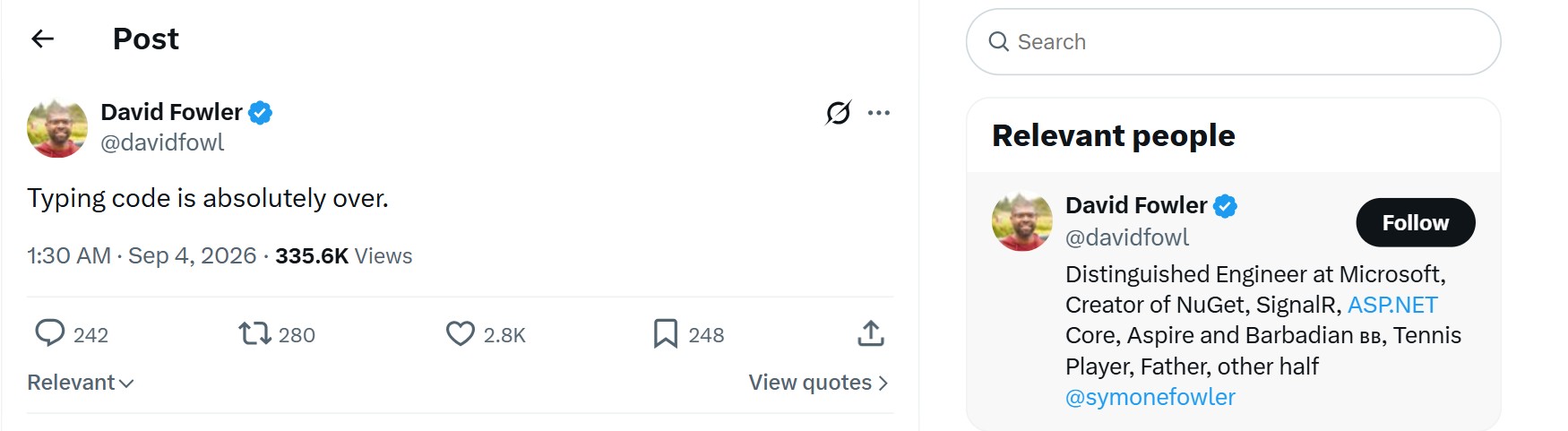
David Fowler, an outstanding engineer who has worked for Microsoft for 18 years, recently publicly posted on the social platform Fowler is not an outsider who gains attention casually. He is the co-creator of the real-time communication framework SignalR. He has been deeply involved in the creation of the NuGet package manager and the Kudu deployment engine. He is also a core developer of ASP.NET Core and is currently responsible for leading Microsoft's new generation tool chain Aspire for distributed applications.
Microsoft CEO Satya Nadella previously revealed that 20% to 30% of the company's internal code is generated by artificial intelligence, and Fowler's latest statement further proves that handwritten code is changing from the core of software development to the least important tedious step.
The trajectory of technological evolution confirms this judgment. As early as 2023, multiple studies conducted by Microsoft Research on Visual Studio IntelliCode showed that the artificial intelligence assistance at that time was mainly limited by the presentation method of screen suggestions, and still remained at the level of passive automatic code completion. However, today's GitHub Copilot has developed by leaps and bounds into a fully active agent (Coding Agent). This tool can not only independently receive development tasks and build the required environment in the background, but can also independently modify the code repository and directly submit a pull request (Pull Request) for review. In cross-platform development for Windows applications and WSL-based Linux, the agent can automatically run code inspection tools and verify the compilation results before handing it over to humans. Linus Torvalds, the father of Linux, has recently publicly recognized this trend, pointing out that the usefulness of artificial intelligence as a tool is beyond doubt.
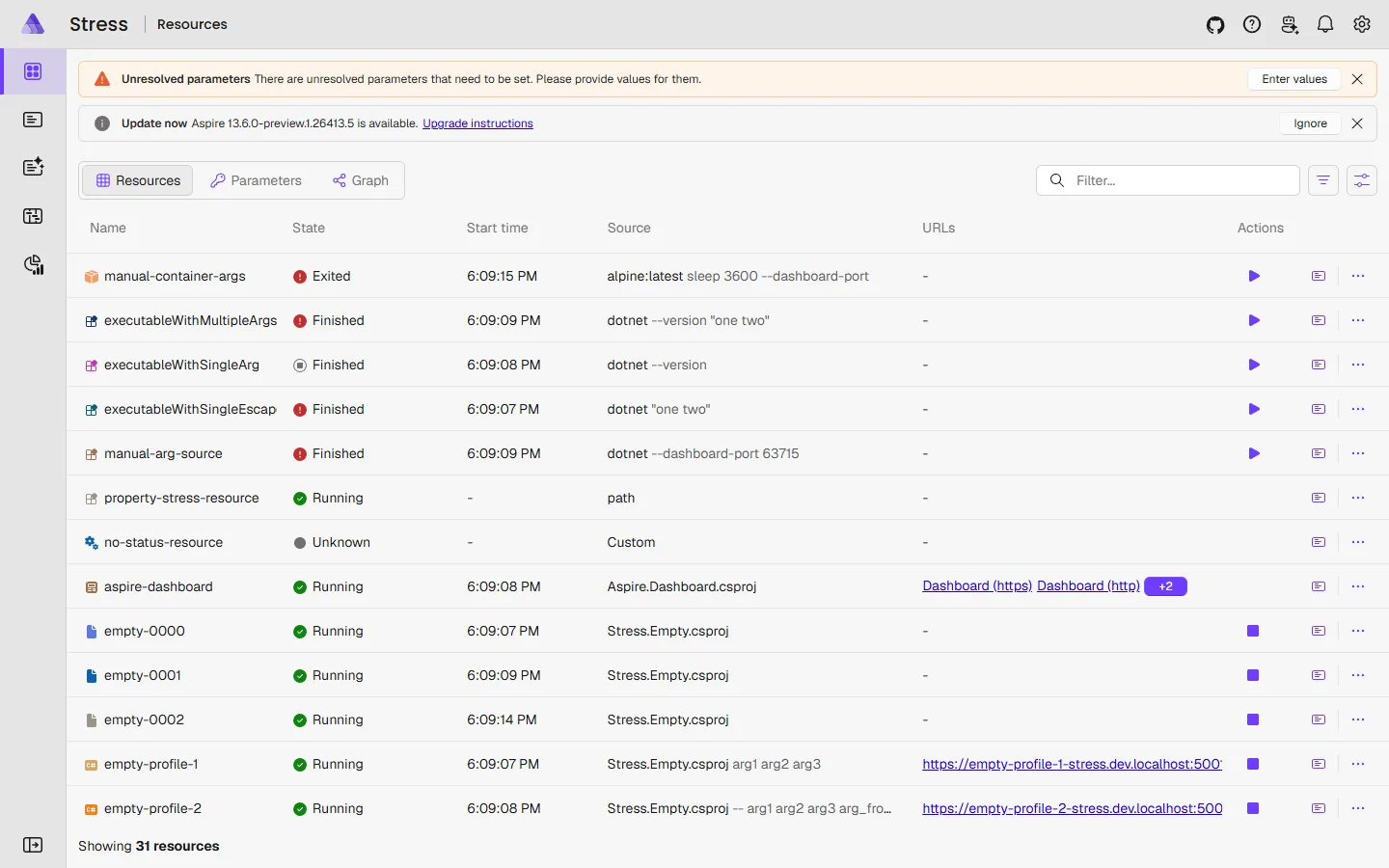
The Aspire framework led by Fowler's team is the core embodiment of this change. In the latest Aspire 13.1 and 13.2 versions, Microsoft has fully integrated the agent-oriented command line interface (CLI) and model context protocol (MCP), upgrading the AI coding assistant to a native element in the development process. Fowler's team emphasized that generating code from the model and delivering the complete software online are two different things. The new tool chain is designed to allow AI agents to directly start services, check telemetry data, read system logs, and automatically repair and restart crashes, thus completely getting rid of the old model of human developers manually copying and pasting error messages in the chat window, and promoting the reconstruction of development tools around AI closed loop.
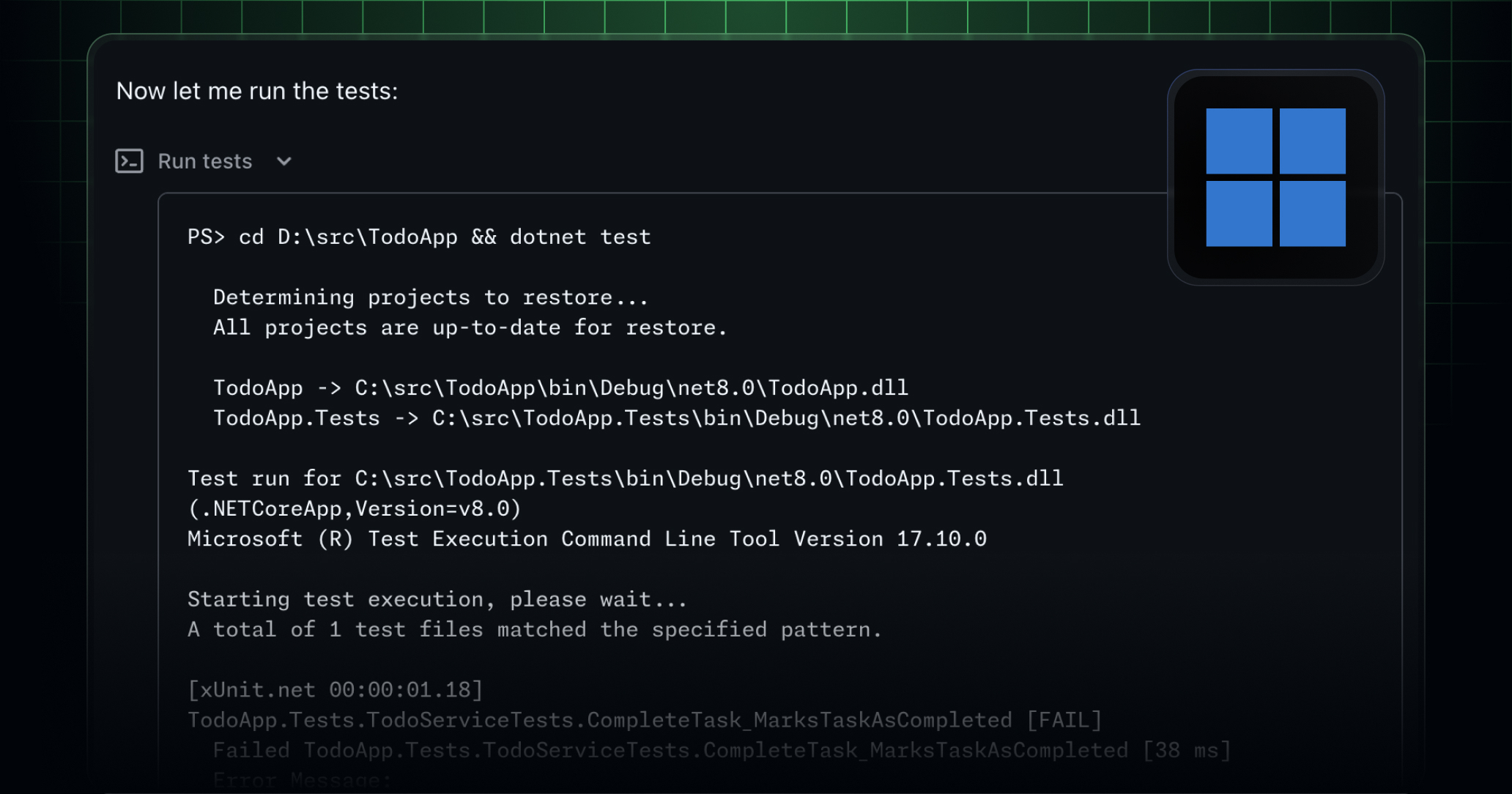
However, "no manual coding" does not mean the end of software engineering. As the cost of code generation approaches zero, engineering difficulties quickly shift to architecture design, native API docking, performance tuning, dependency management, and code auditing. A 2026 generative AI code security report released by security company Veracode pointed out that about 44% of AI-generated codes in benchmark tests have known security vulnerabilities. To this end, Microsoft's internal agent vulnerability scanning system, codenamed MDASH, has been widely used in the Windows kernel, Hyper-V virtualization and network protocol stacks. It uses high-end AI agents to deeply dig into the core hidden dangers of the underlying system and cope with the review pressure caused by the proliferation of code.
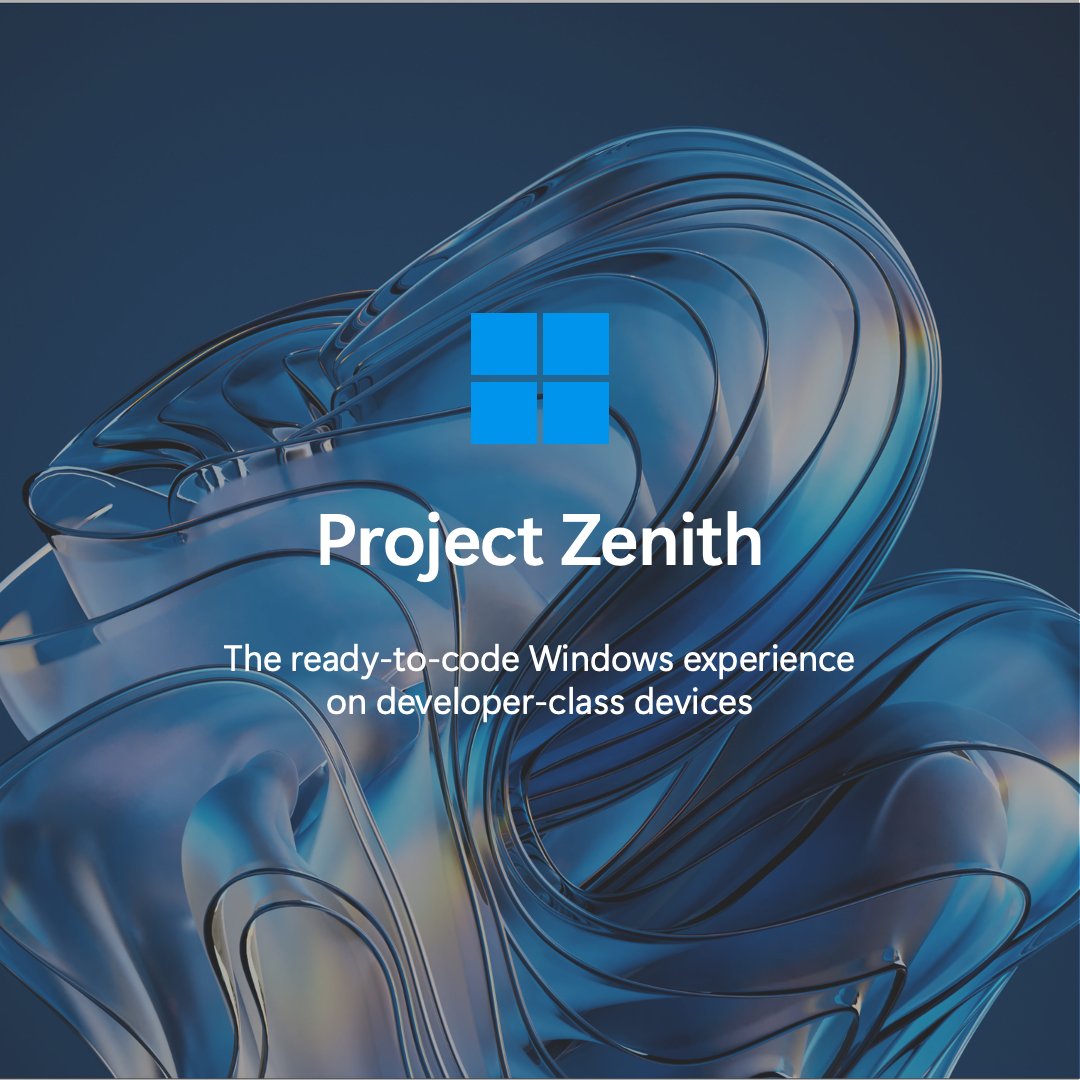
The reshaping of this development model has had a profound impact on the Windows 11 ecosystem. Fowler had previously taken the lead in calling for the abandonment of web page encapsulation shells and a return to native clients. Subsequently, Microsoft vigorously promoted WinUI 3 and made it fully open source. The open and standardized documents directly provide AI agents with an easier-to-parse training and execution environment. Under this change, the update iteration speed and defect repair scale of Windows 11 have been significantly improved. Microsoft is also making efforts to support localized intelligent development at the hardware level. The newly announced "Project Zenith" project creates a customized lightweight Windows 11 environment for developers. By stipulating high thresholds of 64GB unified memory and 250GB/s high bandwidth, it ensures that large language models with over 30 billion parameters can be smoothly run locally and avoids the continued expenditure of cloud tokens.
Fowler's conclusion reveals the essential change in current software development: when the threshold for generating code has been completely leveled, the core value of engineering has shifted to conceiving product logic, setting boundary conditions, and reviewing and performance controlling AI-generated products. The keyboard is no longer the absolute focus of programming, and programmers' responsibilities are being fully transformed from heavy code typers to software architecture and design experts who control the direction.
Comments