
Abstract:
Microsoft is accelerating Copilot's development blueprint, hoping to build it from a single artificial intelligence assistant into a "super application" covering work, learning, creation and software development. As a new round of feature upgrades are announced one after another, Copilot is being given increasingly stronger autonomous execution capabilities, and Microsoft is also trying to redefine the way users interact with computers.
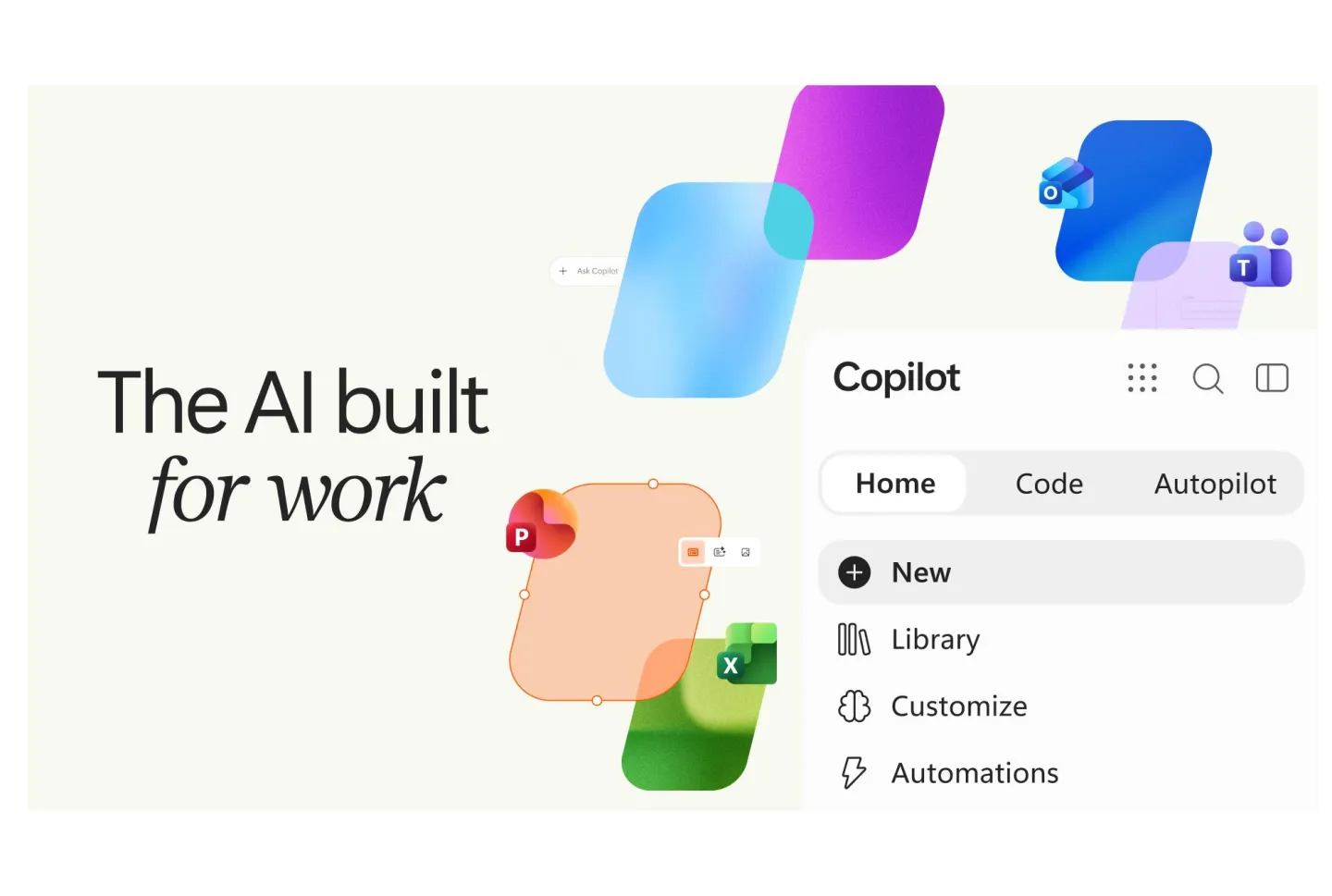
According to the latest disclosed information, Microsoft's internal positioning of Copilot has gone far beyond the scope of traditional chat robots. In the future, Copilot will not only be responsible for answering questions, but will also be able to take on responsibilities such as programming, automated task processing, information organization, and cross-application collaborative work, thus becoming the core entrance for users' daily digital activities.
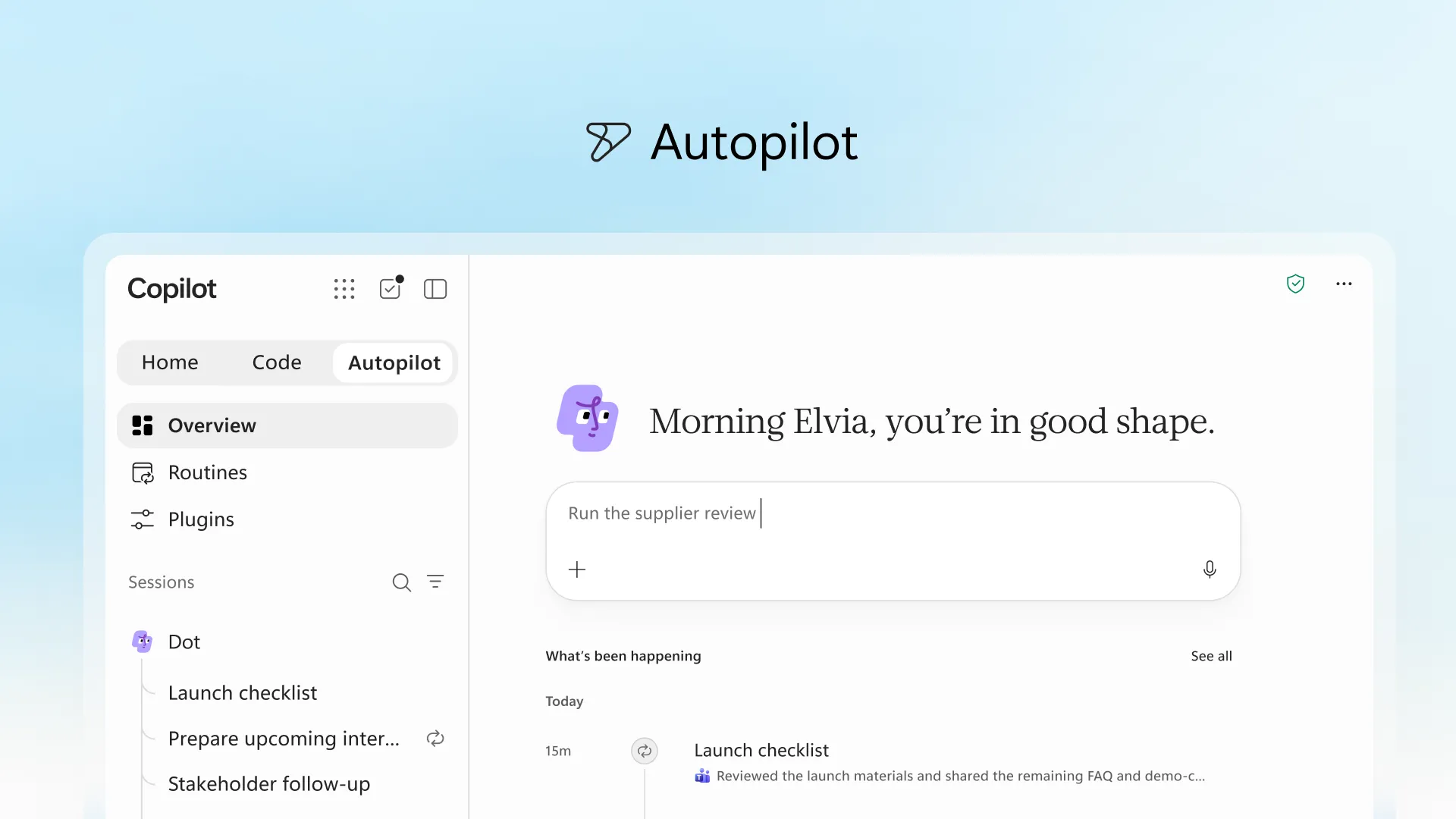
Microsoft is focusing on promoting a new mode called "Autopilot". In this mode, Copilot can autonomously plan the task process according to the user's goals and automatically complete multiple steps, instead of requiring the user to issue explicit instructions one by one. This means that users only need to express their result requirements in the future, and the system will be able to decide how to execute each link.
At the same time, software development capabilities have become one of the important directions for Copilot's evolution.
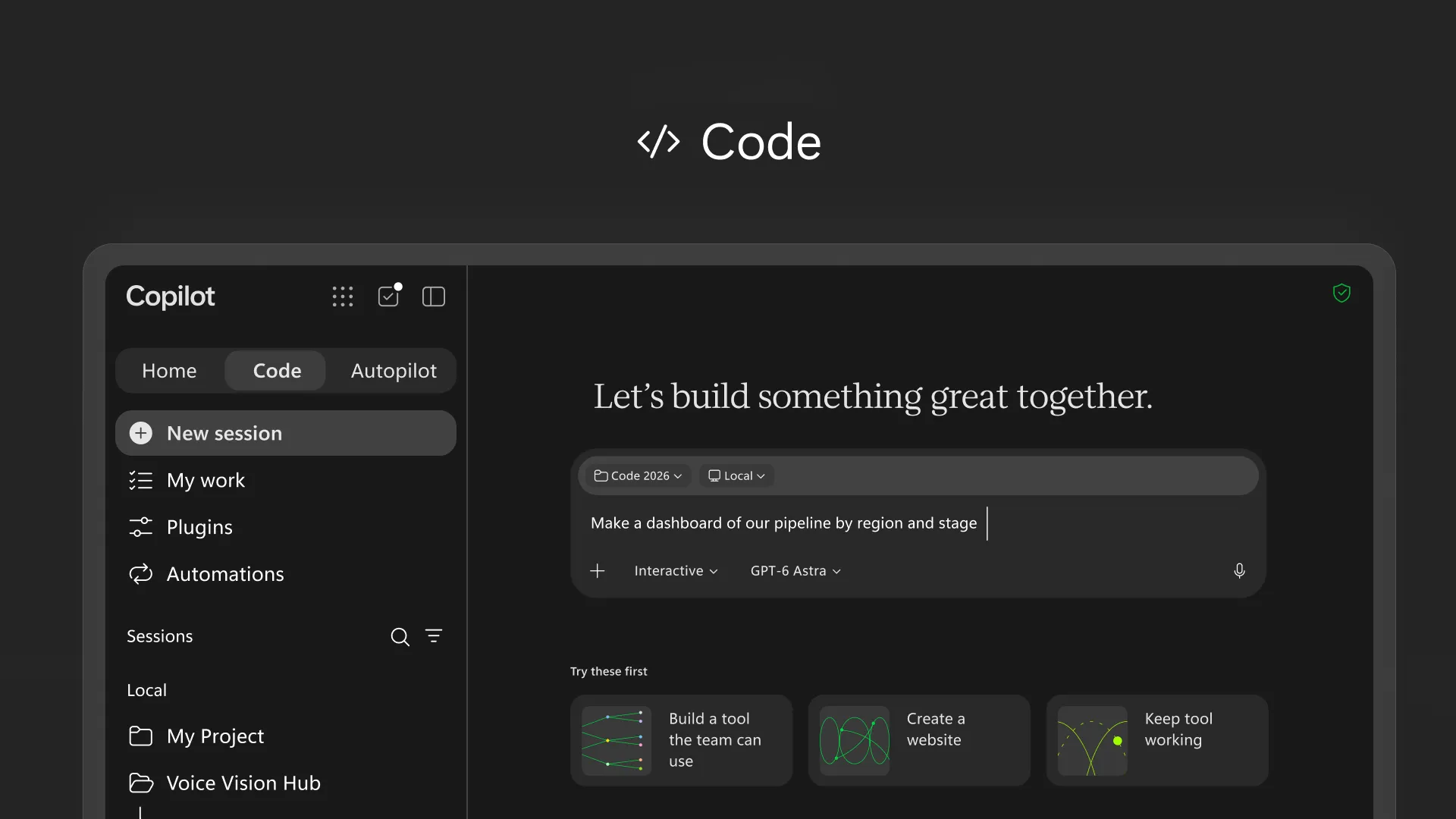
Microsoft believes that as generative artificial intelligence continues to advance, programming will become one of the most valuable application scenarios of AI. Therefore, Copilot will further integrate code writing, testing, debugging and project management capabilities in the future. Developers can not only use it to generate code, but also allow it to participate in maintenance projects, analyze errors, make optimization suggestions and even perform part of the development process.
Industry insiders pointed out that this idea is highly consistent with Microsoft's large-scale investment in GitHub Copilot in recent years. Microsoft obviously hopes to expand its AI programming capabilities originally for developers to a wider user group and eventually integrate them into the unified Copilot ecosystem.
In addition to development capabilities, Microsoft is also continuing to expand Copilot's ability to connect various services and applications.
In the future, Copilot will be able to connect with more data sources, office tools and third-party software, allowing users to complete complex work without frequently switching applications. For example, information search, document processing, data analysis and subsequent task execution are completed in a unified interface.
This direction reflects Microsoft's judgment on the next generation of user interfaces.
For the past few decades, personal computing has relied primarily on windows, menus, and applications. Today, Microsoft believes that artificial intelligence assistants are becoming the new interaction layer. Users no longer directly operate complex software, but express their needs to Copilot through natural language, and then AI coordinates the underlying system to complete the task.
If this vision is successfully implemented, Copilot will not only be a function in Windows, but will gradually become a unified entrance to connect operating systems, cloud services, office platforms, and professional software.
However, this transition also comes with challenges.
As Copilot assumes more and more autonomous decision-making and execution tasks, how to ensure accurate results, protect user privacy, manage permission boundaries, and maintain system reliability have become issues that Microsoft must solve. Especially when it comes to automating operations, users' demands for control and transparency will also further increase.
At the same time, industry competition is intensifying. Companies such as OpenAI, Google, Meta, and Anthropic are actively promoting the development of AI assistants in the direction of "intelligent agents", hoping that models can not only answer questions, but also complete actual work on behalf of users.
In this context, Microsoft is trying to build a comprehensive ecosystem covering chat, programming, search, office and automated execution through Copilot. The company hopes to elevate artificial intelligence from an auxiliary tool to a core operating layer in digital life.
With the gradual advancement of Autopilot mode, enhanced programming capabilities, and wider application integration, Copilot is moving towards the "super application" envisaged by Microsoft. The competition around who will become the main entrance to the future computing era is also entering a new stage.
Comments