
Abstract:
An RTX 5090 user recently disclosed an email exchange with PNY’s after-sales department, saying that his graphics card melted and was eventually damaged due to the 16-pin power connector, but his warranty application was rejected by PNY. The reason given by PNY is that the user did not use the PNY certified power cord or adapter provided in the graphics card box, but instead used the 12VHPWR/12V-2x6 power cord originally included with the power supply.
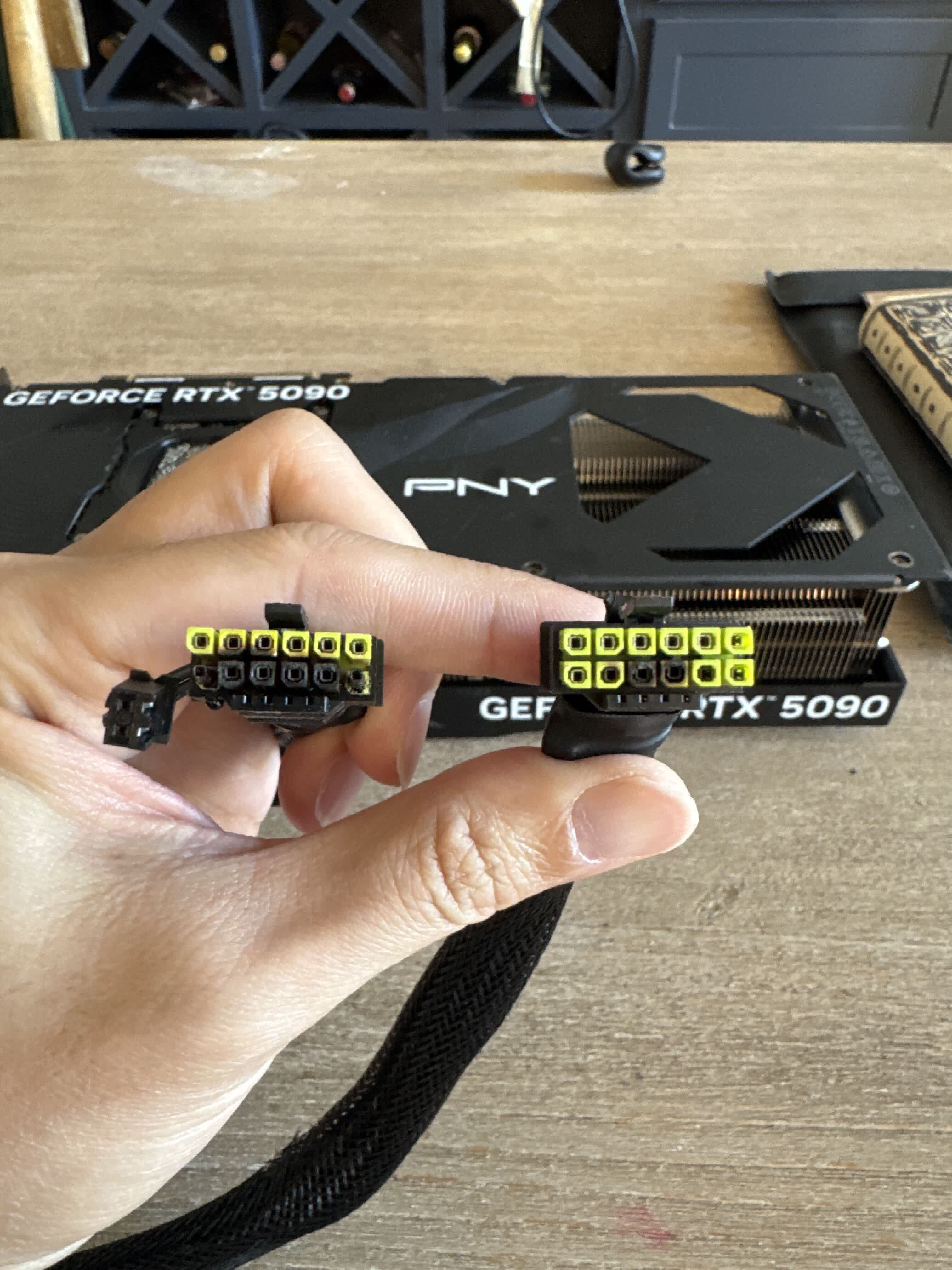
The key to the controversy caused by this incident is not just that the power interface of the RTX 5090 melted again, but that users believed that the warranty restriction proposed by PNY was not clearly written into its publicly released warranty terms.
According to this user, he is using an ASRock PG-1600G 1600W modular power supply, which complies with the ATX 3.1 standard, and directly uses the native 12V-2x6 power cord included in the power supply package to connect to the PNY RTX 5090, without using a splitter or additional adapter.
The user also said that this graphics card uses the original VBIOS, has never been overclocked, and even sets the power consumption limit lower than the default value. What's more special is that when the graphics card fails, the computer is idle and is not running high-load games or performing GPU calculations.
The fault manifested itself as melting of the 16-pin power connector of the graphics card and both ends of the power cord, and then the computer was completely unable to recognize the graphics card. The user therefore submitted an after-sales application to PNY, hoping to have it repaired or replaced according to normal warranty procedures.
However, a subsequent written reply from PNY customer service stated that all PNY graphics cards that require 16-pin 12VHPWR or 12V-2x6 input will provide a PNY-approved power cord or adapter in the package, and only when this set of PNY-approved connection methods is used, the product is covered by the warranty.
PNY further stated that if the user uses a third-party power cord, adapter or power cord that comes with the power supply, and the interface is melted, burned, overheated or deformed, PNY can refuse the warranty and believes that the manufacturer of the power cord or power supply should be held responsible for the relevant damage.
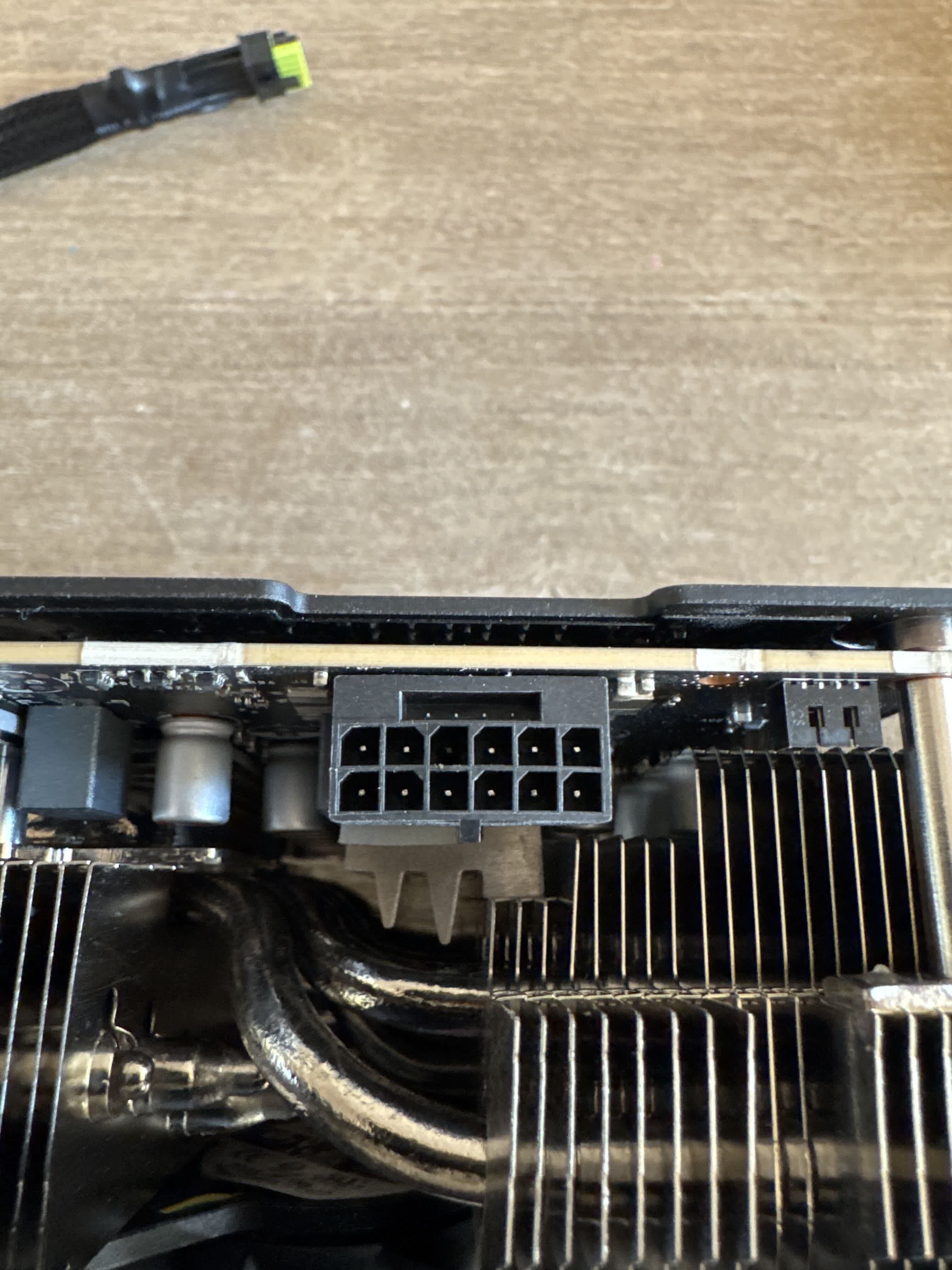
The RTX 5090 user then checked PNY's publicly released graphics card warranty document and found that it did not seem to explicitly mention restrictions such as 12VHPWR, 12V-2x6, power cords, adapters or power supplies.
The user is checking the PNY graphics card warranty document marked "Rev 02.28.2025", which covers multiple generations of GeForce graphics cards, including the RTX 50 series. According to his inspection results, no related keywords such as "cable", "adapter", "connector", "PSU" or "12V" were found in the file.
The warranty document does require that the graphics card must be installed in accordance with the installation guide provided with the product, and has disclaimers for misuse, negligence, improper installation, etc., but the user believes that these contents do not clearly prove that using the 12V-2x6 power cord natively included with the ATX 3.1 power supply will void the warranty.
The user then checked the installation guide included with the RTX 5090. He said that the installation guide does not even clearly mention the 16-pin power interface, and the relevant connection instructions mainly involve 6-pin and 8-pin interfaces. The power supply instructions in the guide only require users to find the unused power connector in the system and connect it to the corresponding interface of the graphics card.
Therefore, the user once again asked PNY which clause in the warranty terms the company relied on to reject his application, and asked PNY to point out the specific terms.
According to user descriptions, PNY did not answer this question. The second reply came from a so-called senior technician, who stated that the company's decision was final and subsequently closed the after-sales work order.
At present, PNY has not publicly responded to this specific case, nor has it explained why the requirement that "PNY certified power cords or adapters must be used" put forward in the customer service reply does not clearly appear in the public warranty documents.
The reason why this incident attracted the attention of the hardware community is also because the ATX 3.1 standard itself is a set of specifications launched to improve the power supply connection of a new generation of high-power graphics cards. Power supplies that comply with the ATX 3.1 standard usually provide native 12V-2x6 power cords directly, allowing users to directly connect to the new generation of high-power GPUs without going through multiple 8-pin PCIe power cords and adapters.
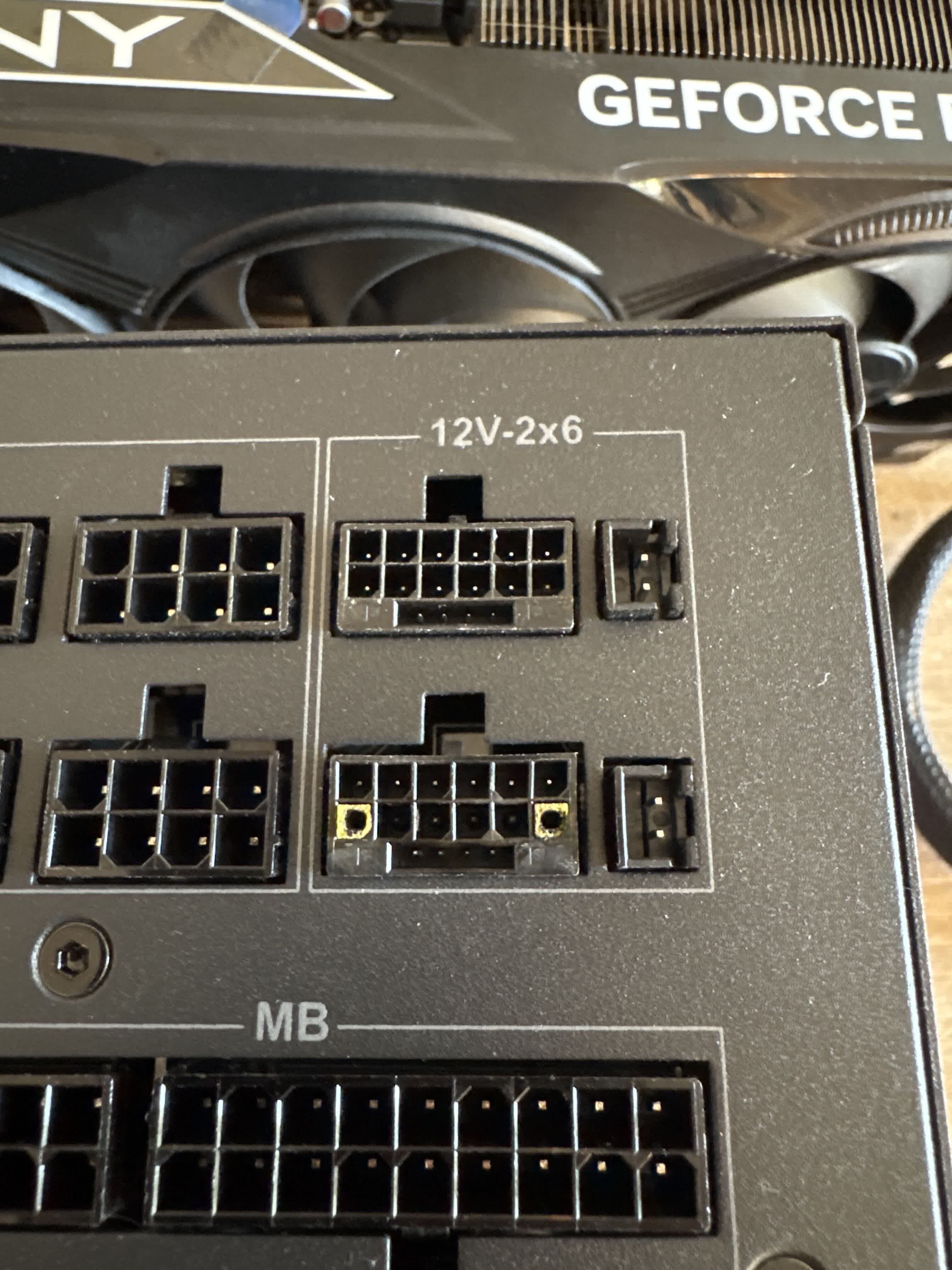
Therefore, if PNY really requires that users must use the dedicated adapter provided in the graphics card package and cannot use the native 12V-2x6 power cord of the power supply that complies with the ATX 3.1 standard, then this requirement is significantly different from the current usage recommended by many power supply manufacturers.
What’s more noteworthy is that this is not the first time that the RTX 5090’s 16-pin power connector has been reported to be damaged recently. Other RTX 5090 users have previously reported overheating, discoloration, and even melting of the power connector or adapter. However, the technical causes of specific accidents are not necessarily the same. It is impossible to determine whether the interface melting phenomenon is caused by connector contact problems, current distribution, cable manufacturing quality, plugging status, or other factors.
In this case, the user himself also made it clear that he could not determine what caused the power interface to melt, so he did not directly assert that there was a quality problem with the ASRock power supply or its original power cord. He disclosed PNY's after-sales reply mainly to let other RTX 5090 users understand PNY's current warranty treatment of power connection methods.
From a consumer perspective, the core of this dispute is actually two issues: First, whether the use of a native 12V-2x6 power cord that complies with the ATX 3.1 specification and is provided by a regular power supply is a normal installation method approved by PNY; second, if PNY does include "must use the PNY power cord or adapter in the package" as a warranty condition, should this restriction be clearly written into the public warranty terms, instead of being informed by the after-sales department after the product fails?
Currently, this RTX 5090 user has received a reply from PNY that “the decision is final and the work order is closed.” Therefore, it remains to be seen whether the result can be changed by further escalating the complaint, contacting PNY management, or other means. At the same time, this incident has once again pushed the 16-pin power supply interface and manufacturer's warranty policy of the RTX 5090 high-power graphics card to the discussion center of the hardware community.
Comments