
Abstract:
For a long time, the problem of overheating and even meltdown of the 16-pin power supply interface of Nvidia GeForce RTX 5090 graphics card has been a concern. Although graphics card manufacturers and connector standard setting bodies have improved related designs, the power supply reliability problem of high-power graphics cards has not completely disappeared. Recently, a hardware modification enthusiast proposed another solution:
Abandon reliance on the controversial 16-pin interface and use four traditional PCIe 8-pin power supply interfaces to spread the current to more wires to reduce the electrical and thermal load on single wires and connection points.
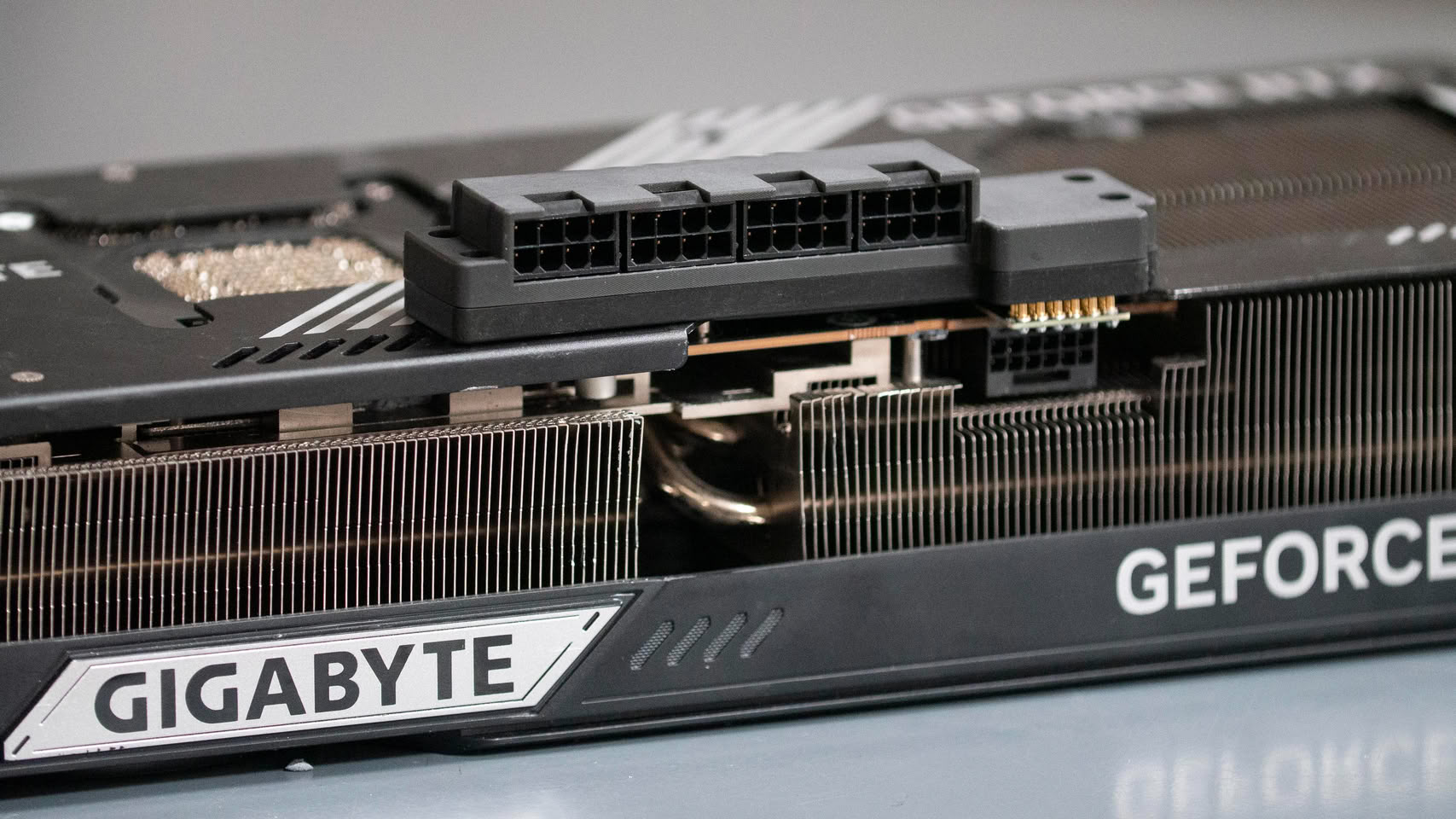
This mod was demonstrated by Reddit user DallasGrave. Different from common adapter cables, this solution uses a customized printed circuit board (PCB), directly connected to the original power supply contacts of the graphics card, and four PCIe 8-pin power supply interfaces are installed on the circuit board. In this way, the power supply can directly supply power to the graphics card through four sets of traditional interfaces, without having to let all the current pass through the original 12V-2x6 interface.
The core goal of this modification is to reduce the current density at local connection points in the power supply system of high-power graphics cards and reduce the risk of overheating caused by poor contact, uneven load distribution, or excessive contact resistance.
The standard total board power consumption of RTX 5090 is about 575 watts, and it is powered by a 12V-2x6 interface. The interface uses multiple power contacts to transmit high currents and additional signal contacts to identify power supply capability and connection status. Compared with traditional multiple 8-pin interfaces, the 16-pin interface is more compact in structure, but it also places higher requirements on contact quality, plug insertion status, cable manufacturing quality, and current distribution.
Under high load conditions, if some contacts do not make sufficient contact, or if the current distribution between different contacts is uneven, the heat generated by the local resistance may increase rapidly. Even if the total current flow across the entire connector does not exceed design expectations, some contacts may still heat up abnormally because they are carrying too much current.
This issue is not solely determined by the power rating of the interface. The actual temperature of the connector also depends on the contact resistance, wire gauge, terminal crimp quality, whether the plug is fully inserted, and the load distribution between the contacts. Therefore, simply increasing the number of interfaces does not automatically guarantee safety, but spreading the current properly does help reduce the burden on some wires and connection points.
The four-interface solution designed by DallasGrave solves this problem by changing the power supply path.
According to data published by the modder, under a 600-watt load, each wire carries about 4.1 to 4.4 amps, which is nearly half the current of a single wire in a standard 16-pin power supply scheme. Modifiers also said that compared with the original power supply method, the temperature dropped by about 20 degrees Celsius after modification.
In higher power tests, the temperature of the custom PCB was said to be about 45 degrees Celsius when the power supply module was running at an 800-watt load. However, this test used an RTX 5090 modified with a shunt resistor, allowing the graphics card to exceed normal power consumption limits, so the results cannot be directly regarded as the performance of an ordinary RTX 5090 in daily use.
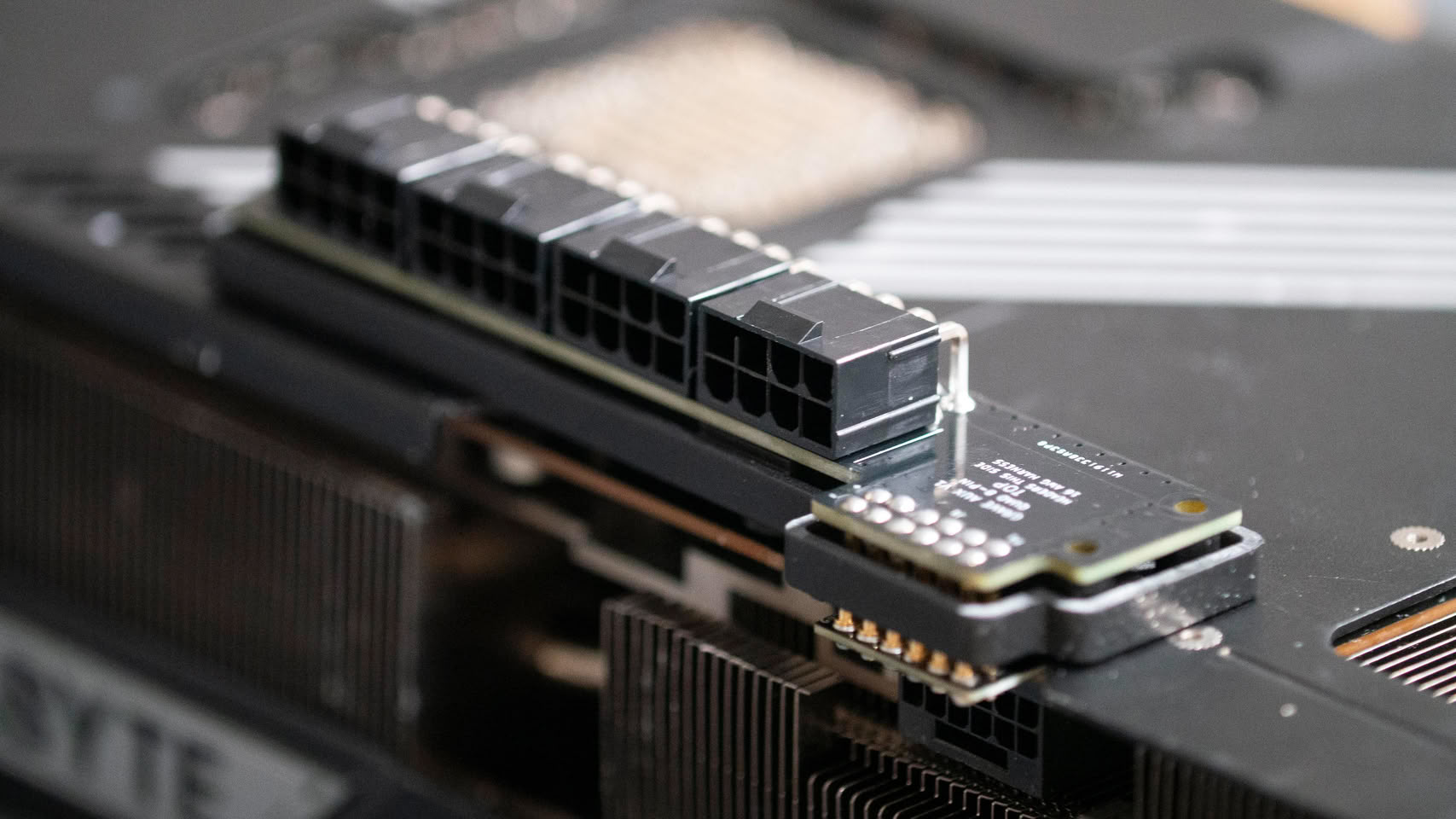
The modder also stated that this set of modules can independently provide power to the graphics card, or can be used in conjunction with the original 16-pin interface. In the mode of completely using four 8-pin interfaces for power supply, the original 12V-2x6 interface is no longer the channel that the graphics card must pass through for power supply, thereby bypassing the controversial interface itself.
This is obviously different from some modification plans that have appeared before. Some early solutions only added two additional 8-pin interfaces to share part of the current with the original 16-pin interface. The graphics card still needed to complete the main power supply through the 16-pin interface. This four-interface design attempts to establish a complete power supply path that does not rely on the original 16-pin interface.
From an electrical principle point of view, adding parallel power supply paths can reduce the current carried by each path. However, even distribution of current depends on the resistance of each path, wire length, connection quality, and circuit board trace design. Only when these conditions are reasonably controlled, increasing the number of interfaces can effectively reduce the load on a single connection point.
The traditional PCIe 8-pin power supply interface is usually designed with a rated power of 150 watts per interface. The four 8-pin interfaces can provide a total of 600 watts of power supply under this rated standard, which is in a similar range to the RTX 5090's standard board power consumption of approximately 575 watts.
But this does not mean that the four 8-pin interfaces can provide 600 watts of power unconditionally and safely under any circumstances. The actual power supply capability is also limited by the power cable, connector quality, graphics card PCB design and the power supply itself. Especially after overclocking or lifting power consumption restrictions, the graphics card may have significantly higher power consumption requirements than standard specifications, and the power supply system must also have corresponding design margins.
This modification has been tested to 800 watts, but the currently public information is not enough to prove that it can withstand this power stably for a long time, nor can it prove that all RTX 5090 models can safely adopt the same design. Continuous operation with high power consumption, thermal cycling at different ambient temperatures, long-term connector wear, and protection mechanisms under abnormal conditions all require further verification.
The modder stated that this design is not limited to a certain RTX 5090, and is also developing adapted versions for a variety of graphics cards, including the public Founders Edition. The plan also includes the production of custom backplanes to make the appearance of the new power supply modules closer to the original factory design. In addition, the modder is preparing videos showing the installation process, real-time temperature and current data, and plans to conduct a 24-hour load test.
However, the final selling price and commercialization arrangements of related products have not yet been fully determined. The modder also mentioned that it plans to offer installation services by mailing graphics cards, and expects to open a related business in Las Vegas in December. The above arrangements are still part of the project plan, and whether they can ultimately be implemented as scheduled remains to be confirmed.
For ordinary users, this kind of modification is not a conventional upgrade accessory that can be easily plugged and unplugged. Customized PCB needs to establish a reliable connection with the original power supply circuit of the graphics card, and the installation process involves graphics card hardware modification and professional welding. Improper operation may damage the graphics card and even cause short circuit, overheating or other electrical failures.
In addition, graphics card manufacturers generally do not include such non-original power supply modifications under standard warranty coverage. Even if the temperature data after modification performs well, it cannot be concluded that its long-term reliability has been fully verified.
This solution has attracted attention because it touches on an important issue in the power supply design of high-power graphics cards: when the power consumption of graphics cards continues to increase, how to balance power supply density, connector volume and long-term reliability in a limited space.
The advantage of the 16-pin power supply interface is that it is small in size, highly integrated, and can transmit large power in a relatively compact space; the traditional 8-pin interface has a long application history, and its connection structure and power supply method have been widely used. The four-interface modification solution attempts to increase the number of connection points and wires in exchange for a lower single-channel current load, but it also increases the number of interfaces, wiring complexity, and installation requirements.
Therefore, this modification does not simply prove that the traditional 8-pin interface is definitely better than the 12V-2x6 interface. What truly determines the safety of power supply is the comprehensive performance of multiple factors such as connector design, contact quality, current distribution, wire specifications, temperature control, and protection mechanisms.
If subsequent tests can prove that this solution has stable performance under standard power consumption and long-term high load, it may be able to provide a power supply design idea for some high-power graphics cards that is different from the original 16-pin interface. However, until more complete test data is obtained, results such as a temperature drop of about 20 degrees Celsius, a PCB temperature of about 45 degrees Celsius under an 800-watt load, and a nearly half reduction in the current of a single wire should still be regarded as test data published by the modifier, rather than a universal conclusion that has been independently verified.
As graphics card power consumption continues to increase, the reliability of power supply connectors will become an increasingly important issue in high-end graphics card design. This RTX 5090 modification with four 8-pin interfaces demonstrates a technical direction worthy of attention, but whether it can become a truly reliable and scalable solution still depends on subsequent independent testing, long-term operating performance, and actual installation conditions.
Comments