
Abstract:
Microsoft has recently sparked discussion again over the actual use of Copilot. After Microsoft CEO Satya Nadella announced a large-scale update for Copilot and described it as a "new operating system for work," a developer relations engineer asked directly on social platforms: "Seriously, is anyone using Copilot?" This slightly ironic comment quickly received about 200,000 views.
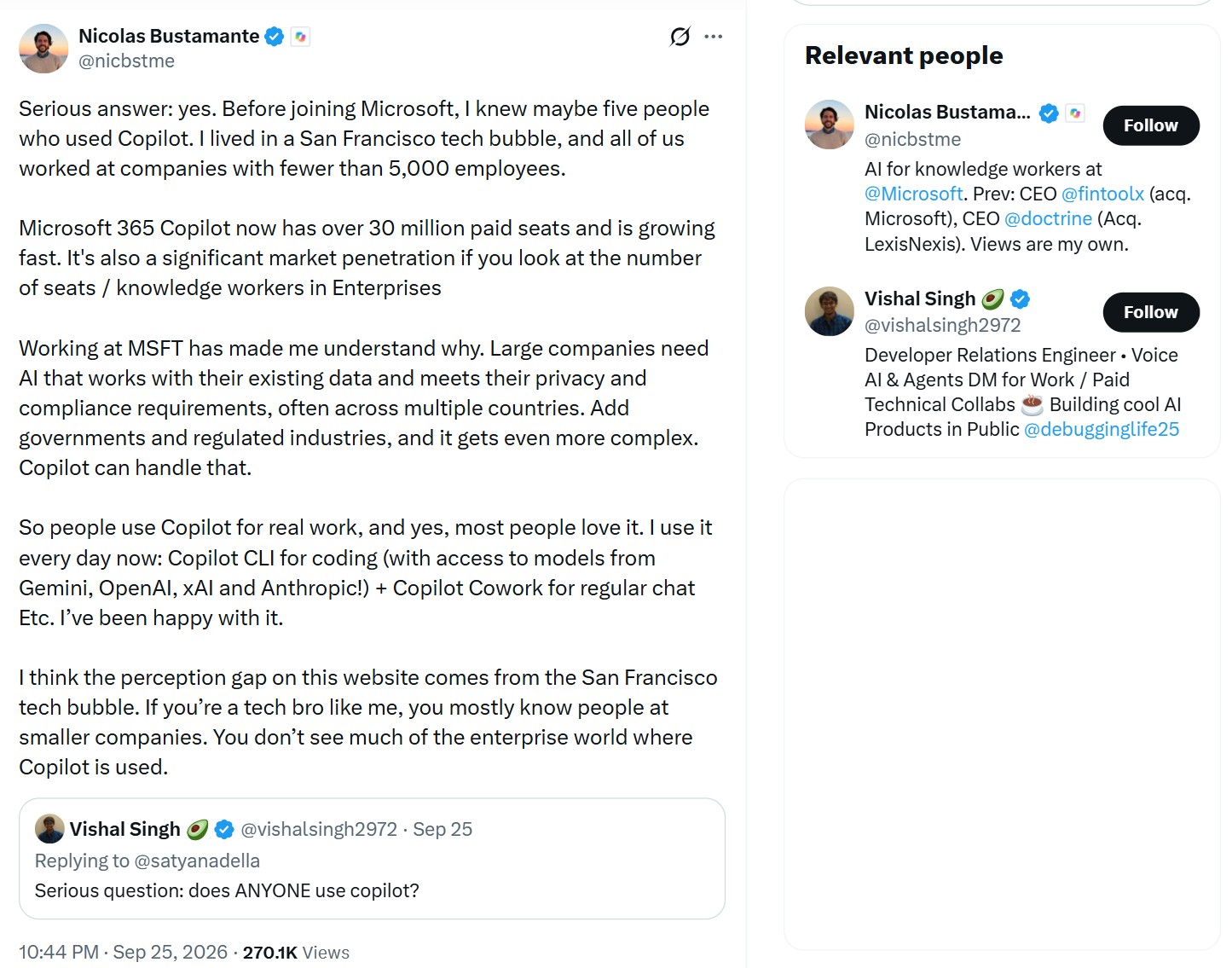
Unlike Microsoft, which usually remains silent when faced with similar questions, Microsoft employee Nicholas Bustamante later responded publicly that the answer was "yes." He believes that the impression that "no one uses Copilot" largely stems from the information bubble formed by people in the San Francisco technology industry. In reality, there is a huge difference in the usage needs of large corporate customers and employees of technology startups.
A key figure given by Bustamante is that Microsoft 365 Copilot currently has more than 30 million paid seats. Microsoft also confirmed this figure during its earnings call in July this year, saying that Copilot's weekly usage has reached a level comparable to Outlook and Teams.
However, 30 million paid seats does not mean that 30 million people actively open Copilot every day. When an enterprise purchases a license, it can only prove that these accounts have usage rights, but it cannot prove that all seats are actually used, let alone the frequency of use. Therefore, after Bustamante expressed his views, many netizens immediately pointed out this issue.
A user said that his company did pay for Copilot, but he did not use it at all, so he asked whether this situation would also be counted among the 30 million seats. Some users believe that many people "use" Copilot only because it has been integrated into Office software, rather than actively choosing to use this service.
Another netizen compared Copilot to "Teams in the field of AI" and believed that many corporate employees use it not because they choose to use it, but because the company has purchased a complete set of enterprise services such as Microsoft Azure and Microsoft 365. Since Copilot is bundled with the enterprise software system, employees naturally have permission to use it.
Bustamante tried to explain this phenomenon from the perspective of corporate customers. He said that before joining Microsoft, he probably knew only five Copilot users because he lived in the "San Francisco technology bubble" at the time, and these people worked in companies with less than 5,000 employees.
He believes that discussants on technology and artificial intelligence-related topics on social platforms such as X are more likely to be concentrated among entrepreneurs, developers and employees of small technology companies. Therefore, if a person has been exposed to this type of users for a long time, it is easy to form the impression that "no one uses Copilot".
But large enterprises have different needs for artificial intelligence. Bustamante pointed out that large enterprises need artificial intelligence that can work with existing enterprise data while meeting privacy and compliance requirements, and often need to operate across multiple countries and regions. If you also consider government agencies and heavily regulated industries such as finance and healthcare, data permissions, identity verification, security audits and regulatory compliance become even more important.
In this case, corporate customers may not be most concerned about whether a chatbot has the highest score in a public benchmark test, but are more concerned about whether it can be integrated with the company's existing identity authentication, authority management, and data systems.
This is also the key to Microsoft's attempt to establish the Copilot business model. Microsoft does not necessarily need to let Copilot itself use the most powerful AI model in the industry. Instead, it can focus on identity, permissions, data and compliance capabilities, and then allow corporate employees to access files and business data that they already have access to through Copilot.
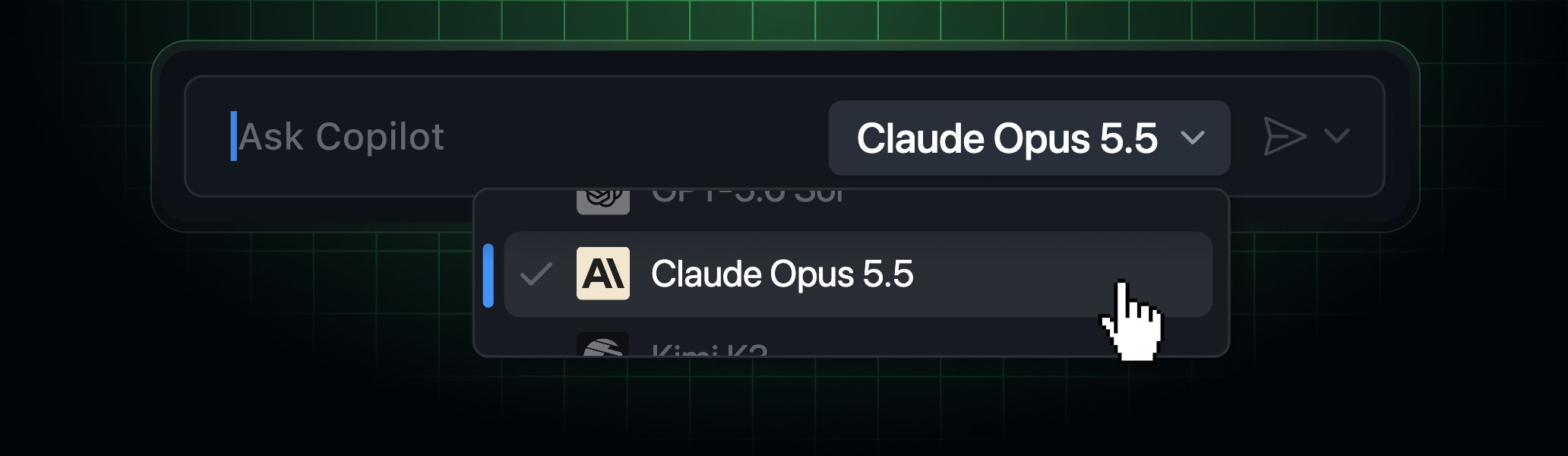
Bustamante also revealed how he uses it on a daily basis. He said that he uses Copilot CLI for programming and calls multiple AI models including Google Gemini, OpenAI, xAI and Anthropic through Copilot; he uses Copilot Cowork for daily chats.
However, this does not mean that all Copilot users can freely call the models of these four companies. Which models are actually available depends on the specific package and the organization's organizational strategy. This change itself reflects that Microsoft is gradually weakening the product promotion idea of "Microsoft's own model must be the strongest model", and instead puts more emphasis on allowing users to choose the model suitable for the task, and Copilot assumes the role of unifying the entrance and workflow.
At the same time, there is indeed another side to the data surrounding the 30 million paid seats. Windows Latest previously reported citing its own statistics that the actual adoption rate of Microsoft 365 Copilot is still less than 4.5% three years after its launch, and the proportion of users who actually open Copilot every week is only about 1%. This type of data is not inconsistent with the 30 million paid seats announced by Microsoft, because "paid seats" and "active users" are inherently two different indicators.
Copilot's past development experience on Windows has also exacerbated ordinary users' negative impression of it. Microsoft has designed Copilot as a Windows sidebar and an independent WinUI application, and then further changed its architecture. A version launched in April this year even quietly bundled the complete Microsoft Edge component, increasing its idle memory footprint from less than 100MB to a maximum of about 1GB.
Microsoft has also previously forcibly added Copilot entrances to multiple system applications in Windows 11, including Notepad, screenshot tools, etc. By 2026, the company began to remove some of these Copilot features. This repeated adjustment has given some users the impression that "Microsoft keeps putting it into Windows and then keeps withdrawing it" towards Copilot.
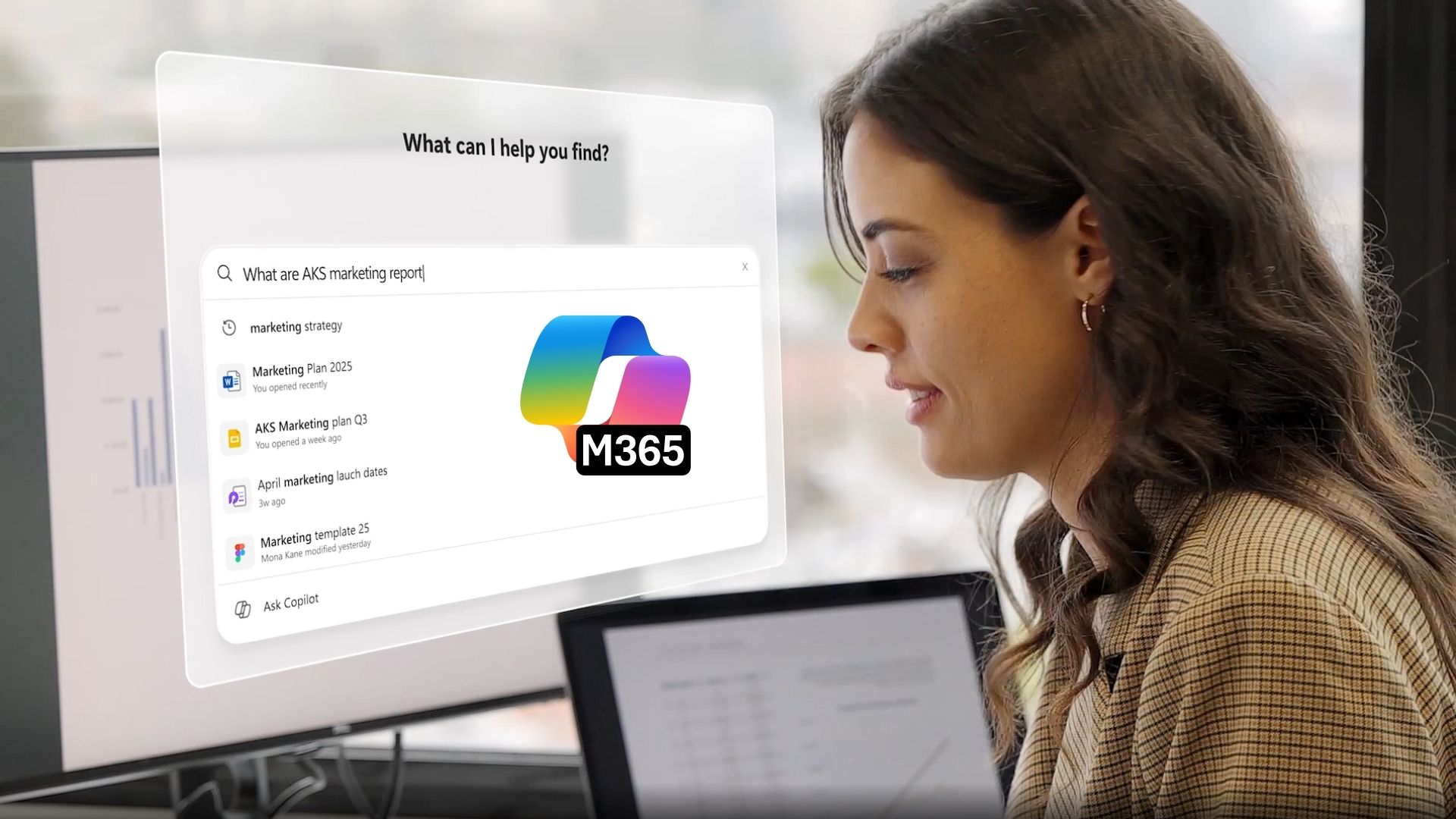
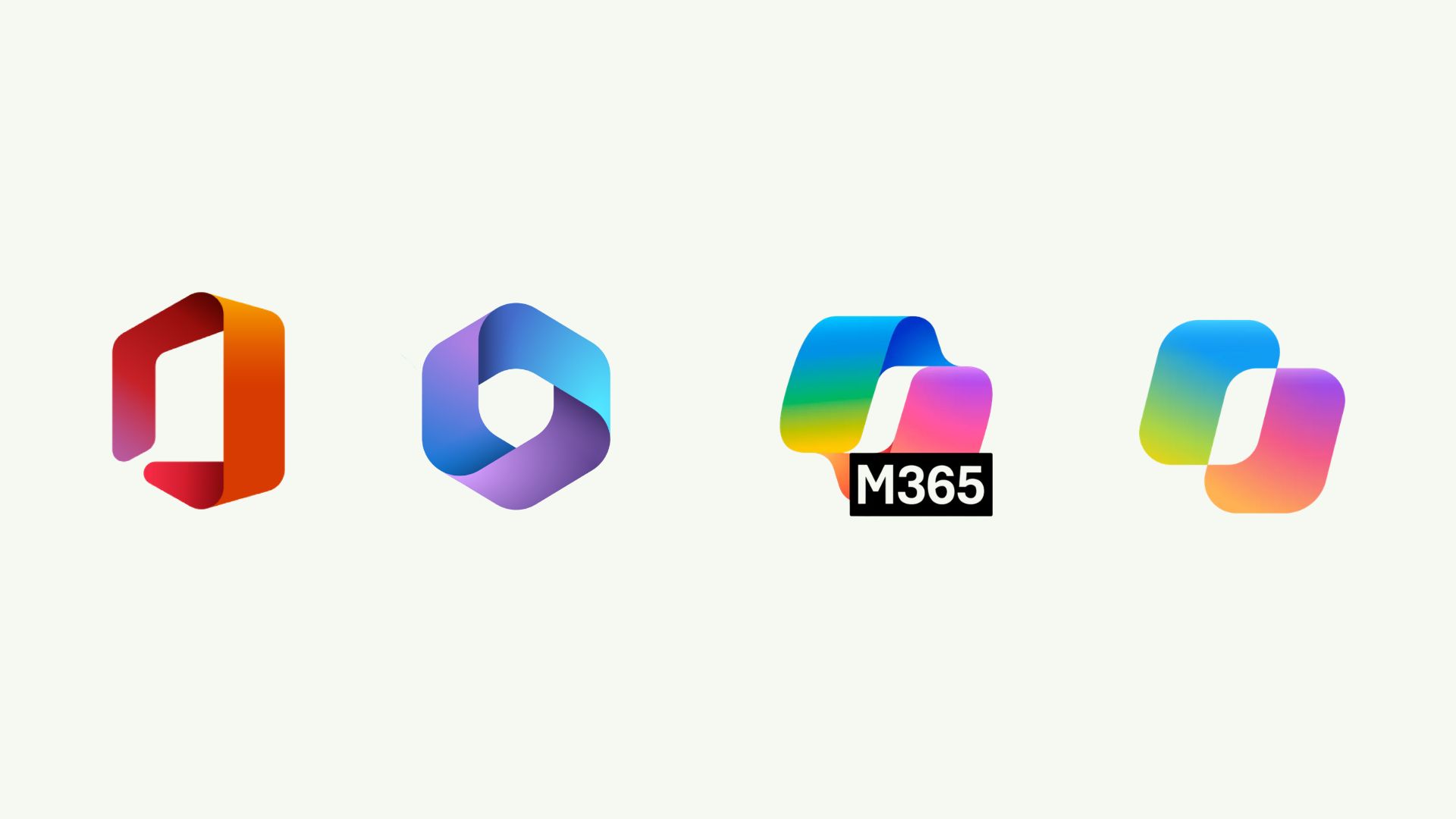
Copilot's brand system has also undergone many changes. The name adjustments between Microsoft Office, Microsoft 365, Microsoft 365 Copilot and Microsoft Copilot make it difficult for ordinary users to accurately understand the relationship between different products. Microsoft even merged the social media accounts of Microsoft 365 Copilot and Copilot just one day before Nadella announced the new version of Copilot.
Therefore, a user who only understands Copilot as an extra button in Office, or a web application that takes up a lot of memory, and an employee who uses Copilot every day to search the company's internal files and access business data through the enterprise permission system may naturally have completely different evaluations of this product.
Microsoft now hopes to change this situation with the new version of Copilot.
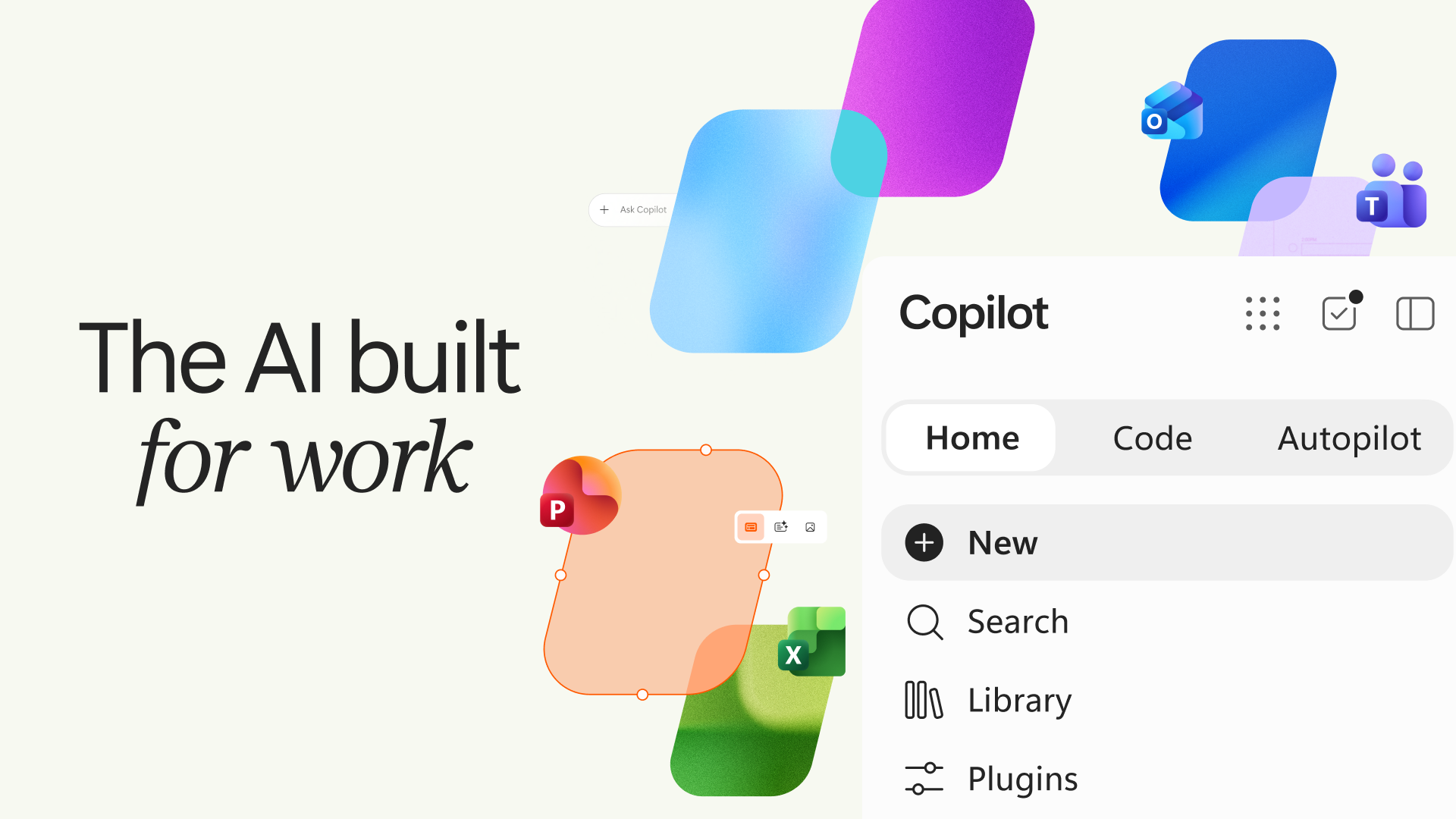
The new Copilot announced by Nadella is no longer just a chatbot in the traditional sense, but attempts to become a more complete work entrance. The new version of Home integrates Chat and Cowork. Code allows users to create small applications through natural language. Autopilot can continue to perform tasks after the user logs out. Office applications such as Word, Excel, and PowerPoint have also been further integrated into the Copilot application.
Autopilot in particular embodies the "agent-based AI" direction that Microsoft is promoting. Unlike traditional chatbots where users ask questions and wait for answers, agents can run continuously in the background to perform a series of tasks based on user authorization. Microsoft hopes to transform Copilot from a tool that requires users to actively open it to an AI platform that can actively participate in the workflow.
This is why Microsoft calls the new version of Copilot a "new operating system for work." If this model ultimately succeeds, Copilot's value will no longer be just answering questions, but becoming a unified portal that connects enterprise data, applications, AI models, and automated agents.
Therefore, the question "Does anyone use Copilot?" actually includes two completely different questions: how many people have Copilot, and how many people actually actively and continuously use Copilot. For the former, Microsoft has already given an answer of 30 million paid seats, while for the latter, it still lacks a public number that can directly correspond to it.
The core point that Bustamante wants to express is that the impression of Copilot formed on social platforms may not represent the true situation of the large enterprise market. Microsoft hopes to further narrow this cognitive gap through the new version of Copilot, so that employees who originally obtained Copilot permissions for corporate procurement have a real reason to actively open and continue to use it.
Comments