
Abstract:
Microsoft CEO Satya Nadella recently said when talking about the Xbox business that he "feels very good" about the game studios and IP portfolio currently owned by Xbox, and said that the business "streamlining" work being promoted by the new Xbox CEO Asha Sharma is "very worth seeing." This statement comes at a time when Xbox is undergoing a large-scale restructuring. Microsoft has previously announced that it will cut about 3,200 jobs in fiscal year 2027, and will successively sell, split or integrate many of its game studios.
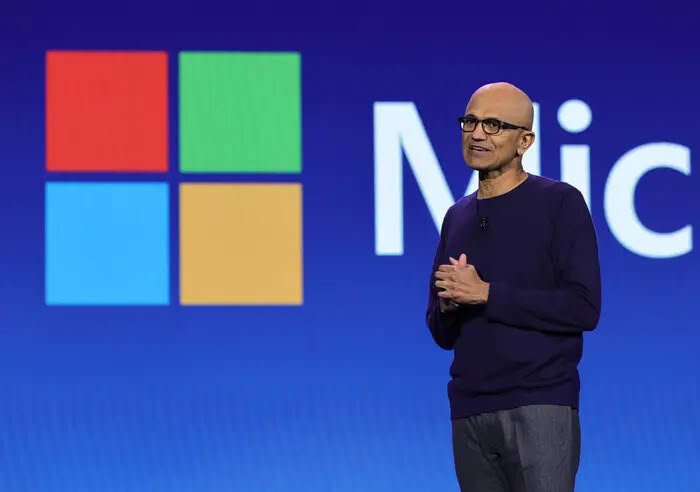
Nadella talked about the current situation of Xbox in an interview with the "Sources" podcast. When asked about the current development and future direction of Xbox, he said that he "feels very good" about the current foundation of Xbox if you look at the current studio lineup, IP portfolio, and ability to make excellent games in the future.
He said that the Xbox team is undergoing a certain degree of business streamlining, and Asha Sharma is also driving this process. "I feel very good to see these changes happening." Sharma recently became the new head of Xbox, after Microsoft announced that Xbox would undergo one of the largest business restructurings in history.
Just before Nadella made the above remarks, Xbox cut another 268 jobs this week. This is another round of layoffs after announcing about 1,600 job cuts in July this year. Microsoft previously stated that it plans to cut approximately 3,200 Xbox-related positions throughout fiscal 2027, and currently approximately three-quarters of this restructuring has been completed.
Xbox's restructuring not only involves staff reductions, but also includes the reorganization of the studio's organizational structure. Microsoft has integrated Obsidian into the Bethesda system and expanded Activision's responsibilities in some game projects, including letting it be responsible for some of the well-known series such as Halo.
Meanwhile, Double Fine and Compulsion Games have split from Xbox and re-established themselves as independent studios. Undead Labs is also seeking a new ownership arrangement, while Hellblade developer Ninja Theory faces the possibility of being shut down. Microsoft said that one of the goals of this adjustment is to reduce the number of business departments, integrate teams with similar working methods, and focus more resources on core games and important IP.
Xbox's previously announced restructuring plan also clearly proposed to compress the management level to a maximum of five layers, and further reduce it to three layers where possible, while reducing supplier expenditures, sharing some technical services, and improving decision-making efficiency through a flatter organizational structure.
Microsoft explained at the time that Xbox’s organizational scale has continued to expand in recent years, resulting in teams becoming more dispersed, with some work even requiring as many as 14 layers of management. At the same time, the size of the Xbox platform team has expanded by about 40% compared to the beginning of this generation, but the number of players and game time have declined. Therefore, Microsoft believes that organizational complexity has begun to affect the speed of decision-making and the division of responsibilities.
Nadella’s statement this time is basically consistent with Xbox’s previously announced restructuring direction. He said that Microsoft now has "very good" game IP and studio resources, and the next step that needs to be solved is how to establish a long-term sustainable business model so that more people can have access to games.
He said that Microsoft has always wanted to be an excellent game publisher and an excellent platform provider, and hopes that its business can cover PC and Xbox platforms. According to him, this goal has not changed.
Microsoft has previously significantly expanded its cross-platform strategy for the Xbox gaming business. More and more first-party Xbox games are starting to land on competitive platforms such as PlayStation, while Microsoft continues to promote the linkage between PC, Xbox consoles and Game Pass. The company hopes to change the business model that has traditionally relied on Xbox console hardware sales by expanding the size of its gaming audience.
However, this strategy still needs to prove its long-term commercial value. Xbox chief Asha Sharma has previously said that Xbox hopes to return to growth in the next fiscal year, and the current restructuring is part of achieving that goal.
Microsoft's restructuring documents released this year also admitted that the profit margin of Xbox's current business is significantly lower than that of other large game publishers and platform companies. Microsoft said that at the beginning of the ninth-generation console cycle, Xbox had a relatively small console user base and a high cost structure. The company subsequently bet on Game Pass, cross-platform distribution, and expanded content lineups. However, although these businesses created value, they did not grow at the expected rate.
In this case, Microsoft had continued to increase team size, investment and development cycle, hoping to eventually obtain better results. However, the overall competitive environment of the game industry and changes in the hardware market further increased the pressure, so the company finally decided to make comprehensive adjustments to Xbox.
It is worth noting that Microsoft has not stopped investing in the Xbox gaming business. The previous restructuring plan made it clear that Microsoft will still invest a lot of money in Xbox this fiscal year, but will pay more attention to investment focus, cost discipline and resource allocation efficiency in the future.
Nadella also did not reveal what new business model Xbox will adopt in the future. He simply said that the company needs to "invent the right, sustainable business model" to bring games to more and more people.
Therefore, the current core direction of Xbox in the future can still be summarized in three points: using existing large-scale IP and studio resources to produce more high-impact games; expanding the game audience through PC, Xbox and other platforms; and improving business efficiency through organizational streamlining and cost control.
For Xbox, what really needs to be verified next is whether this more streamlined organizational structure can maintain sufficient game development capabilities while reducing operating costs after experiencing large-scale layoffs, studio adjustments and business restructuring, and ultimately promote the Xbox business to regain growth.
Comments