
Abstract:
Microsoft is accelerating the performance optimization of Windows 11, focusing on improving system response speed, application startup efficiency and memory management capabilities, hoping to maintain a smooth experience for Windows on mid- to low-end devices and new workloads in the artificial intelligence era.
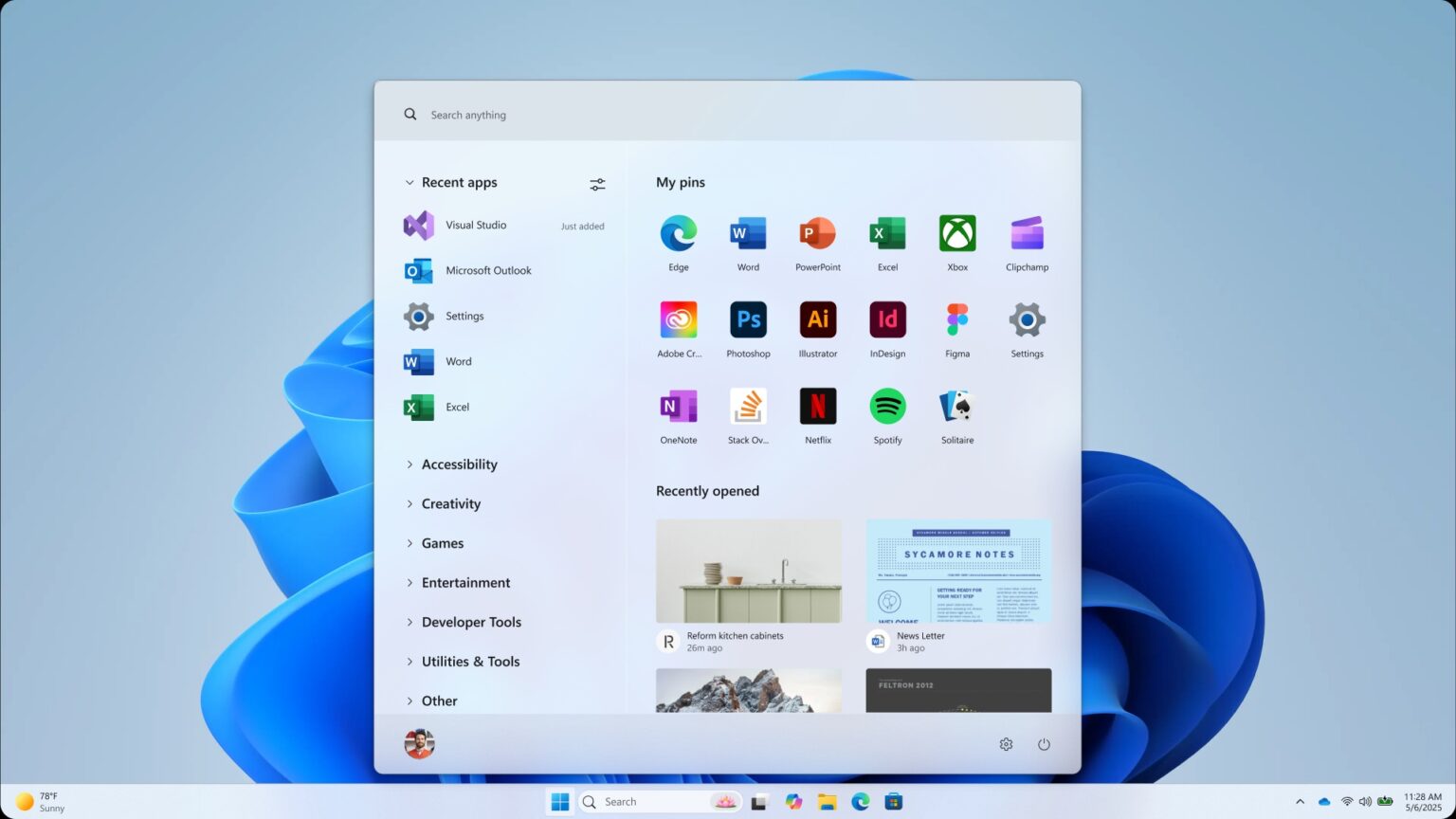
Microsoft said that one of the focus of future optimization is to reduce the memory usage of Windows itself. The development team is re-examining the system resource management mechanism to release more available resources for applications by reducing the operating system's basic memory requirements and improving memory usage efficiency. For users, this means that under the same hardware configuration, more memory space can be used to run software and AI applications.
In addition to memory improvements, Microsoft also continues to promote a technology called "Low Latency Profile". This mechanism will increase the processor frequency to a higher level for a short period of time when the user opens the start menu, search function, notification center or launches an application, completing the task in the shortest time, and then quickly returns to a low-power state.
Microsoft calls this strategy "Race to Sleep", which means completing work quickly and returning to an idle state as quickly as possible. This can not only improve operation response speed, but also help control overall energy consumption.
According to test results where relevant optimizations have been deployed, the startup speed of some applications has been significantly improved. The response time for high-frequency operations, including the start menu, search function, and some commonly used applications, has been shortened compared to the past, and the overall system experience has become smoother.
At the same time, Microsoft is also promoting the migration of Windows core interface components to the WinUI 3 framework. The company believes that the new interface architecture can reduce system overhead during user interaction, thereby reducing latency and improving interface response speed.
File Explorer is also an important target of this round of optimization. Microsoft is improving the responsiveness of search, local file navigation, and right-click menus, and improving the performance of large file copy and move tasks.
For the developer community, Windows Subsystem for Linux (WSL) will also be further optimized. Microsoft plans to improve file access speeds between Linux and Windows environments, enhance network performance, and simplify the installation and configuration process.
Many users who have recently upgraded to Windows 11 26H2 have also found that system memory usage has decreased. Some users have reported that under the same hardware environment, the memory usage of the system in idle state is reduced by about 2GB to 3GB compared with before. At the same time, application startup speed and desktop operation responsiveness have also been improved.
However, Microsoft has not officially confirmed that all memory usage decreases are directly from the 26H2 version itself. Since multiple performance optimization projects have been gradually rolled out through monthly updates over the past few months, many improvements have actually entered the system in advance, but have been more fully enabled in the 26H2 version.
Industry analysts believe that as local artificial intelligence models, Copilot functions, and various generative AI tools gradually become an important part of the Windows ecosystem, the resource management efficiency of the operating system itself has become more important than ever. Rather than relying solely on stronger hardware configurations, Microsoft is trying to improve existing hardware utilization through underlying optimizations.
Judging from the currently announced route, Microsoft will continue to promote Windows performance improvements in three major directions in the next few years, including reducing memory usage, shortening user interface response time, and improving application startup speed. In the context of rapid growth in AI application demand and continued high memory costs, these optimizations are expected to become an important part of the future development of the Windows platform.
Comments