
Abstract:
Microsoft executive Ryan Roslansky will leave the company at the end of 2026. This executive, who has worked at LinkedIn and Microsoft for nearly 18 years, once served as CEO of LinkedIn. He took charge of Microsoft Office business last year and further took over Microsoft Teams-related businesses this year. His departure will also trigger a new round of management adjustments at Microsoft.
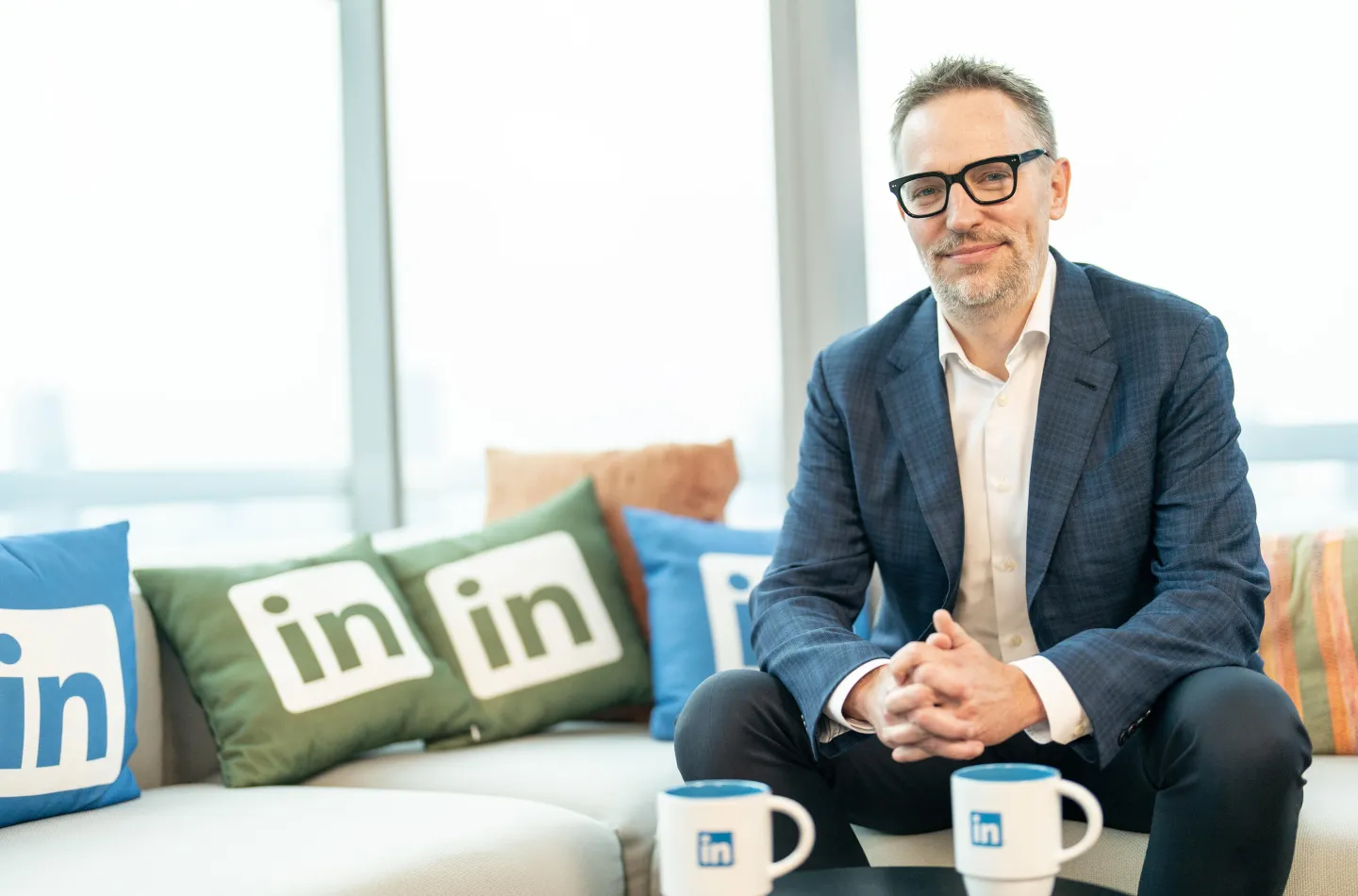
Microsoft CEO Satya Nadella announced the news in an internal email sent to employees on October 1. He said that after discussing future development routes and work arrangements with Roslansky, both parties believed that now was the right time to make adjustments. Roslansky will stay on through the end of the year and serve as an advisor to Nadella to assist with the management transition. Nadella also said that when Roslansky left, the relevant business was already in good condition.
Roslansky joined LinkedIn in 2009, initially as head of product. At the time, LinkedIn was still an independently operated company. In 2020, he succeeded Jeff Weiner as LinkedIn CEO. During his tenure as CEO, the number of LinkedIn members grew from approximately 700 million to more than 1.3 billion, and the company's business scale also expanded significantly. Microsoft acquired LinkedIn in 2016 for approximately $26.2 billion.
In 2025, Roslansky's responsibilities were further expanded. He moved from LinkedIn CEO to executive vice president in charge of LinkedIn and Microsoft Office business, and began to be responsible for Word, Excel, Outlook and Microsoft 365 related products at the same time. In April this year, Microsoft appointed Dan Shapero as LinkedIn CEO, and Roslansky continued to be responsible for the broader Microsoft business. Earlier this year, he was given management responsibilities for Microsoft Teams.
A direct reason for Roslansky's departure is that Microsoft hopes that relevant responsible persons will work more permanently and intensively in Redmond, where the company is headquartered. Roslansky said in an internal letter to the team that he believed that if he wanted to truly lead the next phase of the work, he would need to stay in Redmond full-time every day. However, his life and that of his family were already rooted in the San Francisco Bay Area, so he ultimately chose to leave Microsoft rather than move to Washington state.
Roslansky’s departure time is also quite special. Microsoft just launched a new Copilot product strategy last week, positioning Copilot as a new "operating system" for work, trying to integrate different AI models, devices and work tasks into a unified software experience. In the internal letter, Nadella specifically affirmed Roslansky's work in this direction over the past year, saying that his team has completed the integration of product, engineering and design infrastructure to lay the foundation for the next stage of development.
With Roslansky's departure, Microsoft will also readjust the management structure of Office and Teams. The Office and Microsoft Teams related teams will be transferred to Charles Lamanna and incorporated into the Microsoft Copilot, Agents and Platform, also known as CAP organization. Meanwhile, Microsoft chief design officer Jon Friedman will instead report to Copilot head Jacob Andreou.
LinkedIn will not change its CEO again because of Roslansky's departure. Dan Shapero will continue to serve as CEO of LinkedIn and report directly to Nadella; LinkedIn head of technology Mohak Shroff will also continue in his current role and also report directly to Nadella.
In his farewell letter, Roslansky reviewed his experience from the early days of LinkedIn to the Microsoft era. He said that Jeff Weiner became a key figure in his entry into LinkedIn in 2009, and his career experience in the past nearly 18 years has been centered around a core goal, which is to help people find opportunities and help them do their jobs better. He described this experience as the most important experience in his career.
It is worth noting that Roslansky's departure is not Microsoft's only recent senior management change. Since this year, Microsoft has undergone a number of high-level adjustments, including Phil Spencer, head of gaming business, and Rajesh Jha, head of original experience and device department. As Microsoft further focuses its corporate resources on artificial intelligence, Copilot, and intelligent agents, the organizational structure of traditional productivity businesses such as Office, Teams, and LinkedIn is also undergoing significant changes.
One month before his departure, Roslansky also publicly warned that office documents generated entirely by artificial intelligence may trap employees in a "doom loop": if companies do not use AI carefully, they may end up using expensive AI systems to evade real writing and reading work and produce a large amount of monotonous text that lacks substance. Now, he himself will leave the company at a critical stage when Microsoft is comprehensively promoting AI to reconstruct office software, ending his nearly 18-year career at LinkedIn and Microsoft.
Comments