
Abstract:
Scientists have long suspected that the moon's volcanic past may have left numerous tunnels underground. Now, subtle changes in the moon's gravitational field have provided new evidence for this conjecture: Researchers have discovered four suspected lava tube tunnels, each of which may be more than a kilometer wide, while the lunar rock above is only about a hundred meters thick.
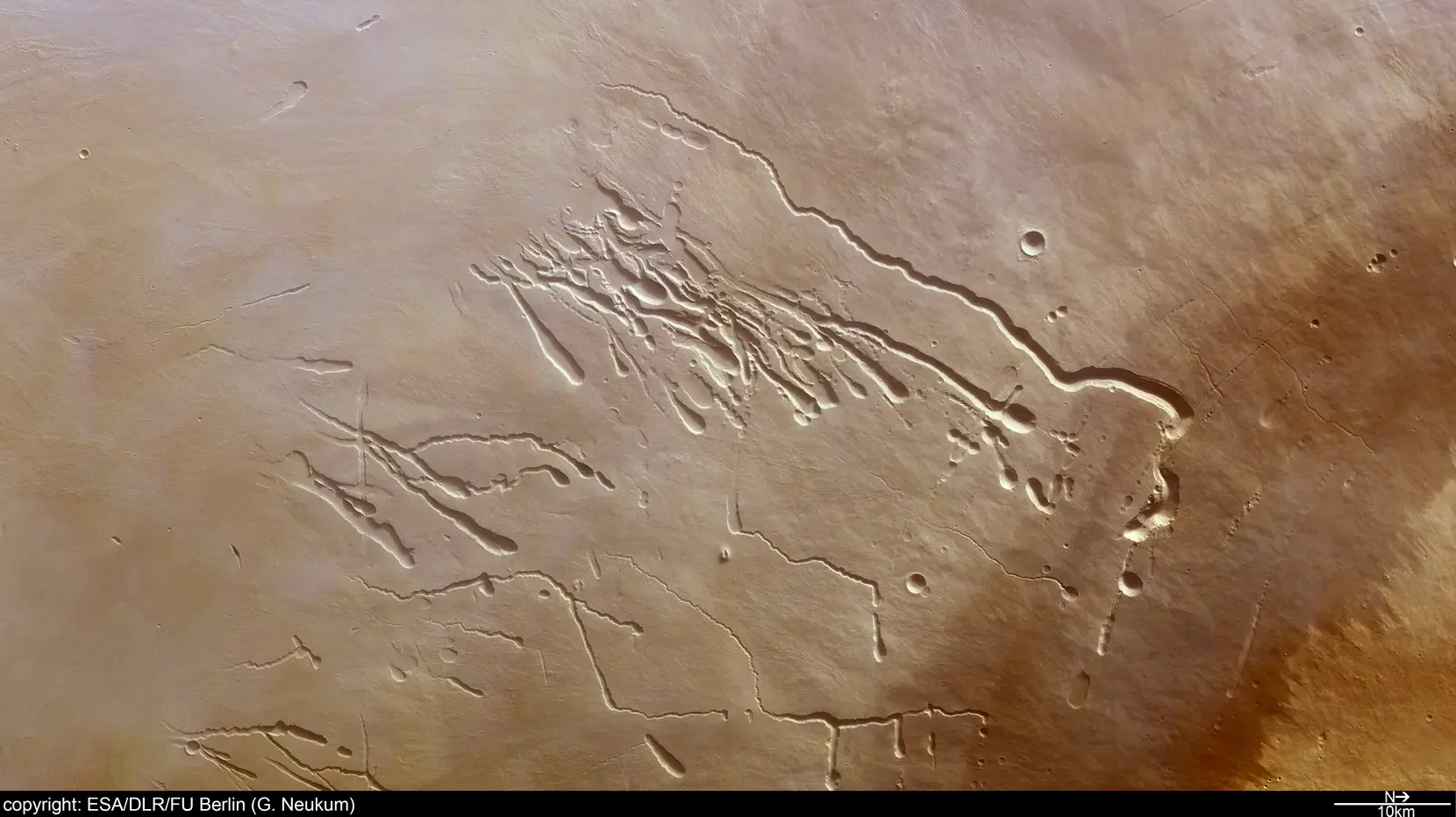
Lava tubes are not unique to the moon. On Earth, the surface of flowing lava cools and hardens, forming an insulating shell within which the lava continues to flow; when the eruption weakens and the lava empties, a long, hollow tunnel is left covered with volcanic rock. Lava tubes on the Moon are likely to be much larger than those on Earth due to the Moon's weaker gravity, higher lava eruption rates, and better fluidity.
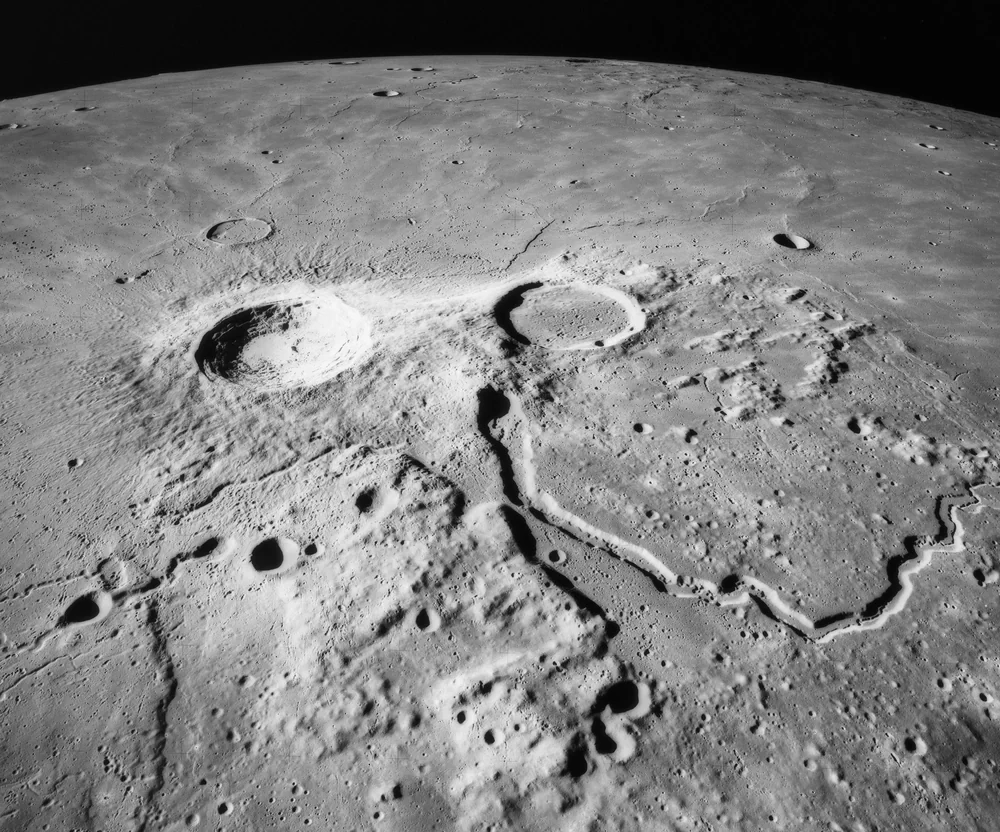
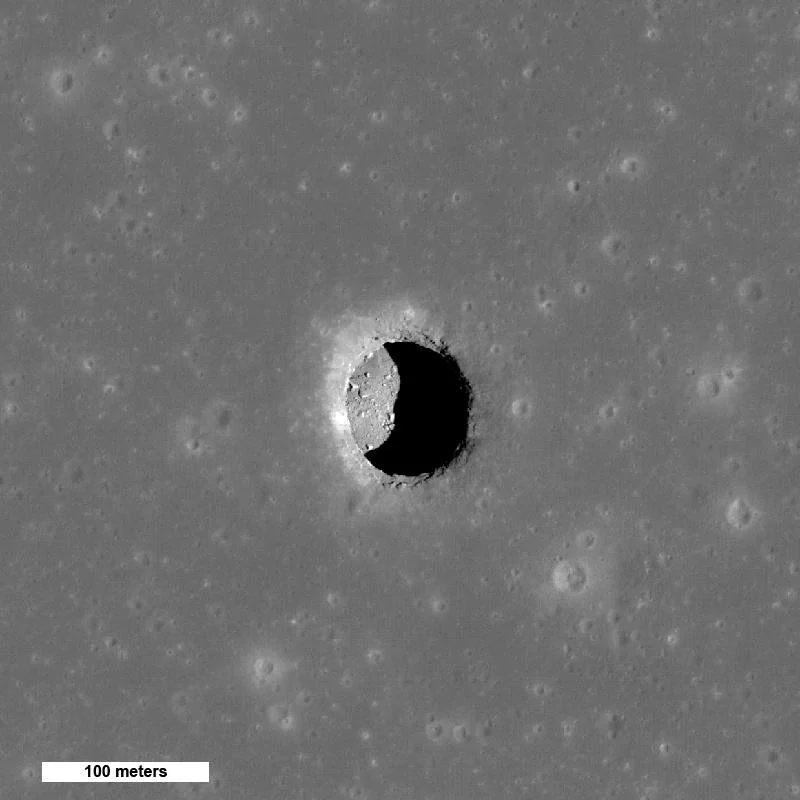
The problem is how to find them. The average distance between the moon and the earth is about 384,400 kilometers. It is very difficult to discern the details of the moon's rugged surface with the naked eye, let alone detect underground structures. However, there are still clues left on the lunar surface: long winding grooves, also known as "moon creeks", may be the remains of collapsed lava tubes; deep pits scattered on the lunar surface may be "skylights" formed by partial collapse of the roof of lava tubes.
Another method is to measure gravity. Hollow tunnels contain less mass than a solid rock of the same volume, so the Moon's gravitational pull is slightly weaker near the lava tube, a difference that can be captured by probes orbiting the moon. Between 2011 and 2012, NASA's Gemini Gravity Recovery and Interior Laboratory probes mapped the moon's gravitational field with unprecedented accuracy. Subsequent research in 2017 and 2024 identified several possible locations for hidden lava tubes, estimated to be up to nine kilometers wide. However, follow-up studies concluded that the tunnels were likely too wide to support the weight of their own roofs.
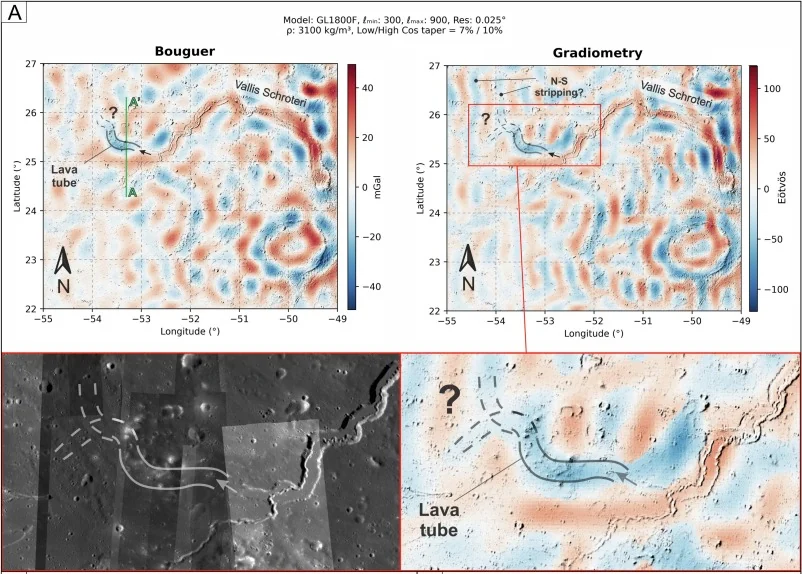
In May 2025, NASA released a higher-resolution lunar gravitational field model. Geoscientists Juan Losalcos and Andrew Dombard of the University of Illinois at Chicago reanalyzed this. They carefully sorted out the tiny depressions in the gravitational field. After excluding the influence of the topography of the lunar surface, they compared these signals with simulations of the possible gravitational characteristics of hollow tunnels of different sizes, and combined the geological features of the lunar surface to find evidence of underground cavities.
In the end, four candidate sites stood out: one is located near the largest lunar stream on the moon, "Schluter Valley", one is located in "Mailan Stream", and the other two are near the "Wollaston Crater". The gravity signals at these locations are consistent with tunnels less than two kilometers wide and about a hundred meters deep. This size is also more consistent with current understanding of the structural limits of lunar lava tubes.
Relevant geological features also suggest that these four tunnels may not have been formed above the broad lava river, but originated from smaller underground passages, which were then continuously eroded and widened by the flowing lava, drilling out of the cave like a giant "lunar worm" instead of building a shell like a caterpillar.
However, these four locations can only be considered candidate targets and cannot be confirmed yet. Other changes in the density of lunar rocks could produce similar gravitational signals, and gravity data alone cannot directly measure the size of the void. Future radar observations and more detailed geological mapping will hopefully help confirm whether the tunnels are real.
The researchers also noted that well-preserved lava tubes with completely uncollapsed roofs are particularly difficult to find because they rely on surface geological clues. But such primitive tunnels may hold important evidence of lunar volcanism and thermal evolution, even if they are harder to explore. The research has been published in the journal Icarus.
Comments