
Abstract:
As the number of games on the Steam platform continues to grow, Valve is facing increasing pressure on game review. The company recently admitted that the number of review requests for Steam store pages and game versions has increased significantly in the past few months, resulting in a backlog for the review team. Currently, a game can take up to 12 working days from submission for review to approval, whereas before it usually only took 3 to 5 working days.
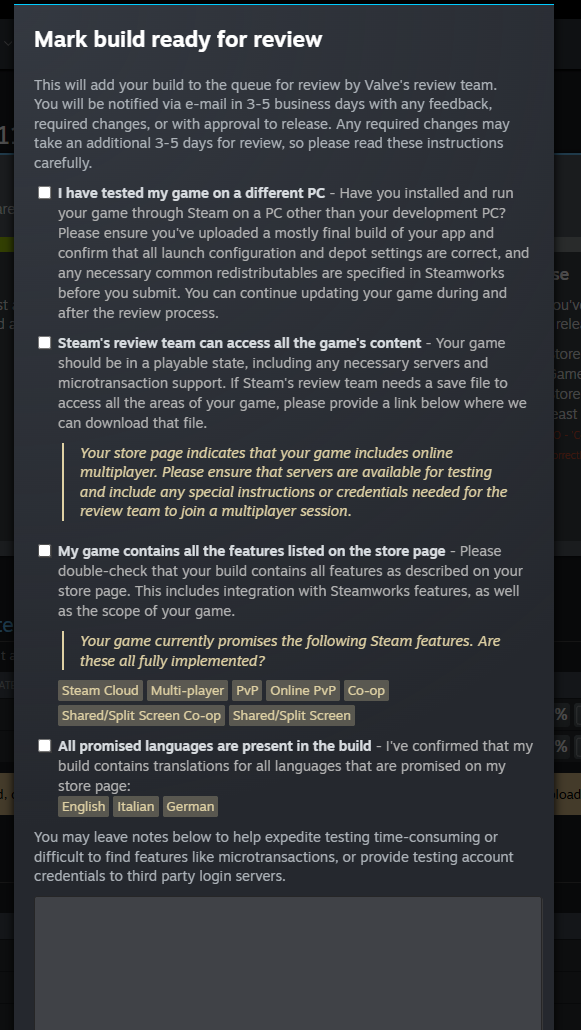
Valve issued an announcement on the Steamworks developer community on November 3, explaining the reason for the review delay, and announced adjustments to the game submission review process, hoping to reduce the time spent by reviewers repeatedly checking the same game by improving the integrity of content submitted by developers.
This review backlog has had a real impact on independent game developers. Some development teams had originally determined the release date of the game, but due to the delay in completing the Steam review, they had to postpone the release plan. For independent studios with limited funding and staff, release date delays not only mean disrupted marketing arrangements, but may also affect crowdfunding delivery, media promotion and cooperation with publishers.
Valve stated that an important reason for the current extension of the review time is that a large number of submitted game versions need to be re-reviewed. Some developers did not fully test the actual operation on the Steam platform when submitting for the first time, causing reviewers to require resubmission of the version after discovering problems, further increasing the review workload.
To reduce this type of situation, Valve is revising the checklist that developers need to complete before submitting a version of their game. One of the new requirements is that developers must actually run the game through the Steam client for at least five minutes, rather than just launching the game executable directly in the development environment.
Valve explained that even if a game can be launched normally by the developer running the program directly, it does not mean that there will be no problems when it is installed and run on the Steam platform. For example, developers may have ignored factors such as the Steam installation directory, startup parameters, dependent components, and platform-related configurations. These issues are often only exposed when the game is installed and launched through the Steam client.
In addition to actual running tests, the new requirements also include confirming that the game's achievement system is ready, and checking whether the public runtime libraries required by the game can be installed correctly.
Among them, the public runtime library mainly includes components such as DirectX and Microsoft Visual C++. Many PC games rely on these running environments to start properly. If developers do not configure related dependencies correctly, players may encounter startup failures or missing components errors when installing the game for the first time.
Valve hopes that developers will complete these basic checks before submitting for review, thereby reducing the cycle of reviewers finding problems and returning versions, waiting for developers to fix them, and then resubmitting.
It is worth noting that Valve has not stated that it will solve the current backlog problem by massively adding reviewers, but will focus on optimizing the submission process and reducing repeated reviews. The company said it will continue to roll out more improvements to the build review process in the future.
Steam has become one of the largest PC digital game distribution platforms in the world, with a large number of independent developers and large publishers submitting new games every year. As development tools continue to become more popular, the threshold for game production has been lowered, and the number of works entering the Steam store continues to increase. In particular, the development of generative AI tools allows small teams to complete some art, programming and content production work faster, and the platform review system is also facing new workload pressure.
However, this Valve announcement did not directly attribute the review backlog to AI-generated games, but clearly pointed out that the recent significant increase in the number of store page and game version submissions, as well as the extra work caused by repeated reviews, are important reasons for review delays.
For developers, the new regulations mean that they need to pay more attention to the real Steam operating environment test before submitting a game version. They can no longer judge that the game has met the submission standards based on the startup results in the development environment. For players, the extended review time may mean adjustments to the official release dates of some independent games.
Valve’s adjustment also reflects an increasingly obvious problem that the Steam platform is facing: game development and submission speeds continue to increase, but manual review capabilities do not automatically increase simultaneously. How to handle the increasingly large volume of game submissions while maintaining the quality of platform review will become an operational challenge that Valve will continue to solve in the future.
Learn more:
https://steamcommunity.com/groups/steamworks/announcements/detail/696528162820984746?utm_source=SteamDB
Comments