Tesla has spent the past year steadfastly promoting and advancing itsrobotTaxi project Cybercab, many investment banks also regard it as one of the driving forces to increase its future valuation. However, according to media interviews with many company personnel, it was found that the project seemed to be a one-word decision made by Musk, but in fact there were many internal objections.
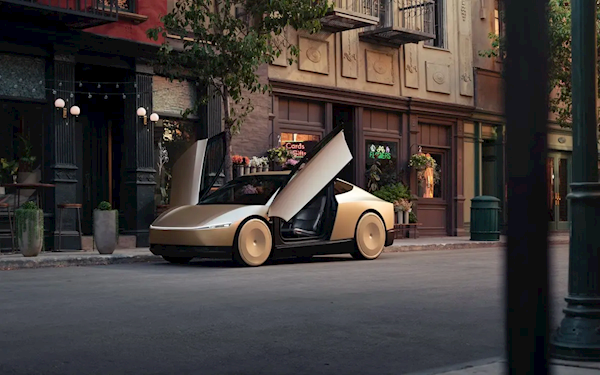
It is reported that at the end of February 2024, Tesla held a final debate on the new economical electric car Model 2. This car is also the $25,000 model that Tesla has previously reported to be promoting. But people familiar with the matter revealed that the car project was eventually canceled during a meeting held by Musk.
At the time, Tesla's automotive program leader Daniel Ho, senior vice president of engineering Drew Baglino, head of business development and policy Rohan Patel, vice president of automotive engineering Lars Moravy and chief designer Franz von Holzhausen all urged Musk to approve production of the new $25,000 model.
But Musk believes that launching a common, $25,000 car is pointless and completely contrary to Tesla's beliefs. Instead, Musk approved the Cybercab project, a so-called robotaxi also known as Robotaxi.
The decision is seen as a sign of Tesla's transformation from an electric car manufacturer to an artificial intelligence car company focused on autonomous driving.
Self-driving taxis have a bleak future
In the past five years, Tesla has only launched one new car, the Cybertruck. However, this car was a failure from a commercial perspective. This has also caused some investors to doubt Musk's decision-making, and this questioning sentiment may further ferment.
An internal research report in the early stages of the Cybercab project stated that Tesla executives had a premonition that the business prospects of robot taxis were not optimistic. The model showed that the return of autonomous driving (FSD) and Robotaxi would be slow and the development would be unstable. In particular, the lack of a regulatory environment would likely make it difficult for taxi services to be rolled out outside the United States.
The report was completed by a team led by Musk's most trusted assistant Drew Baglino. The report assumes that most future car sales will be contributed by fleet operators, and vehicles will be mainly used for ride-sharing services, and individual consumers will also tend to use more self-driving taxis.
Baglino's analysis also used many of the assumptions put forward by Musk, such as that U.S. car sales will plummet from 15 million units per year to 3 million units. Among a series of optimistic scenarios, the report calculated potential demand for 1 million autonomous vehicles per year in the United States. But taking into account competition, it will be difficult for Robotaxi to reach Tesla's current sales level of about 600,000 vehicles per year in the United States.
In terms of revenue, the report believes that in addition to the initial sales revenue of US$20,000 to US$25,000 for Cybercab, Tesla can also earn a total profit of up to three times the selling price of the car through fare sharing with fleet operations.
But this expectation is far lower than Musk's previous vision. In 2019, he proposed that autonomous driving would help Tesla's vehicles reach a value of $100,000 to $200,000.
The internal report concluded by emphasizing that robotaxis face difficulties in expanding into other markets, and as a resultLimited by scale and profitability, Tesla may ultimately suffer losses in the coming years.
However, Musk refuted this analysis report and approved the Cybercab project.
The editor-in-chief of Electrek, an electric vehicle publication, pointed out that one of his major concerns about Tesla is that Musk may not have management partners around him who can help him stay rational. In addition, the investigation may also confirm his suspicion that the strategic shift was one of the reasons why Tesla lost too much top talent last year.
In October 2024, in less than ten days, Tesla’s chief information officer Nagesh Saldi, public policy director Jos Dings, Model X project manager David Zhang and automotive project leader Daniel Ho resigned one after another. Previously, nearly one-third of Tesla employees who reported directly to Musk had chosen to leave.