Google on Tuesday announced its annualGoogle Starline launched at I/O developer conferenceAn upgraded version of Beam technology. Google has partnered with HP to commercialize the system. Google Beam is an AI-powered video communications platform designed to make video chats feel like meeting in person.
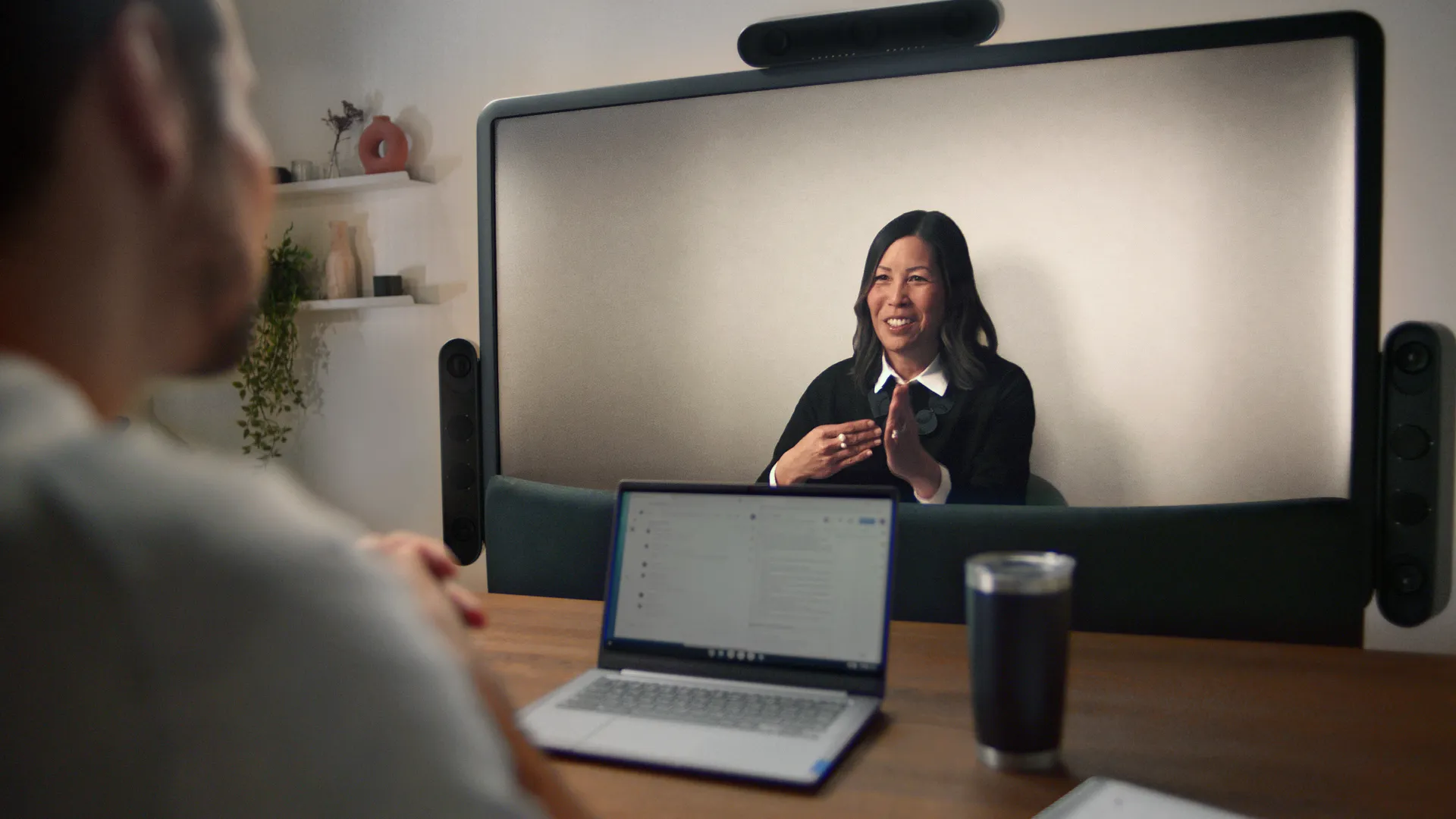
Google Beam uses a six-camera array to capture subjects from different angles. AI video models stitch these perspectives in real time to create 3D characters. Google said the system has near-perfect head tracking capabilities with millimeter-level accuracy and a video frame rate of 60 frames per second.
The idea is reminiscent of the various holographic communication systems seen in movies like Star Wars and Star Trek. Unlike the tiny, low-quality Princess Leia hologram in A New Hope, Beam's design is life-size and lifelike. Google once described this technology as a "magic window."

Google's Starline technology platform is growing and getting a new name: Google Beam.
The platform uses a light field display and does not require any special equipment to be worn. Google also said that voice translation is a new feature provided by Google for Google Meet and may also be applied to Beam in the future.
Google launched Starline as a research project in 2021 and has been testing and improving the prototype. Today's announcement means this technology is about to hit prime time.
Video calls have long been plagued by challenges. For example, difficulty interpreting expressions and gestures. Traditional video chat lacks eye contact. The issue of Zoom fatigue became a hot topic during the height of the coronavirus pandemic. Beam hopes to solve these problems with a more immersive and realistic experience.
Google said HP will share more information about the platform at the InfoComm audio-visual technology show in June. Google is also working with Zoom and other audiovisual companies. Beam is likely to gain a foothold first among large organizations looking to revolutionize the way they handle video conferencing.
The first Beam devices will be available to early adopters later in 2025.