With the successful completion of the first 2-petawatt experiment, ZEUS is poised to push the boundaries of high-field science and provide researchers with powerful new tools to facilitate exploration and innovation. The team continues to upgrade the system and strive to reach its maximum capacity, while user experiments are already underway.
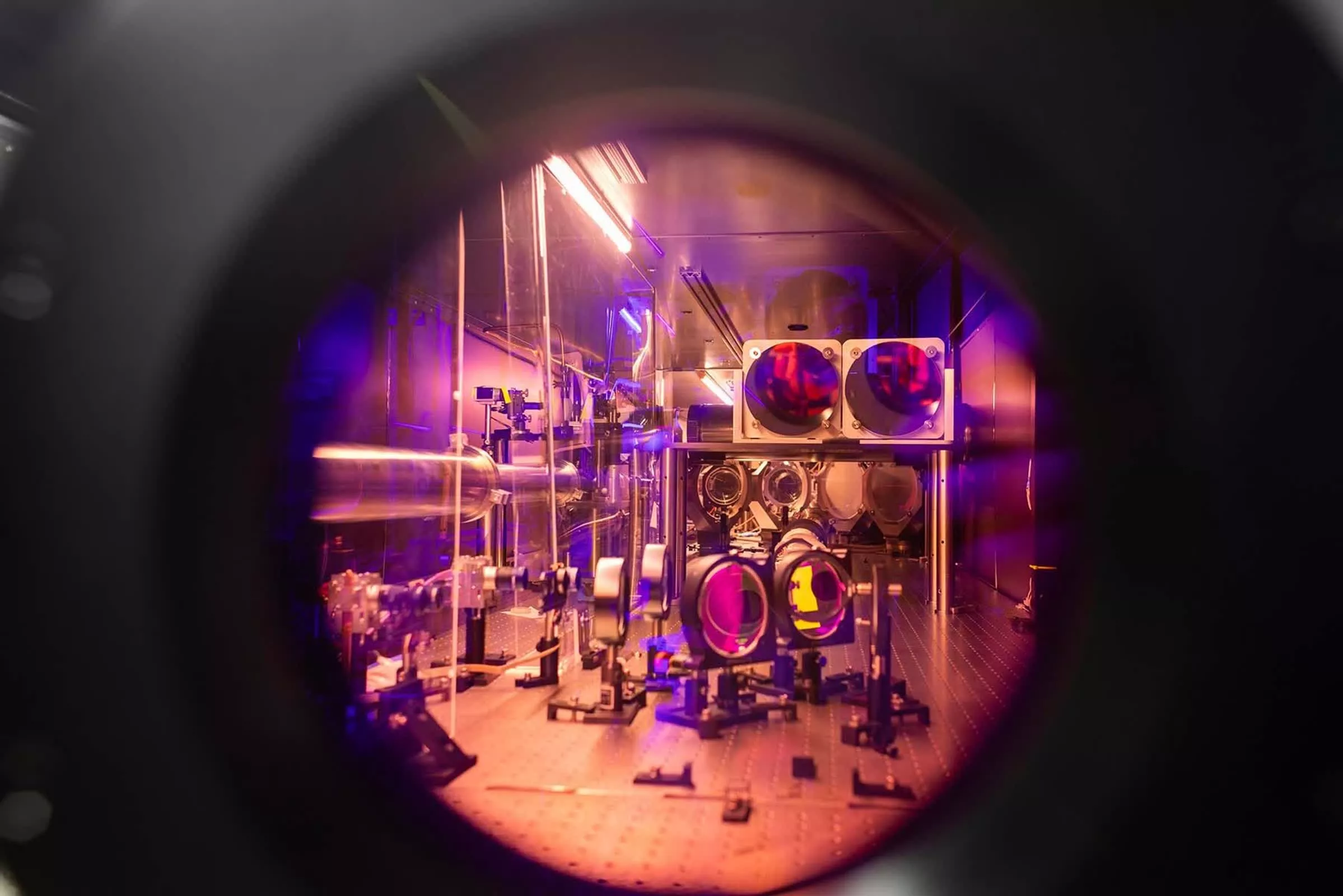
The University of Michigan's Zeus Laser Facility catapults the United States to the forefront of high-intensity laser science. In its first formal experiment, the ZEUS laser achieved a peak power of 2 petawatts, twice the output of other lasers in the United States. Although the burst was more than 100 times more powerful than the global total and lasted only 25 quadrillionths of a second, it represented a major milestone in U.S. research capabilities.
“This milestone marks the beginning of a journey into uncharted territory for U.S. high-field scientific experiments,” said Karl Krushelnik, director of the Gérard Mouroud Center for Ultrafast Optical Science, home of ZEUS. The university said the $16 million facility was a "great value for money" given its size and potential.
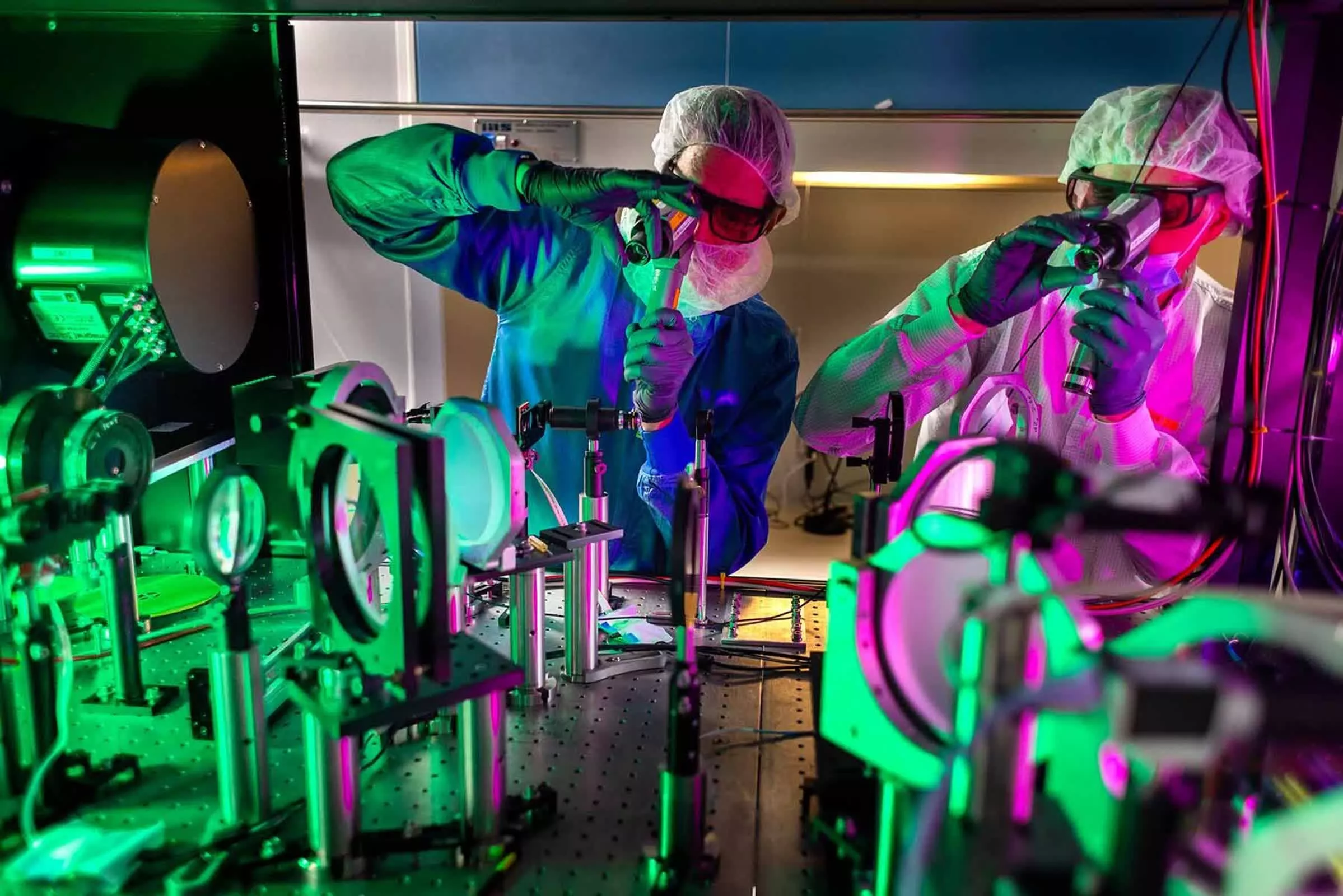
ZEUS is supported by the National Science Foundation (NSF) and operates as a user facility, welcoming research teams from across the United States and around the world. Experimental proposals are selected through an independent review process to ensure that the performance of their lasers is used for the most promising scientific research. Research conducted by ZEUS is expected to advance advances in fields such as medicine, national security, materials science, astrophysics, plasma science and quantum physics.
The ZEUS system is constructed primarily from commercially available components and incorporates advanced technologies, including dual chirped pulse amplifiers and programmable acousto-optic filters, to maintain the precise bandwidth and phase required for ultra-short, high-power pulses. The laser can output compressed pulses as short as 20 femtoseconds, enabling a variety of cutting-edge experiments.
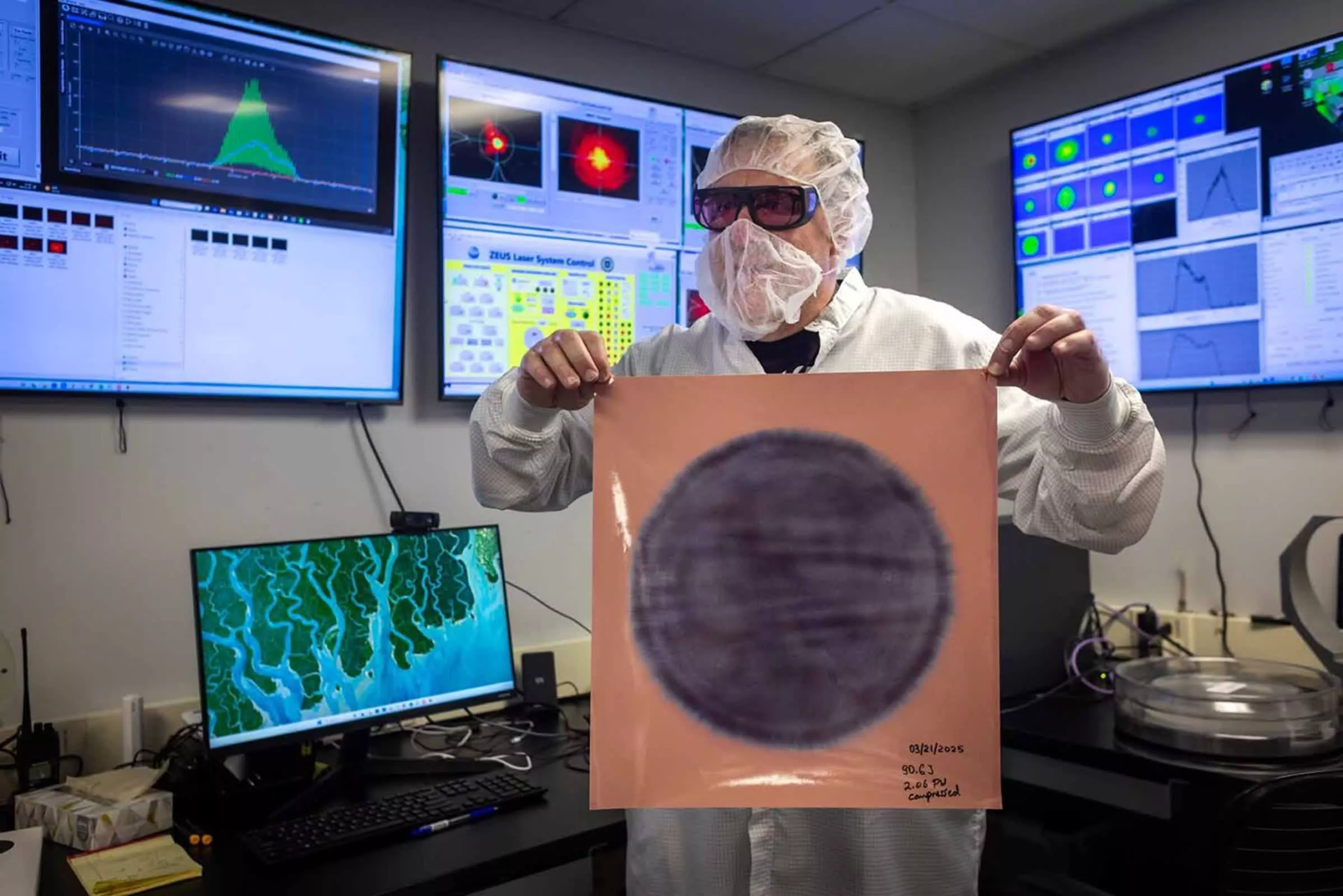
Housed in a space roughly the size of a school gymnasium, ZEUS houses three distinct target areas, each customized for a specific research application. Target Region 2 is designed for experiments involving solid targets and ion acceleration, while Target Region 3 is optimized for laser wakefield acceleration and can measure electron energies up to approximately 5 GeV.
The device's ability to split a beam allows it to achieve an intensity a million times greater than a single beam, allowing the study of extreme phenomena such as quantum vacuum structures and the creation of matter-antimatter pairs from empty space.
“One of the great things about ZEUS is that it’s not just a big laser hammer, but it can split light into multiple beams,” said Franklin Dollar, a professor at the University of California, Irvine, whose team is conducting the first user experiment at 2 petawatts.
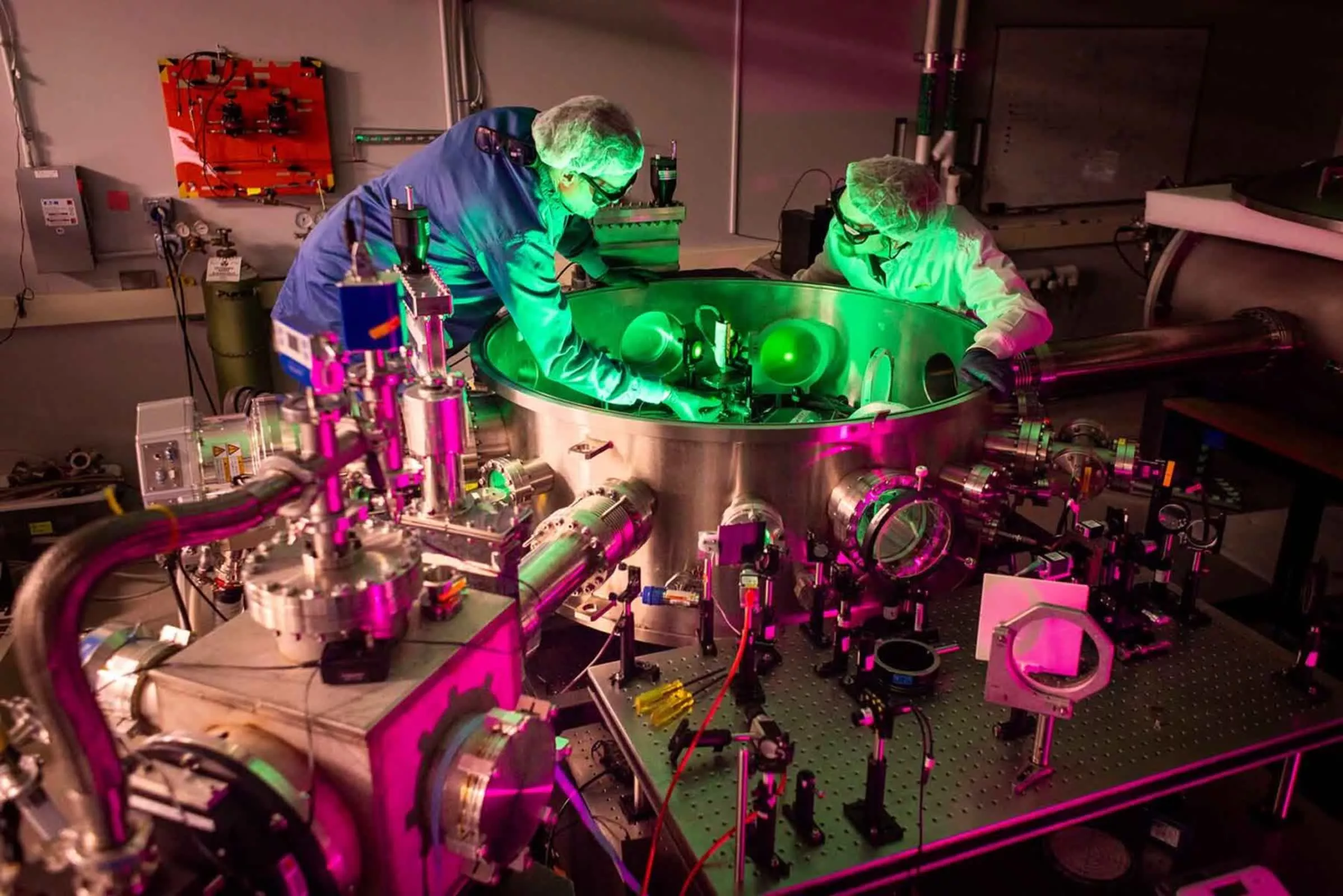
Target Area 1, where the first 2 petawatt user experiments will take place.
Dollar's team is working with scientists at ZEUS to create electron beams with energies comparable to those produced by particle accelerators hundreds of meters long. Their goal is to achieve electron energies 5 to 10 times higher than what ZEUS has previously achieved.
"The goal was to reach higher electron energies using two separate laser beams - one to form the guide channel and the other to accelerate the electrons through the channel," explains Anatoly Maksimchuk, a research scientist at the University of Michigan who led the development of the experimental area.
To achieve this goal, the researchers redesigned the target and lengthened the cavity that holds the helium. When a laser pulse hits the helium, electrons are stripped from the atoms, forming a plasma that converts the helium into a mixture of free electrons and positively charged ions. The electrons are then accelerated in the wake of the laser pulse, a process called wakefield acceleration. Because light travels slower in a plasma, electrons can catch up and ride the pulse, gaining more energy over longer distances in a less dense, extended target.
This demonstration of ZEUS power is a prelude to the facility’s signature experiment, which is expected to take place later this year. In this experiment, accelerated electrons collide with laser pulses traveling in the opposite direction. In the electronic frame of reference, a 3-petawatt laser pulse would be one million times more powerful than an electron—reaching a Ziva level pulse—hence the full name of ZEUS: “Zeva Equivalent Ultrashort Laser Pulse System.”
Vyacheslav Lukin, program director for the National Science Foundation's Physics Division, said the potential benefits of ZEUS extend far beyond physics and will also impact advances in health care, technology and economic development. “Basic research conducted at the NSF ZEUS facility has the potential for a wide range of applications, including improving soft tissue imaging methods and advancing technologies for treating cancer and other diseases,” he said.
ZEUS's experiments may also help explain astrophysical phenomena such as black holes' positron jets and gamma-ray bursts, linking laboratory science to some of the most mysterious events in the universe.
The journey to achieve 2 watts has not been smooth sailing. The nearly 7-inch-diameter titanium-doped sapphire crystal required for the final amplifier took several years to procure. "The crystal we are about to get in the summer will allow us to reach 3 petawatts of power, and it took four and a half years to make it," said ZEUS project manager Franko Bayer. "We have only a handful of titanium sapphire crystals of this size in the world."
The transition from the 300 terawatt HERCULES laser to ZEUS's 1 petawatt system also presented some technical challenges. The unexpected dimming of the diffraction grating was attributed to carbon deposits formed when the intense beam interacted with residual molecules in the vacuum chamber. The team set safe operating limits to prevent further damage.
Since its launch in October 2023, ZEUS has carried out 11 experiments involving 58 researchers from 22 institutions, including international participants. The facility's user model is similar to that of other major research centers, such as SLAC National Accelerator Laboratory's LCLS-II, and has attracted global collaborations.