U.S. President Donald Trump said U.S. forces attacked three facilities in Iran on Saturday, the first time the U.S. has been directly involved in attacking Iran's nuclear assets in the Israeli-Iranian conflict. Trump said Fordow, Natanz and Isfahan were hit during the operation. He specifically described dropping a "full load of bombs" on Fordow. Fordow is one of the key sites for Iran's uranium enrichment facilities, raising international concerns that the country may be preparing to build nuclear weapons.
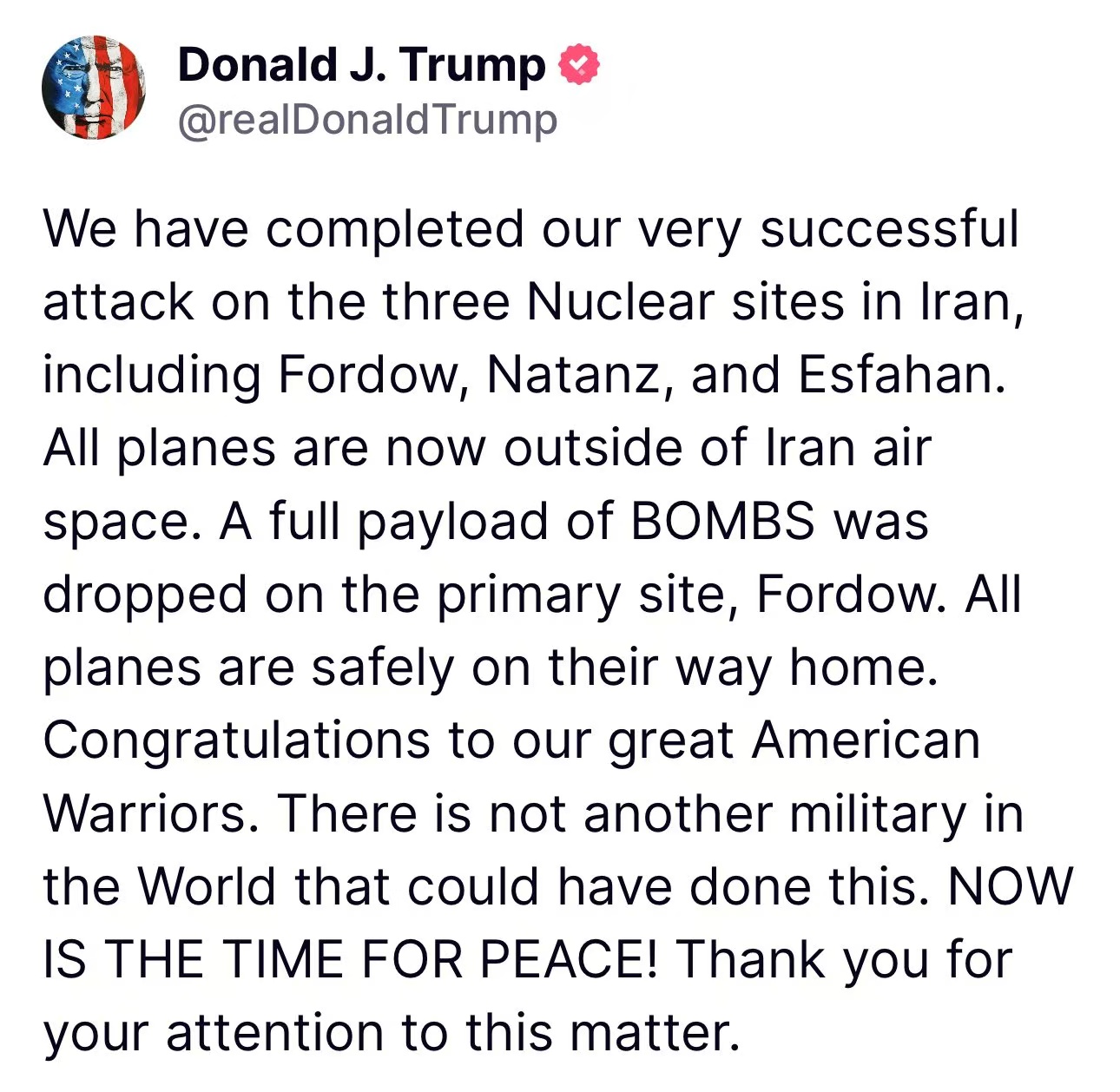
Trump called the operation "very successful," adding that the aircraft involved in the operation had left Iranian airspace and were "returning safely."
“There is no second army in the world that can do this. It’s time for peace!” he wrote on Truth Social.
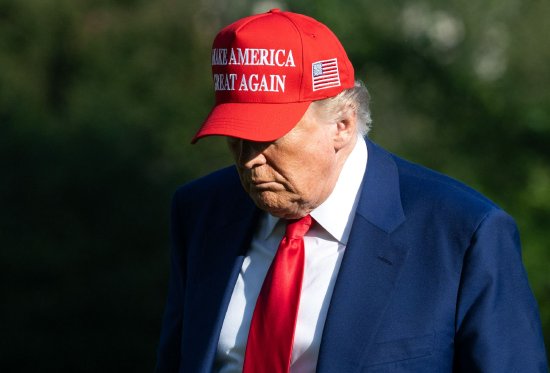
U.S. President Trump
Trump also said that he will address the nation at the White House at 10 p.m. Eastern time on the military operation.
This action brings to an end many days of discussions about whether the United States will join Israel in attacking Iran. Trump said on Thursday he could make a decision within the next two weeks.
The strike raised concerns about possible retaliatory actions by Tehran, including possible attacks on U.S. soldiers and military assets in the region, as well as other facilities.
The ongoing war has also raised concerns about regional conflict. Such a conflict would result in massive civilian casualties and disrupt the flow of energy and other trade in the region. About a fifth of the world's daily oil supplies pass through the Strait of Hormuz, which lies between Iran and its Arab neighbors.
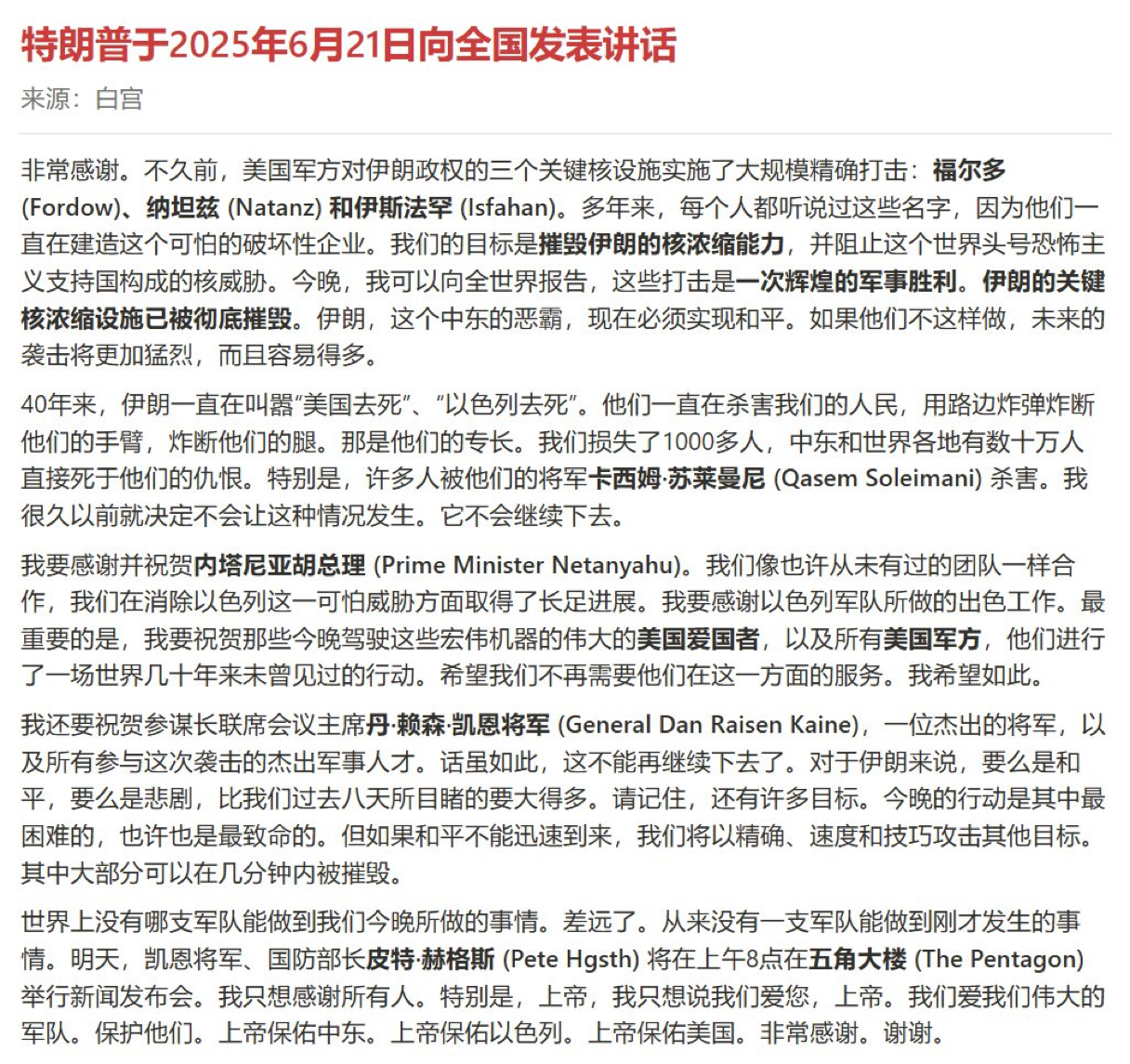
What are the origins of the three Iranian nuclear facilities that Trump attacked?
①Fordo: This facility is located near the holy city of Qom and is buried deep in the mountains. Its size and nature are still unknown.
The main hall is estimated to be 80 to 90 meters (approximately 262 to 295 feet) underground. Israeli officials and independent reports have previously said the United States is the only country in possession of such a bomb. A recent report from the International Atomic Energy Agency shows that Iran has increased its enriched uranium production at Fordow to a level of 60%. According to experts and the International Atomic Energy Agency, the facility currently has 2,700 centrifuges.
②. Natanz: The nuclear facility located about 250 kilometers (150 miles) south of the capital Tehran is considered Iran’s largest uranium enrichment facility.
Analysts say it is used to develop and assemble uranium enrichment centrifuges, a key technology for converting uranium into nuclear fuel. According to the non-profit Nuclear Threat Initiative (NTI), Natanz has six above-ground buildings and three underground buildings, two of which can house 50,000 centrifuges. Iran has been enriching uranium to a purity of up to 60% at its above-ground pilot fuel enrichment plant, according to the International Atomic Energy Agency (IAEA). Weapons-grade uranium is enriched to 90%.
③. Isfahan: Isfahan is located in central Iran and is the country’s largest nuclear research center.
According to NTI, the facility was built with Chinese support and opened in 1984. According to NTI, 3,000 scientists are employed in Isfahan and the site is "suspected to be the center of Iran's nuclear program." NTI said it "operates three Chinese-supplied small research reactors," as well as "conversion facilities, fuel production plants, zirconium cladding plants and other facilities and laboratories."
Trump: Iran must end war or be hit again
According to reports, Iran confirmed that three nuclear facilities in Fordow, Natanz, and Isfahan were attacked by the US military. However, the evacuation of the three locations has been completed and no major losses were caused. Iranian state television said every U.S. citizen or military personnel in the region was now a "legitimate target."
It is reported that the United States used six ground-penetrating bombs in the attack on Iran's Fordow nuclear facility and 30 Tomahawk missiles on other nuclear facilities.
According to reports, the United States contacted Iran through diplomatic channels on Saturday, saying that the attack was all part of the U.S. plan and that there were no plans for regime change-related actions.
U.S. President Trump hopes that the strikes he ordered on Iran's three nuclear facilities will prompt Iran to return to the negotiating table. The United States currently has no further military strike plans. At the same time, he is pressuring Iran's leaders to "agree to end this war."
Trump has come to believe over the past few days that U.S. forces are necessary to destroy Iran's heavily guarded nuclear facilities, making the decision as diplomacy remains apparently deadlocked.
While Trump remains hopeful about the diplomatic process, U.S. troops in the region are prepared for Iranian retaliation.
U.S. President Trump said in a phone interview that Iran should stop the war immediately, otherwise they will be hit again.
In addition, US President Trump held talks with Israeli Prime Minister Netanyahu after the US launched air strikes on Iran.
Israeli officials said Israel was "fully coordinating" with the United States on attacks against Iran.
The Israeli military issued a statement that it had tightened public security restrictions to "essential activities" following the U.S. attack on Iran. The Israeli military said schools and workplaces would be closed under heightened security restrictions, with the exception of "critical industries."