Google announced that it is pushing its solution to Apple’s age assurance tool, the Play Signal API, to global users, and plans to achieve global coverage by the end of 2026. Currently, this technology has been launched in Brazil and is designed to assist Android developers in identifying young user groups of applications, thereby providing a safer and age-appropriate experience.
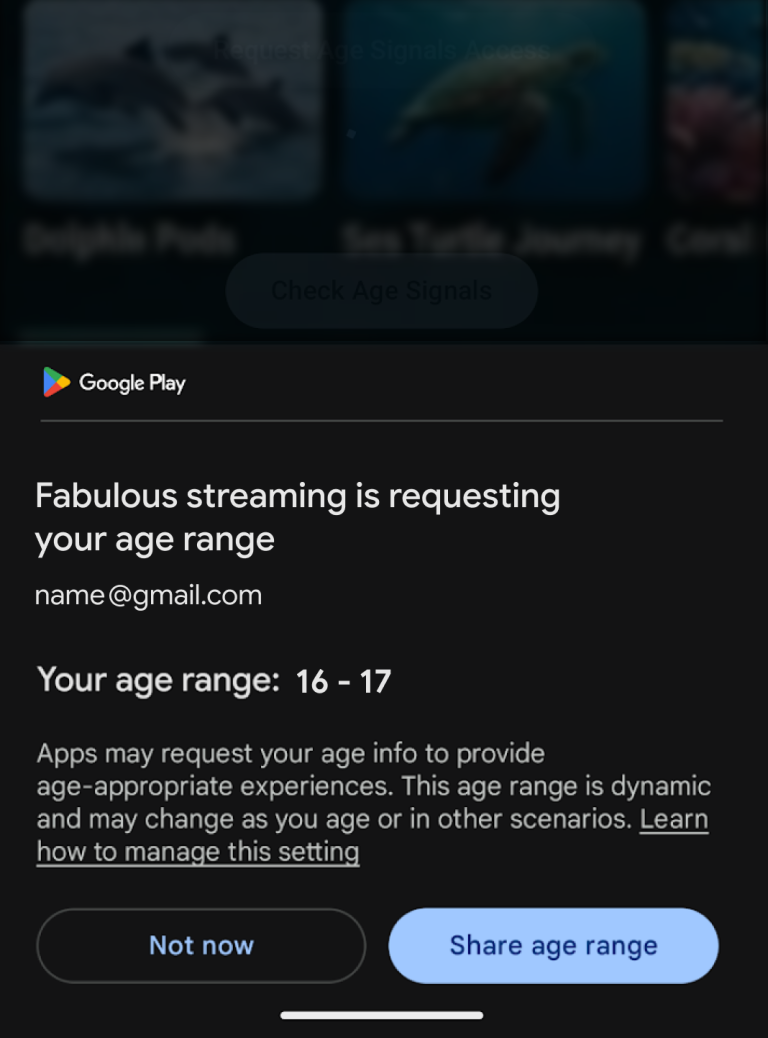
According to the plan, the API will first land in the Australian and Canadian markets in mid-August, and then be promoted to all markets around the world before the end of this year. The feature comes as lawmakers and regulators around the world continue to pressure app stores to provide stronger protections for minors. For example, Apple launched age verification tools globally in February this year to adapt to increasing age verification regulations.
Similar to Apple, Google's technology allows developers to learn a user's age range without obtaining personal information such as date of birth. Instead, it allows parents to share their child's age group directly to the app, and adult users can share their age themselves when prompted by the app developer for a customized experience.
Parents don't need to manage this shared information individually across apps. To simplify the process, Google has centralized relevant controls in its parental control panel, Family Link. Once the information is entered, any developer who chooses to access the age group data can call the signal to adjust the content of their application. However, Google emphasizes that age group information is not shared by default and must be actively selected and entered by parents.
The feature complements other existing safety tools on Google Play, including one that allows developers to restrict certain apps from being discovered by children. At the same time, parents can continue to manage their children's screen time, approve app downloads, or set PIN-based content filters for specific apps through Google Play's Family Link app.