Birds like the cuckoo are known to adoptnest parasitismThe breeding method is to lay eggs in the nests of other birds, and let other birds incubate and raise the chicks. This "old six behavior" seems to be easily rejected by the host bird. When the host bird sees the cuckoo, it should fight it or abandon its nest.
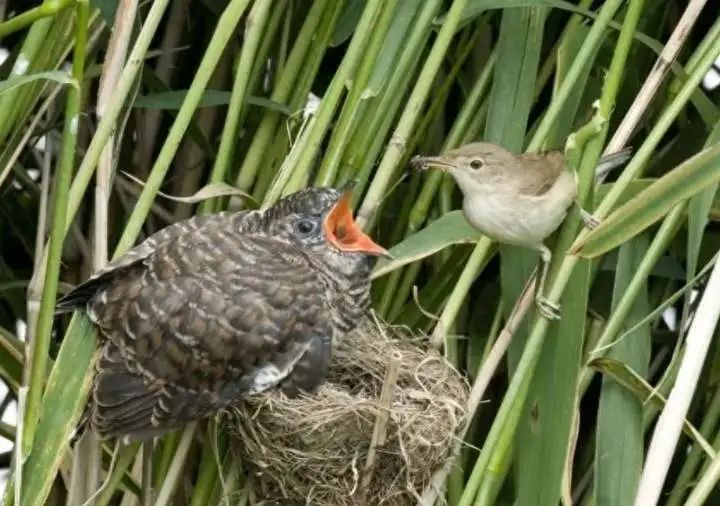
However, cuckoos have ways to avoid these behaviors that affect their own nest parasitism, because cuckoos are better at camouflage than imagined.They are trying to imitate the raptors in their habitat, and then scare away the hosts off guard so that they can lay eggs in the host's nest without anyone noticing..
Mimicking behavior of adult cuckoos
In a 2011 study, Dr. Justin Wellbergen of the University of Cambridge in the UK found that great tits and blue tits are as afraid of cuckoos assparrow hawkHowever, the cuckoo is not a raptor that preys on other birds and does not pose a life threat to the birds, so this abnormal behavior attracted his attention.
Following this study, he and his team studied cuckoos and sparrowhawks, and found that the striped patterns on the abdomens of cuckoos and sparrowhawks were very similar.
Then they conducted a simple experiment, placing models of cuckoos and sparrowhawks next to the reed warbler's nest to observe the reed warbler's reaction [1].
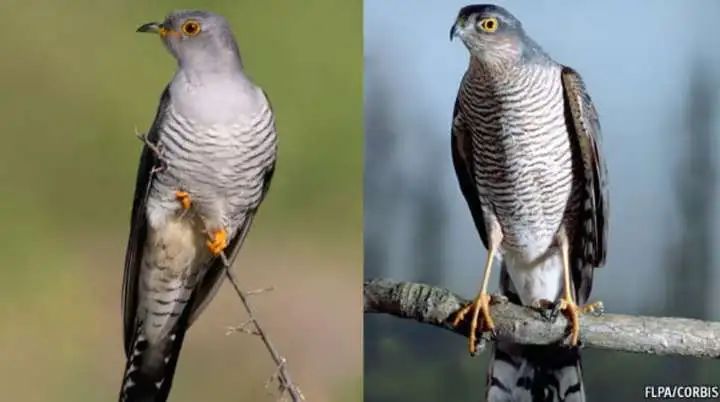
△ Cuckoo (left), sparrowhawk (right)
They found that when the stripes on the model bird's abdomen were exposed, the reed warblers were reluctant to approach the model, and when the model bird's stripes were covered with white cloth, the reed warblers would attack the model to protect their nests.
Researchers therefore believeThe cuckoo may imitate the sparrowhawk through the stripes on its belly feathers to scare the reed warbler away, thus giving it the opportunity to lay its eggs in the reed warbler's nest.
Cuckoos do a lot of imitation in order to parasitize their nests, their eggs become more and more like their host's eggs, their chicks' sounds also imitate the sounds of their host's chicks, etc.
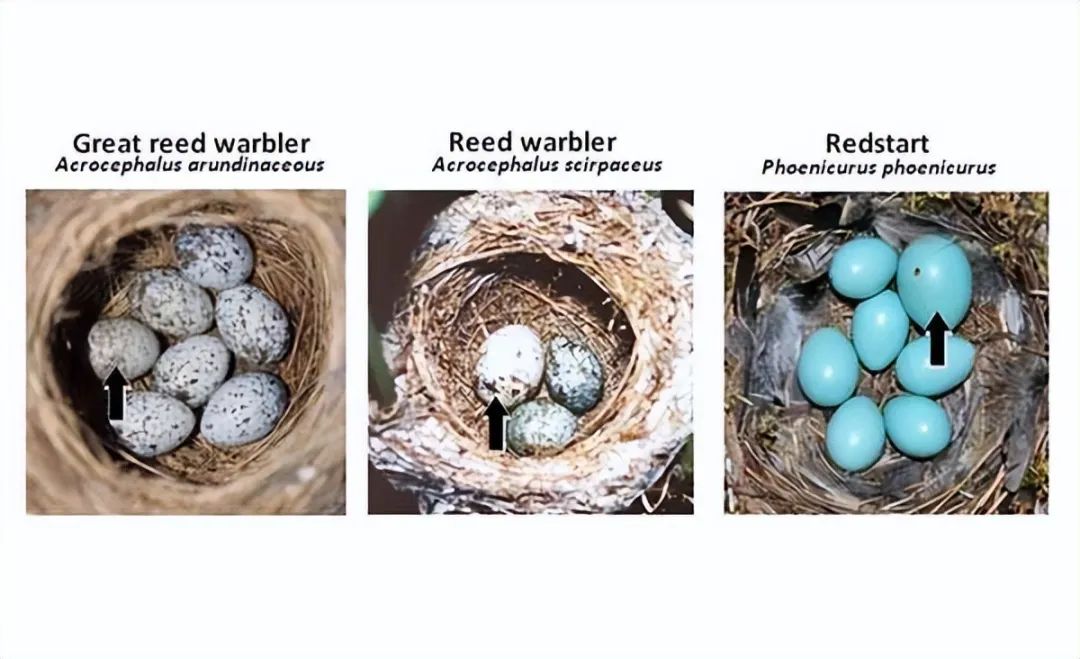
△ Different cuckoos lay different imitation eggs in the nests of the great reed warbler, reed warbler and red-throated songbird (the arrow points to the cuckoo’s egg)
I wrote in detail about the nest parasitic behavior of cuckoos in a previous article:
What would birds do if they found themselves raising a cuckoo chick?
But adult cuckoos can also imitate other animals. This is the first time that they have been discovered.However, it is easy to understand, because the host bird during the egg-laying period is highly vigilant, and the cuckoo's chance of going to their nest to lay eggs under such circumstances is slim, so scaring the host away is a good choice.
This imitative behavior is calledMimicry, to be more preciseBatesian mimicry, but the mimicry of cuckoos is not that simple. Their appearance is as specialized as their eggs, and many of them are difficult to see with our naked eyes, or are easily misunderstood. Only the vision of birds can detect them.
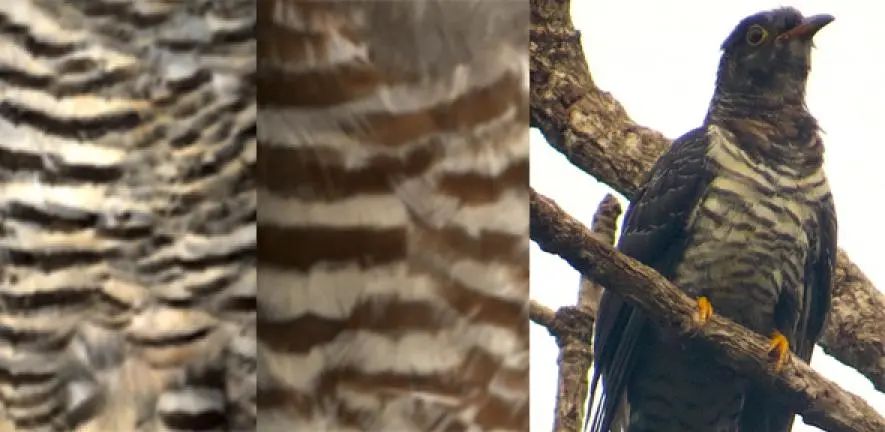
Each cuckoo species has a unique imitation
RhododendronThere are 159 species, about 40% (60-64 species) of which are nest parasitic, and nest parasitic cuckoos are basically distributed in the Old World.
In 2013, researchers from the same University of Cambridge (but not the same research group) conducted a more systematic study of nest-parasitic cuckoos in the Old World [2].
They took photos of a variety of nest-parasitic cuckoos and then converted the images to the birds' spectral sensitivities. Not only do birds' eyes, unlike ours, have tetrachromatic vision and are more sensitive to color, they are also extremely sensitive to the contrast and intensity of shades of black, white and gray - which helps them identify subtle changes in the image, as well as the repeatability of the image and the size of the various marks.
The team then used digital image analysis technology to determine the similarities between cuckoo feathers and raptor feathers.
However, they found that many cuckoo species have abdominal feathers that look similar to sparrowhawks to us, but when converted to the bird's spectral sensitivity, the abdomens of these cuckoo species are significantly different from sparrowhawks.
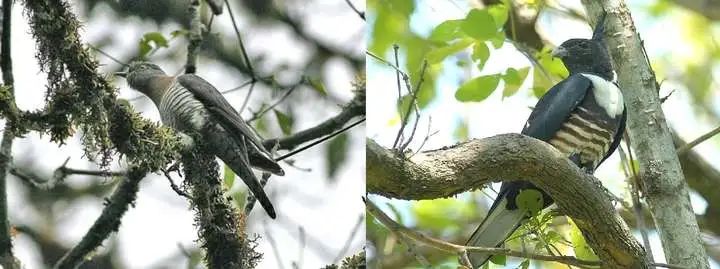
△ Himalayan cuckoo (left) imitates the black-crested cuckoo falcon in its habitat (right)
This meant that the cuckoos were not imitating sparrowhawks, and further investigation revealed thatCuckoos are highly specialized in imitating feathers, and they only imitate birds of prey within their own habitat.
It only makes sense to imitate like this, because their hosts will definitely only be sensitive to their real natural enemies—the raptors in their own habitat!
In addition, this study also found that when looking for host nests, some cuckoos will imitate the calls of raptors in the habitat and other behaviors to confuse the host bird so that they can complete their egg laying.
Nest parasitism is a very unique way of survival, which already implies that they will have unique innovations, so any behavior and physiological characteristics of cuckoos should not be too strange. Maybe they have even stranger things waiting for us to discover.
refer to:
[1].https://doi.org/10.1093/beheco/arr008
[2].https://doi.org/10.1016/j.anbehav.2013.09.020