A large number of studies show thatTurn to AI search capabilitiesand useArtificial Intelligence Chatbotis killing traffic to publishers' websites. But Google denied that claim Wednesday, at least generally. Instead, the search giant said its total organic clicks to the site from its search engines were "relatively stable" year-over-year, with average click quality improving slightly.
"This data stands in stark contrast to third-party reports that incorrectly point to sharp declines in overall traffic—often based on flawed methodology, isolated examples, or changes in traffic that occurred before AI features were rolled out in search," Liz Reid, Google's vice president and head of search, wrote in a new blog post.
While Google didn't share any specific data to support its conclusions, even if we assume that Google's claims are true, that doesn't necessarily mean that AI isn't having an impact.
Even Google has to admit this, as Reid admitted, "User trends are moving traffic to different sites, resulting in less traffic to some sites and more traffic to others."
The word "some" is significant here because Google doesn't share data on how much website traffic increased or decreased. While chatbots like ChatGPT have certainly seen an increase in traffic in recent months, that doesn't mean online publishers haven't been affected.
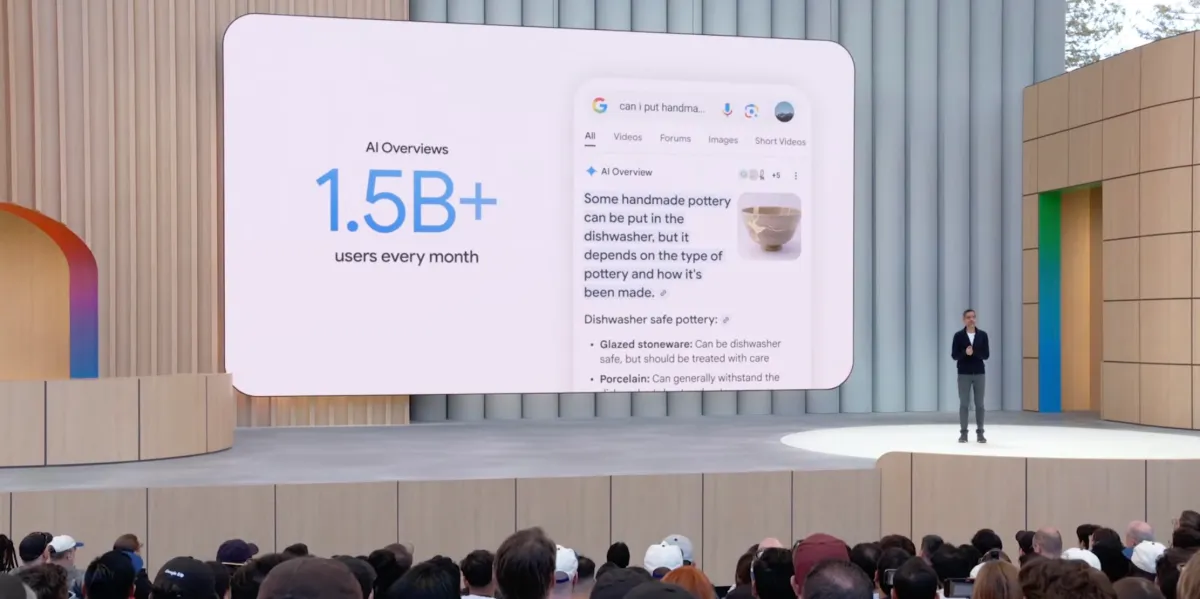
Image source: Google
Google has been improving its search engine over the years to answer more questions directly on the search results page, and now it's doing that with an "AI Overview" that appears at the top of search results. Google also allows users to interact with AI chatbots on certain queries. However, Google denies that the move is significantly reshaping the search landscape. Instead, it states that users divert their attention to other websites to begin their queries.
"Increasingly, people are looking for and clicking on sites with forums, videos, podcasts and posts where they can hear real voices and first-hand perspectives," Reed explains.
Between the lines, it seems that Google.com is no longer the first choice for people to surf the Internet today. But we already know this. As early as 2022, a Google executive even said that social networking sites such as TikTok and Instagram were cannibalizing Google's core products, such as search and maps.
"Our research found that about 40% of young people don't use Google Maps or Google Search when looking for a place to lunch," said Google Senior Vice President Prabhakar Raghavan. He was in charge of the company's Knowledge and Information department (now Chief Technologist). "They'll go to TikTok or Instagram," he noted.
Google has also been worried that Amazon.com will become the first stop for people's online shopping searches, while Reddit will become the first stop for people to research topics of interest.
For years, the company has been building engaging features for consumers and retailers to drive more users to Google Shopping. These efforts include a universal shopping cart, local inventory lookup, deal finder, shopping via website product images, and more. Google even made shopping details free for merchants in 2020.
Meanwhile, as users complained about the declining quality of Google searches, the search giant saw huge demand for Reddit and eventually added a "Reddit" filter that allowed users to narrow search results based on relevant search queries. (This filter now only shows "Forum.")
So there may be some truth to Google's denial—the death of search isn't entirely caused by artificial intelligence. Search was already dying.
Google's new blog post also attempts to change what it means for a website to get Google clicks. Now, instead of counting clicks, Google wants publishers to consider click quality.
The company said average click quality has improved, with Google sending slightly more "quality clicks" to sites than a year ago. (Google explains that high-quality clicks are clicks where users don’t click back quickly, but stay and continue reading.) However, Google did not disclose the extent of the improvement. The company simply noted that when people click on responses from AI-provided sources, they are more likely to explore deeper, so those clicks are worth more.
Additionally, Google sees AI as an opportunity for web publishers to increase visibility, saying "with AI overview, people are seeing more links on a page than before," Reid wrote. “More queries and more links means more opportunities for the website to surface and get clicks.”
However, the report shows that despite AI’s growing influence as a recommendation source, it has yet to close the gap in terms of clicks. A recent study by Similarweb showed that the proportion of news searches on the web that resulted in zero clicks to news sites has grown from 56% (when Google launched its AI overview in May 2024) to 69% in May 2025.
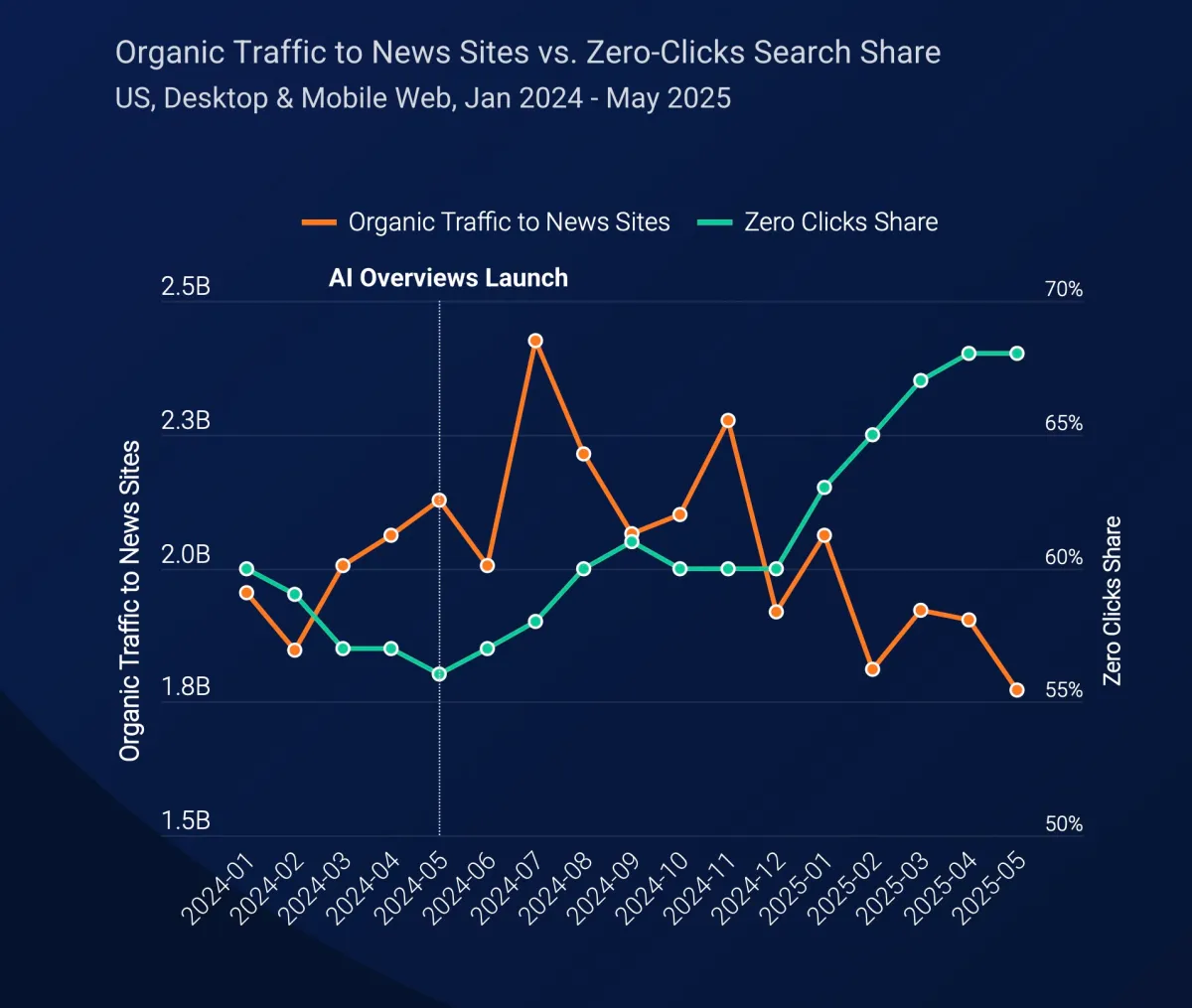
Google seems to know this is a trend, too, as it recently launched a product for publishers to help them monetize their dwindling traffic through other means that don't rely on ads, such as micropayments or newsletter signups.
Google vigorously promotes"Artificial intelligence is not the end of search traffic! ” PR strategy only makes the situation more dire. Google seems to want publishers not to believe what they see with their own eyes – and the charts and data – but rather the fact that Google is still driving “billions of clicks” to websites every day, as the post claims.