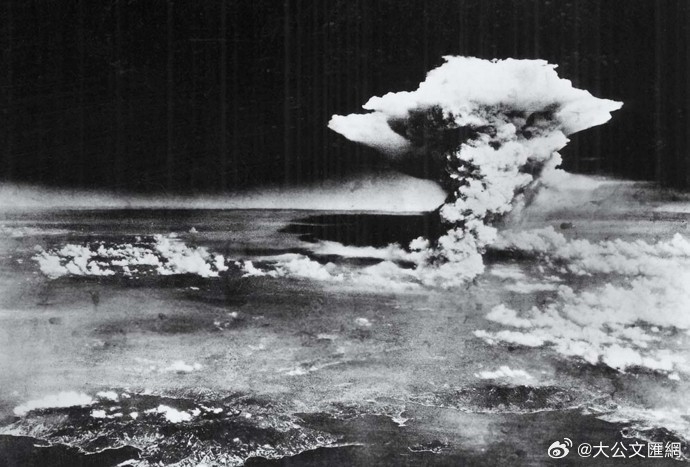
On August 6, local time, Hiroshima City, Hiroshima Prefecture, Japan held a commemorative ceremony to commemorate the 80th anniversary of the atomic bombing. Japanese Prime Minister Shigeru Ishiba attended the event and delivered a speech, saying that the tragedies of Hiroshima and Nagasaki would never be allowed to happen again, and Japan would adhere to the "Three Non-nuclear Principles."
In order to prompt Japan, which had launched a war of aggression, to surrender as soon as possible, the US military dropped atomic bombs on Hiroshima and Nagasaki on August 6 and 9, 1945 respectively. For a long time, Japan has portrayed itself as a "victim" of atomic bombing, but has completely ignored the reasons for the bombing and its history of aggression against other countries.
The pilot who dropped the atomic bomb once said in an interview in his later years: "I don't regret it, because it can save more people. If I could do it again, I would still choose this way."
On the morning of August 6, 1945, the U.S. B-29 bomber dropped the first atomic bomb over Hiroshima, Japan. On August 9, the United States dropped a second atomic bomb on Nagasaki, Japan. The United States dropped two atomic bombs on Japan in succession, accelerating Japan's collapse.