A groundbreaking study traces 66 million years of primate evolution and overturns the traditional belief that our ancestors first inhabited warm tropical forests. Using advanced statistical and climate modeling techniques, researchers have discovered that the earliest members of our evolutionary lineage were actually survivors of colder climates.
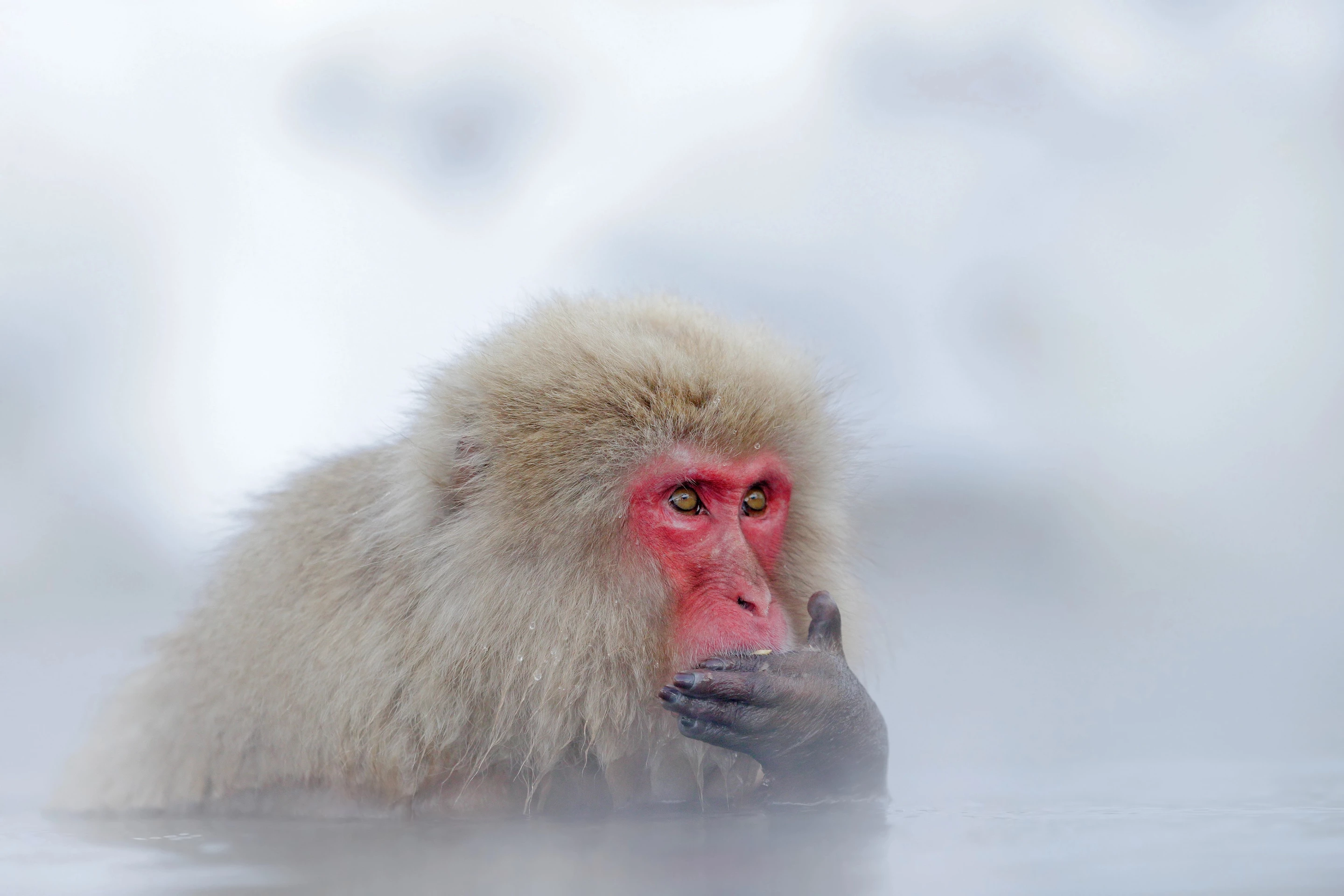
Japanese macaques may live in a climate more similar to their ancestors than previously thought
Researchers at the University of Reading surveyed 479 primate species - 178 extinct (via fossil studies) and 301 living - to track how species richness, climate tolerance and geographical range changed over time and within long-established and studied evolutionary clades. These species are found throughout North America, Europe, and Asia.
To challenge the accepted hypothesis that primates originated in warm tropical forests, researchers need to reconstruct the evolutionary relationships between species and the geographic location and climate conditions of their ancestors. This is no easy task as it takes about 66 million years.
The team fused genomic and fossil data from hundreds of primate species and referenced existing "supertrees" of primate relationships involving extinct and extant (living) species. The researchers paired this complex map with detailed climate and geographic location to analyze how trait evolution relates to these external factors.
They then added more detail to each branch of the supertree through Bayesian biogeographic modeling (a statistical method that calculates the probabilities of different ancestral states, such as where primates were distributed or the climate zones of that period). Of course, these details were subsequently adjusted for continental drift and plate tectonics.
The researchers needed to know what type of climate each primate ancestor actually lived in, so they used the Köppen-Geiger climate classification, which divides the world into temperate, tropical, arid and cold climate "types" based on temperature and rainfall patterns. Ultimately, they overlaid the paleoclimate reconstructions with paleogeographic maps showing the location of the continents at that time, creating an atlas of ancient climate that allowed for a clearer, more detailed picture of the origins of primates and their subsequent migrations.
By applying this method to every species in the massive data set, the researchers were able to provide a climate type for every animal on the evolutionary tree.
They found that some of the earliest primate ancestors likely experienced extreme hot and cold seasons and had highly fluctuating resource supplies as the seasons changed. From this, researchers can infer that these ancient primates were extremely adaptable, had a wide-ranging diet (pantophagy), and were able to tolerate such harsh and unpredictable environments.
Researchers believe these first primates may have lived in North America, a region with cold climates with hot summers and cold winters - upending a widely accepted origin theory for about half a century.
"The idea that primates evolved in warm tropical forests has been unquestioned for decades," said Jorge Avaria-Llautureo, a researcher at the University of Reading and lead author of the study. "Our findings turn this theory on its head. It turns out that primates did not originate in dense jungles - they came from the cold seasonal environments of the northern hemisphere."
According to their theory, primates able to survive these harsh conditions and transcend local climatic boundaries possess biological "adaptations" that allow them to reproduce and gradually migrate further and further away, so that different external influences (environment, resources, climate) drive the evolution of new species. Millions of years later, as climate changed—sometimes rapidly—adaptive primates were able to migrate to new areas and further diversify their species. Researchers believe this is why many species end up calling tropical forests home.
Interestingly, the researchers theorize that early primates may have survived harsh winters by hibernating like today's bears—lowering their heart rates and sleeping during the coldest months to conserve energy. Some small primates, such as pygmy lemurs (there are 10 species in total), still hibernate, sleeping deep underground for months – making them well adapted to their native Madagascar.
As living primates now face today's environmental challenges, understanding how their ancestors adapted to ancient climate changes can help conservationists better understand species survival and identify threats.
"Understanding how ancient primates survived climate change helps us think about how living species respond to modern climate change and environmental changes," Avaria-Llautureo added.
The research was published in the Proceedings of the National Academy of Sciences.