When you mention "walnut", what do you think of? Two words may come to many people's minds - "brain replenishment"!How nutritious are walnuts? Can eating more walnuts really "replenish the brain"? Let’s talk about it in detail today.

Consistently eating walnuts for 6 months,What other benefits does it have to the body?
In April 2023, a 6-month randomized controlled nutritional intervention trial was published in the well-known medical journal "The Lancet", which gave us a preliminary answer to the question of "whether eating walnuts can nourish the brain."
The study included 942 middle school students aged 11 to 16 years old. After screening, 771 teenagers were included in the analysis and randomly divided into groups. The control group did not receive any form of intervention; the experimental group received a small bag containing 30g of walnut kernels, approximately 3 to 4 walnuts, and ate 1 bag per day for 6 months.
After observation, the researchers found that 133 people had good compliance and had eaten walnuts for >100 days (not necessarily every day). These teenagers had slightly higher α-linolenic acid status in red blood cells and enhanced attention. It had a significant improvement effect on the behavior of some teenagers with symptoms of attention deficit hyperactivity disorder, as shown by paying more attention to the teacher in class and increasing fluid intelligence-related functions, such as perception, memory, computing speed, and reasoning ability. From this point of view, for teenagers who have good compliance with eating walnuts for 6 months, walnuts do play a "brain-replenishing" role.
Researchers also believe that regular walnut eating (more than three servings per week, about 10 walnuts) may lead to improvements in sustained attention, fluid intelligence, and ADHD symptoms, but has no significant impact on neurodevelopment in healthy adolescents. Research aside, walnuts do contain many nutrients that the brain needs. For example, protein is a component of the brain; carbohydrates provide energy for brain operation; and the polyunsaturated fatty acid α-linolenic acid can be converted into DHA in the body, which is helpful for brain health. But be reminded that although the above research shows that eating walnuts for a long time is useful for "brain replenishment", don't expect to improve your IQ by eating walnuts!

What nutrients do walnuts have?
Walnuts, also called walnuts, are widely grown in my country. As of 2020, my country's walnut planting area ranks first in the world, which shows how popular walnuts are in our country. It can make art, play with walnuts, and eat them, killing three birds with one stone! Speaking of the nutritional value of walnuts, it is really good. It has the reputation of "longevity fruit" and "health treasure".
1protein
The protein content of walnuts is 14.9g/100g. Although it is not very good among nuts, it is still rich in amino acids. Studies have shown that walnut protein contains 18 kinds of amino acids, of which 8 are essential amino acids for the human body, accounting for 26.98%~30.38% of the total amino acids, which is beneficial to growth and development.
2unsaturated fatty acids
The fat content of walnuts is as high as 58.8g/100g, which is mainly polyunsaturated fatty acid, accounting for approximately 76.2% of the total fatty acids. Linolenic acid and linoleic acid account for 12.2% and 64% of the total fatty acids respectively. Although the alpha-linolenic acid content in walnuts is not as high as that of flaxseeds, it is much higher than that of other nuts. This ingredient can be converted into DHA in the body, which is beneficial to brain and retinal health, but the conversion rate is generally low.
3Vitamin E
The vitamin E content of walnuts is more prominent among nuts, up to 43.2mg/100g, which is nearly 1.2 times that of hazelnuts. Vitamin E has strong antioxidant properties and is an essential nutrient for maintaining fertility and maintaining normal immune function.
4Antioxidant ingredients
Walnuts are rich in antioxidants, including total phenols and flavonoids. Someone analyzed the phenolic substances and flavonoids in the endotesta of fresh walnuts, and found that the phenolic substances had the highest content of gallic acid and the lowest content of ferulic acid; the highest content of flavonoids was rutin. And the vast majority of antioxidant substances are found in the seed coat of walnut fruits. These ingredients have antioxidant properties and can help our bodies fight inflammation and remove excess free radicals. However, the seed coat of walnut fruit has a distinct astringency due to its high phenolic content. If you can tolerate it, it’s best to eat it with the skin on. Also, I have to remind everyone: walnuts ≠ pecans. The walnut we usually talk about is a nut of the genus Juglans, while the pecan is not a "walnut from the mountains". It is also called a small walnut and is a member of the genus Pecan. Pecans are much smaller than walnuts, have thicker skins and have a lower edible part, 43% of the edible part of the walnut compared to only 24% of the pecan.

The nutritional difference between the two is not small. In contrast, walnuts have higher contents of linolenic acid, dietary fiber, potassium, and selenium, while pecans have higher contents of protein, vitamin E, and magnesium.
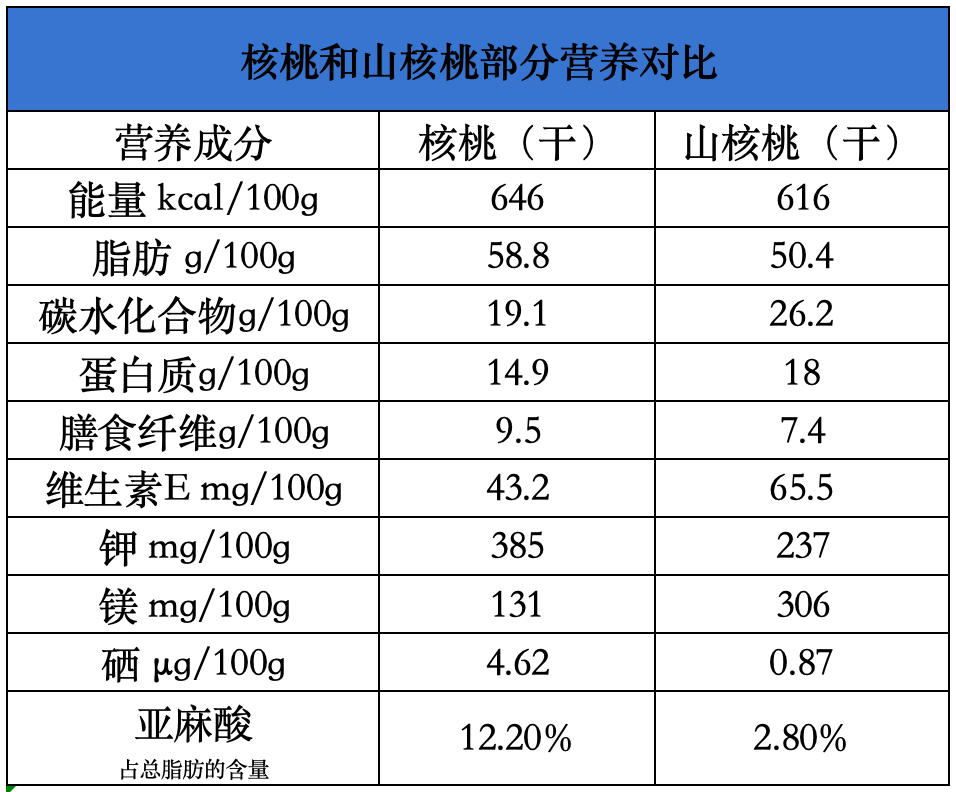
Note: Pecan linolenic acid data is for cooked pecans
In addition to "brain nourishing", walnutsWhat other benefits does it have to the body?
Walnuts are so nutritious. Don’t just think about whether they can “replenish your brain” when eating them. Eating walnuts regularly has many other benefits for the body!
1Improve blood lipids
A 2018 data analysis of 26 clinical trials involving 1,059 subjects found that compared with the control group who did not eat walnuts every day, the diet after adding walnuts significantly reduced plasma triglyceride (TG) levels by 5.52%, low-density lipoprotein cholesterol (bad cholesterol) levels by 3.73%, and total cholesterol levels by 3.25%. The decrease in these indicators is of great significance in preventing hyperlipidemia, and can also further reduce the risk of atherosclerosis and cardiovascular disease. A 2022 meta-analysis of 13 intervention trials involving populations in the United States, Germany, Iran, the United Kingdom, Spain, and China explored the impact of walnut intake on blood lipid levels. The study found that walnut intake was significantly associated with improvements in serum triglyceride, total cholesterol, and bad cholesterol levels. In the study, healthy people consumed 15-64g of walnuts per day, while those with overweight, obesity and dyslipidemia comorbidities consumed 30-99g of walnuts per day.
2Prevent diabetes
A study in the American Journal of Clinical Nutrition mentioned that high consumption of nuts, especially walnuts, is associated with a lower risk of diabetes and a lower risk of obesity. Therefore, regular consumption of nuts (approximately once a day) can be continued as part of a healthy diet to prevent obesity and type 2 diabetes.
3May promote sleep
Everyone knows that melatonin is a hormone secreted by the pineal gland in the brain that can naturally induce people to sleep. However, due to physical or work reasons, many people's melatonin secretion is affected, making it difficult to fall asleep. Walnuts are a food rich in melatonin. A study found that after feeding animals walnuts, the content of melatonin in their blood can increase four times. People who have trouble sleeping often eat walnuts, which may help them sleep, so you might as well give it a try.
4relieve anxiety
Among nuts, walnuts have the best alpha-linolenic acid content. Studies have shown that alpha-linolenic acid has neuroprotective effects and can reduce anxiety symptoms, relieve emotional tension, and reduce stress.
4 tips for eating walnuts
Although eating walnuts is beneficial to health, you still have to choose the most correct way of eating them. Here are 4 tips on eating walnuts healthily, be sure to check them out!
1Choose original walnuts
There are many flavors of walnuts on the market now, such as sweet amber walnuts and salty salt and pepper walnuts. These types of walnuts are generally high in sugar or salt. Regular consumption of these walnuts is detrimental to health and increases the risk of dental caries, obesity, hypertension and other diseases. The most recommended ones are plain walnut kernels or whole walnut kernels with shells.
2Best eaten with the skin on
Under normal circumstances, the surface of walnut kernels has dark brown walnut skin, which tastes a bit bitter. Many people do not like to eat it. There are also peeled walnuts on the market, which are white and clean. If you want to get more of the antioxidant content in walnuts, eat them with the skin on.
3Pay attention to how to save
Walnut kernels are rich in polyunsaturated fatty acids, which are prone to oxidation and rancidity, causing a havoc taste. Therefore, it is recommended to buy less each time and keep it sealed and refrigerated. It is better if you can buy it in the shell, store it in a cool and dry place, and eat it now. Don’t eat moldy walnuts!
4Control the amount
Although eating nuts regularly can help prevent obesity, you should not eat too many. The "Dietary Guidelines for Chinese Residents" recommends eating 50~70g of nuts per week, with an average of 10g per day, which is equivalent to 1 large paper walnut or 2~3 pecans. If you eat too much, you should appropriately reduce the amount of cooking oil, or use walnuts to replace part of the pork and beef. This can partially replace the intake of saturated fatty acids with polyunsaturated fatty acids, which can reduce the risk of coronary heart disease.

The weight of 1 paper walnut is approximately 9g
Small walnuts have great benefits! Consistently eating walnuts every day will make your blood lipid levels healthier, maintain your weight better, make you less anxious, and gradually reduce your stress. It may also make you more focused, have better memory, and have stronger reasoning ability. Start eating walnuts now!