The encrypted digital identity project "World" (formerly known as Worldcoin) launched by Sam Altman, a well-known AI entrepreneur and CEO of OpenAI, plans to conduct iris scanning for one billion users around the world. However, after many years of regulatory resistance and public controversy, the project has only achieved 2% of its goal.
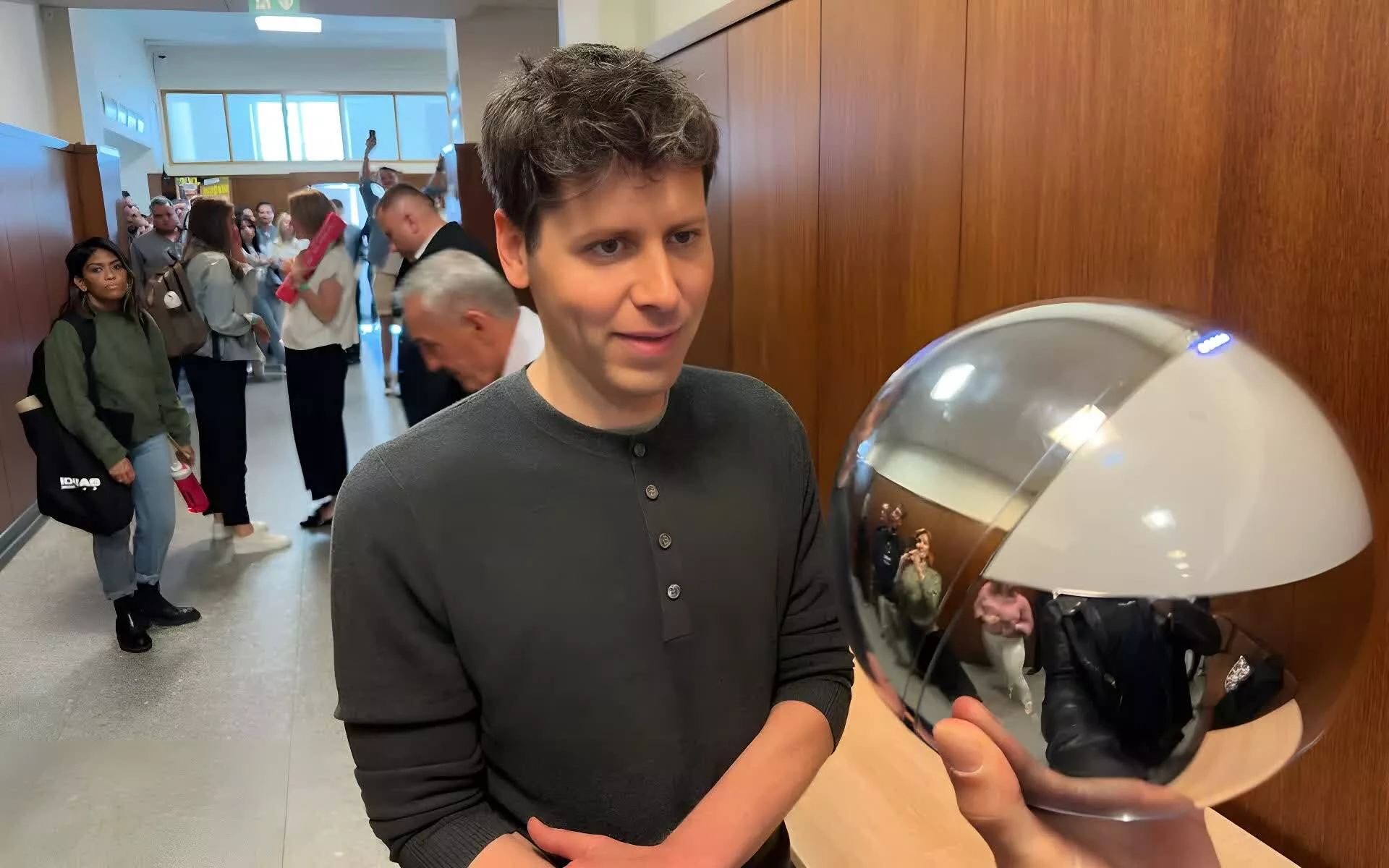
World is run by Tools for Humanity, a startup founded by Altman, with an ambitious mission statement: "To create a new identity and financial network that everyone in the world has." World uses a device similar to "Palantír" - the Orb scanner, to collect user iris information to determine identity. After completing the scan, users will receive a digital World ID that can be used in various applications.
According to Business Insider, World has collected biometric data from about 17.5 million people since its public launch in 2023. Although it is still far away from the goal of one billion users, this number is quite significant - especially considering that the project has encountered strict regulatory scrutiny in many countries.
The World project was banned in Kenya a month after its launch, and later received bans, suspensions or important regulatory requirements in Spain, Hong Kong, Portugal, Indonesia, Germany (Bavaria), and Brazil. South Korea and France have also investigated it, with main concerns over privacy protection.
Despite the controversy, Tools for Humanity is currently valued at US$2.5 billion and has received a total of US$240 million in funding from multiple investment institutions including Andreessen Horowitz.
World hopes to promote iris scanning by more users by cooperating with global mainstream applications. The company has announced a partnership with Match Group to provide a verification pilot for Japanese Tinder users, and has established partnerships with companies such as Stripe, Visa and Razer. At the same time, World is also discussing a cooperation plan with the social platform Reddit, and plans to verify the true identity of users through iris scanning, which has caused some controversy.
World's Orb device collects eye images through infrared cameras and depth sensors, generates a unique digital code (encrypted IrisHash), and checks it with a global database to ensure that each person is limited to one registration. Upon success, the system will issue a World ID, which can prove that the user "is a human" through zero-knowledge encryption without revealing personal identity. According to official statements, Orb devices do not store users’ personal information and only save original images with the user’s consent.
What is worth pondering is that Ultraman, who is driving the wave of generative AI, is now building a system that can "distinguish between humans and machines." As one former employee put it: “He created the disease and he was trying to develop a cure.”