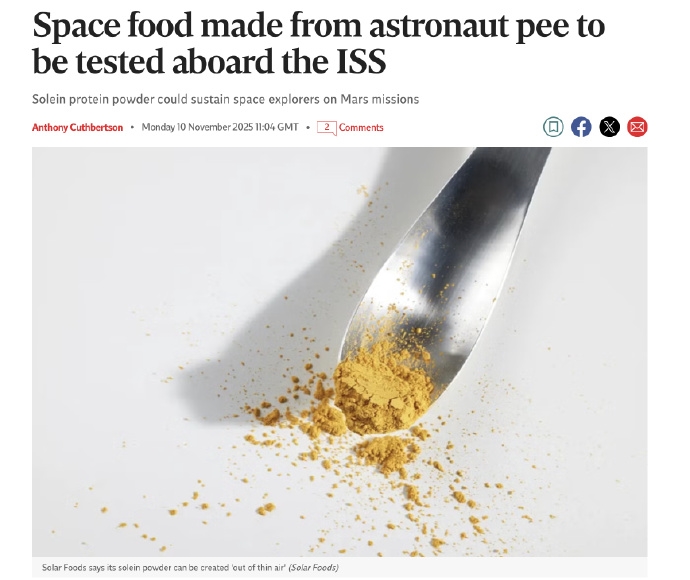
The European Space Agency (ESA) and Finnish company Solar Foods are collaborating to develop a breakthrough technology:Converting astronaut urine into high-protein food "Solein", plans to conduct tests on the International Space Station (ISS) in 2025-2026. At the same time, NASA is also advancing similar research, using gene-edited yeast to convert urine into nutrients and 3D printing materials.
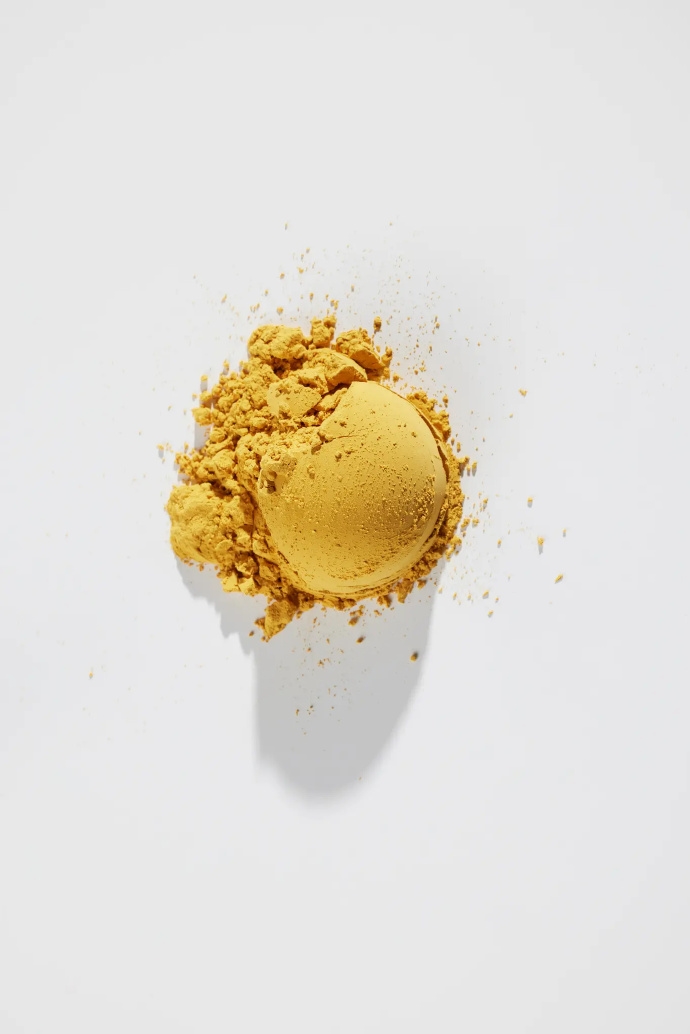
The nutritional powder, called Solein, is made through gas fermentation technology, requiring only microorganisms, air and electricity to produce.
Its core component, urea, an organic compound found in urine, will provide a critical nitrogen source for protein synthesis in a space environment, a process typically assisted by ammonia on Earth.
Solein can be added to other foods to increase protein content.While its taste has yet to be evaluated by astronauts, Solar Foods says it tastes "like cheese."
At present, food for the International Space Station is made and delivered from Earth. This method is feasible for low-orbit missions, but it is almost impossible for long-distance space travel.
As organizations such as SpaceX advance their Mars mission plans, the issue of long-term supply of astronauts becomes increasingly critical.If Sollein's test is successful, urine food technology will enable astronauts to become "producers of ecological cycles in space", fundamentally solving the supply problem.