Quietly, the current laser radar has developed into something that everyone could not imagine before. When it comes to lidar used in cars, everyone's first reaction must be that this once unattainable thing has now become a bargain, and even many entry-level models can afford it. But what you guys may not know is that while it’s getting cheaper, lidar is also secretly getting stronger and surprising everyone. Lidar, which was once criticized for its insufficient accuracy, is now so scary that it may be able to replace cameras...
This is really not an exaggeration. Look, this is an imaging picture of the mainstream 128-line lidar on the market.
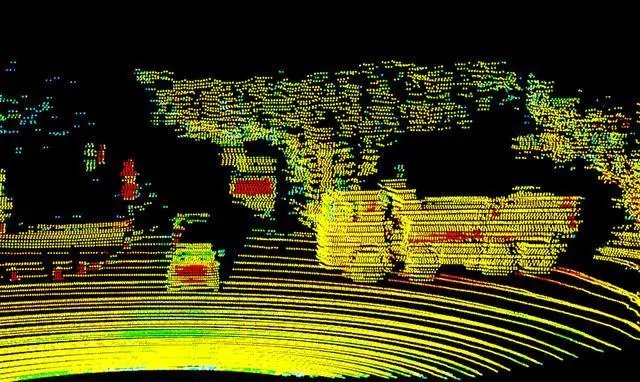
I can only roughly tell that there seems to be a truck inside, right? I can't really tell what the things on the side are.
And this is the imaging picture of a 1080-line lidar released by a domestic manufacturer not long ago.
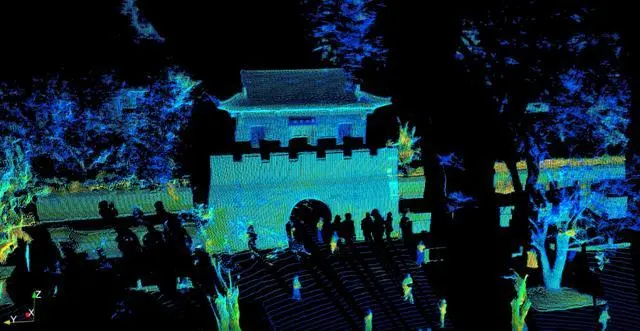
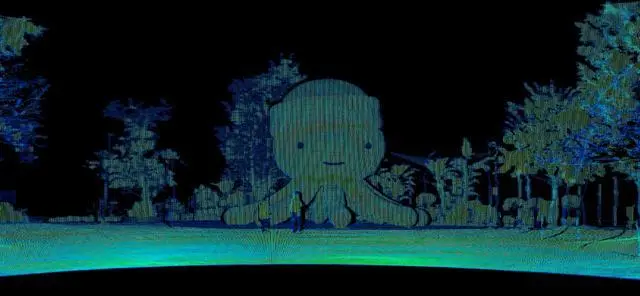
No matter what the object is, even the words written on the plaque on the city tower and the expression of the octopus sculpture are very different from each other.
Comparing the two brothers, it really feels like a patient with astigmatism suddenly put on glasses.
Obviously, the biggest contributor to such a huge improvement in imaging effect is the sudden increase in the number of lidar lines (128 lines ~ 1080 lines). But if you have ever known about lidar, you will definitely be confused. It seems that the line number of lidar has not increased significantly for a long time.
Huawei’s 192-line lidar used in Hongmeng series models has also been ranked among the most mass-produced lines for a long time.

But why has the price of radar wiring harnesses in new cars skyrocketed like the price of gold since this year, with prices starting at 500 lines (Lantu Taishan, Jikrypton 9X, Zhiji LS9) and even exceeding 1,000 lines?
To talk about this issue, we must first know what this so-called line number means, and the reason why it is stuck at more than 100 lines.
Some friends may think that the number of lines here refers to the lidar antenna, and the more the more awesome it is, but in fact, it actually refers to the number of laser rays emitted by the lidar.
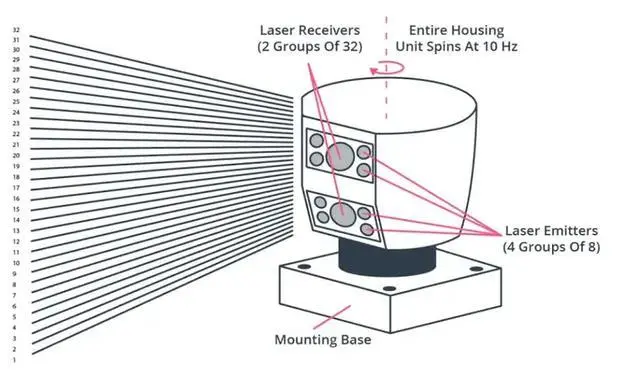
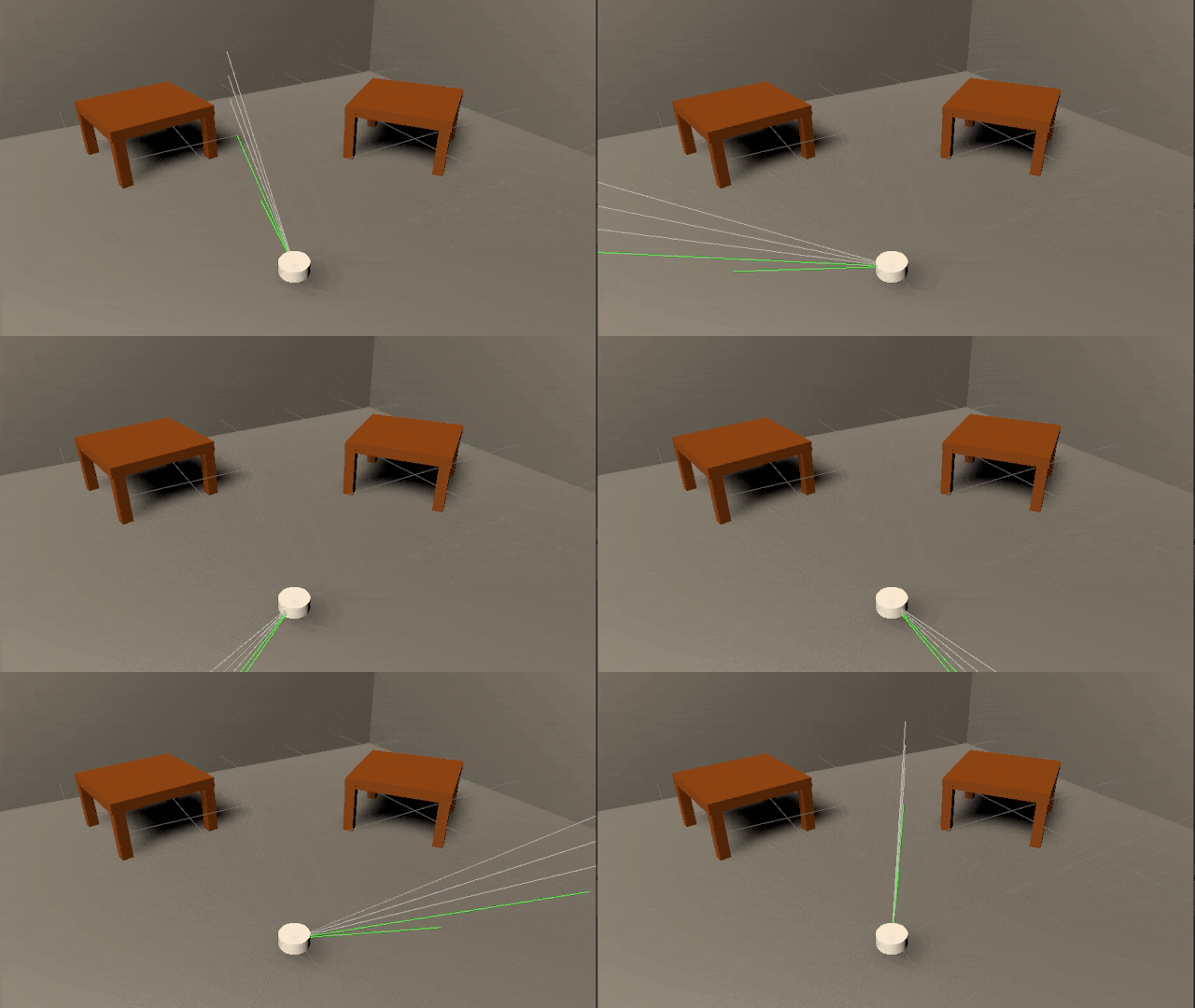
For example, the earliest mechanical lidar, the one that rotates in circles, may emit 32 laser beams at the same time to detect the environment, so this is a 32-line lidar.
Through the different reflection times of these lasers, lidar can mark the surrounding environment one by one. By combining all the effective points, a point cloud map can be formed for reference by the intelligent driving system.
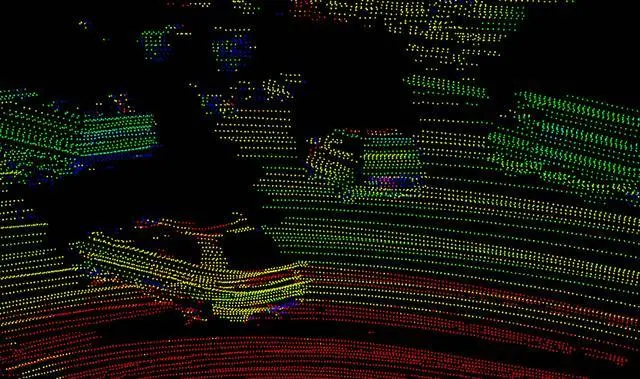
Obviously, the density of this point cloud is the "resolution" of the lidar detection environment.
If you want higher detection accuracy, you must increase the number of lasers emitted, which means increasing the number of laser emitters.
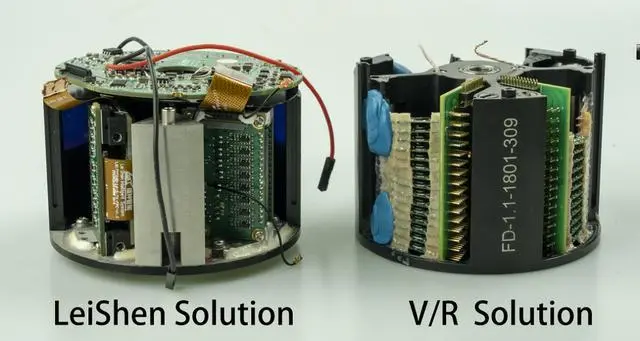
But lasers are bulky. Dozens of lasers put together are already very large.
If you want to get more than a hundred lines or more, then you probably have to use this style of painting.
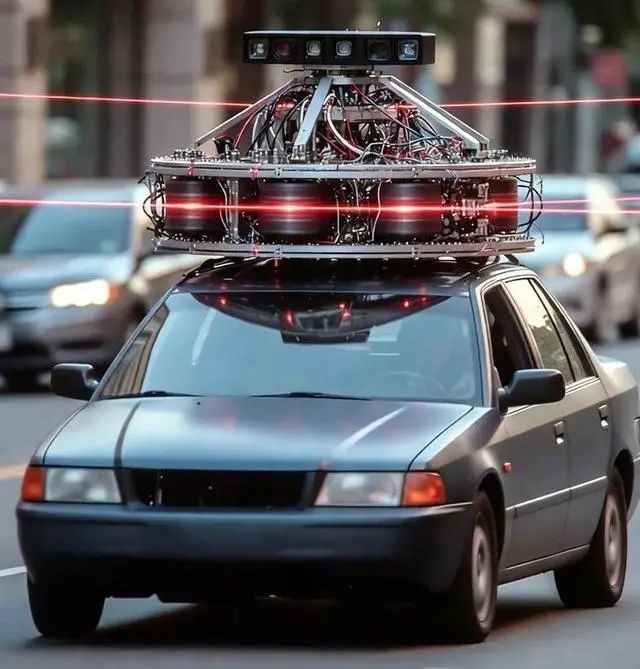
So a small group of smart engineers thought that if local methods didn't work, let's try to be clever?
As a result, the now very common semi-solid laser radar has appeared. It has a very small number of lasers, but can refract or reflect a small amount of laser light to different angles through special components (such as a small mirror or lens).
Principle of MEMS micro-mirror hybrid solid-state lidar
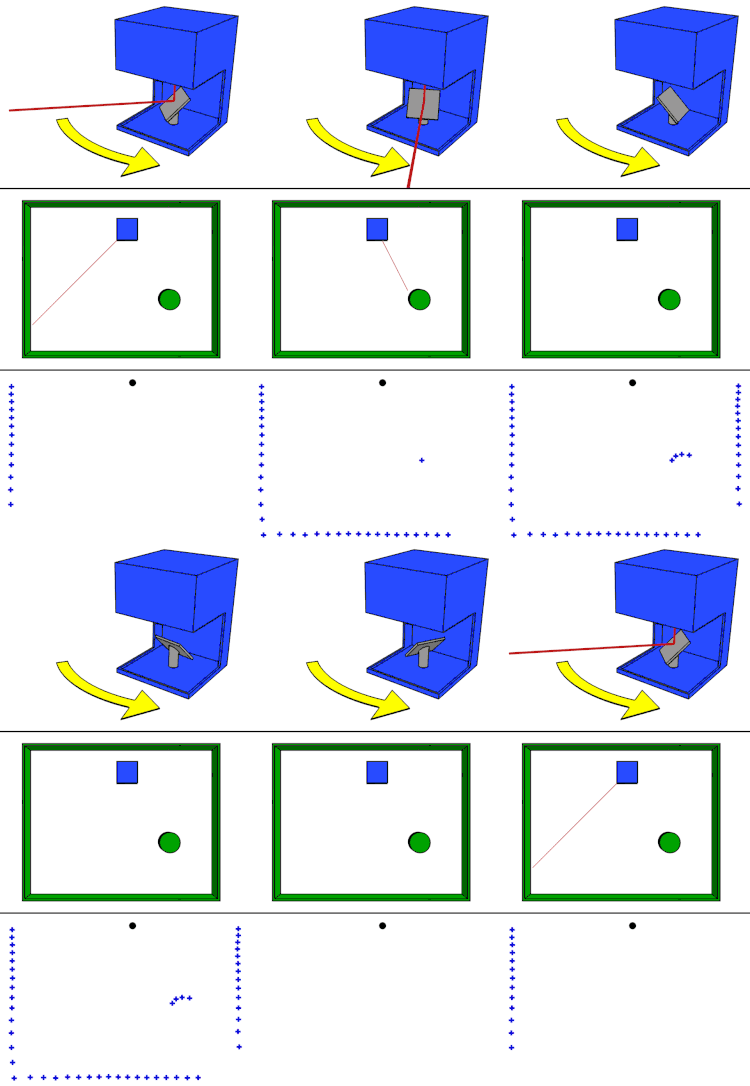
As long as this component moves fast enough, the refracted laser beam can collect point clouds with the same effect as multiple lasers in the same time integration. This is currently the most mainstream hybrid solid-state lidar in the industry, and its wire harness calculation method is the "equivalent wire harness" derived by analogy.
For example, the lidar HAP launched by Livox in 2021 actually only has 6 sets of laser transceivers, but it can reach a point cloud level similar to that of a 144-line rotating mechanical lidar in an integration time of 100ms, so it is an "equivalent 144-line" lidar.

If we use the analogy of drawing, it is actually a bit like the current AI drawing, which is equivalent to 10 illustrators in terms of drawing efficiency.
OK Having said so much, the point is finally coming.
According to this equivalent statement, as long as the mechanical parts inside move fast enough, wouldn't this laser radar have as many lines as you want?
But why is it that LiDAR with an equivalent of 128 lines has been put into mass production as early as 2021, but in the past few years, the mainstream solutions have remained at an equivalent of more than 100 lines, and only now have solutions with more than 500 lines appeared?
If the bottleneck of the last surge in the number of lines was the size of the laser, then the reason for limiting the increase in the number of lines this time will be more complicated. People in the world call it: analog signals.
As we mentioned before, the previous imaging principle of lidar relied on marking points in space and then synthesizing point clouds, which required a complex set of analog signal processes from transmitting to filtering to receiving.
To put it simply, it is a bit like using a pen to simulate the outline of the environment in 3D space.
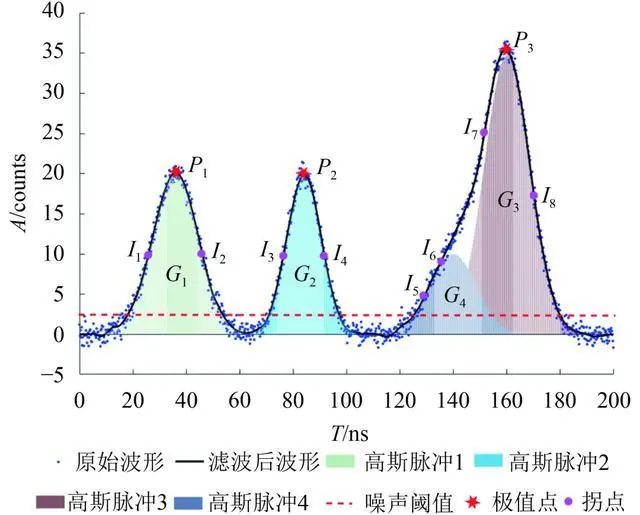
But just as there is an upper limit to the drawing speed of even the best painter, this kind of lidar that relies on analog signals has obvious physical bottlenecks.
Because if you want to process analog signals, you need a dedicated APD (Avalanche Photodiode) analog detector channel to output a waveform. For example, a 128-line signal must correspond to 128 analog channels.
16-channel lidar analog front-end component
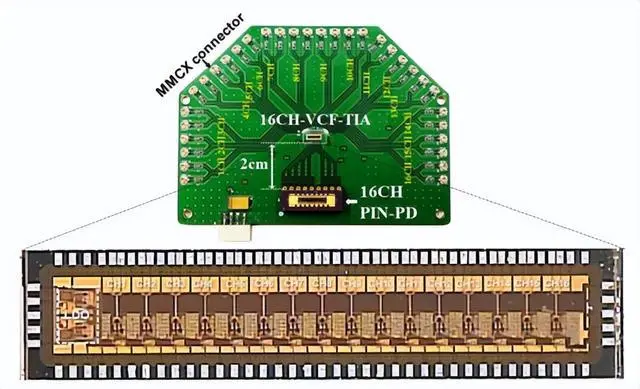
If you want to continue to increase the line count, on the one hand, the number and complexity of analog circuits will increase significantly, and the size of the attached circuits will also increase correspondingly. In new energy vehicles that have high integration requirements, it is basically impossible to increase the number of lines casually.
What to do? At this time, the smart engineers thought that it was not good to draw with a pen, so why don't we use pens?
The turning point of the story happened in 2023. A chip called IMX459 was mass-produced on a lidar equivalent to 192 lines, which immediately broke the line-number bottleneck of analog signal lidar.
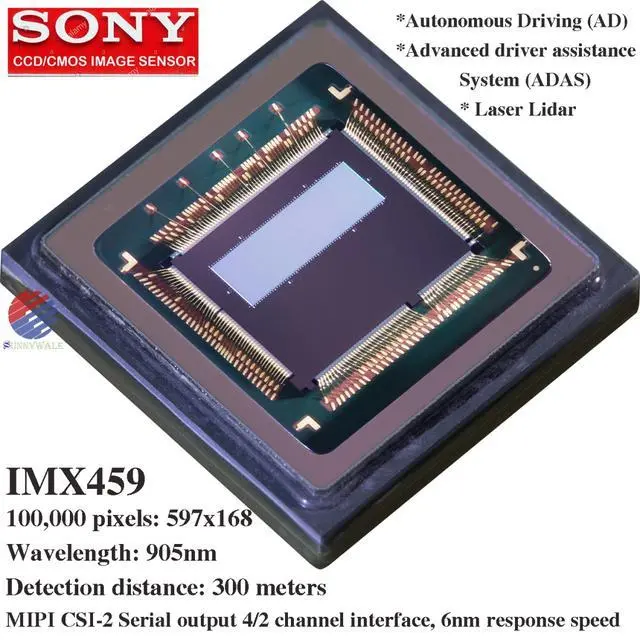
And the reason why it can do this is that it essentially uses photography instead of painting.
Specifically, SPAD (single photon avalanche diode) was used instead of the previous APD to collect laser signals, and the lidar ranging process was changed to a laser that instantly emits a laser beam, and then the SPAD array was used to receive information reflected back from a large piece of laser light at the same time.
With a snap, you can get a "photo" with depth information.
By the way, lidar, which relies on analog signals for ranging, has been transformed into a route that relies on COMOS to process digital signals, just like a camera.
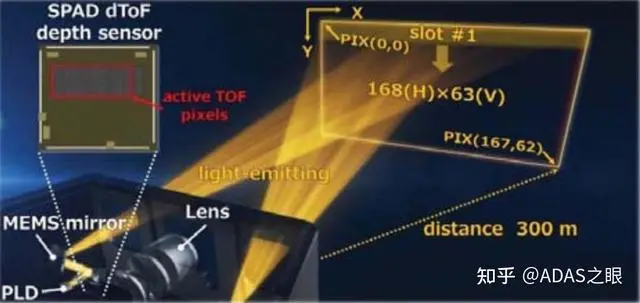
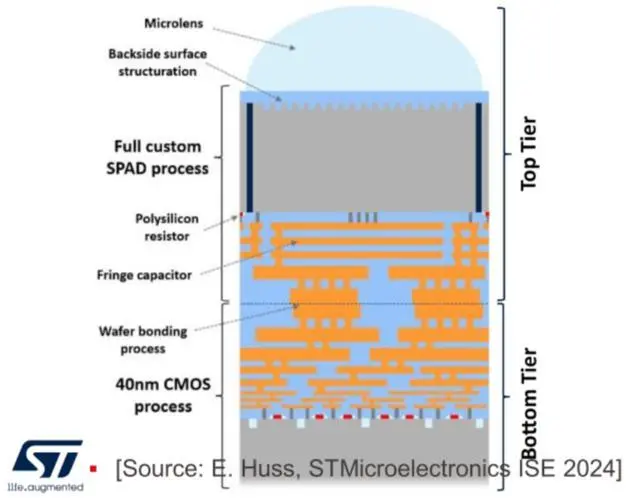
Coincidentally, the core of this solution: the structure of the SPAD-SoC chip is almost exactly the same as the CMOS on the camera, and both need to be manufactured using 3D stacking.
After all, the communication time error required for this thing is very small, and the physical distance between each layer of circuits needs to be as short as possible. Stacking them is naturally the best way.
Looking back at the matter of increasing the number of lidar lines, it is actually as simple as increasing the pixels of a camera, right? There is no need to build any analog channels and supporting circuits, just increase the number of pixels on the SPAD-SoC.
For this reason, not long after the previous IMX459 chip went into mass production, the IMX479 chip was already coming, and the equivalent wiring harness flew directly from the 192 line to the 520 line, which also allowed the lidar to achieve the same "putting on glasses" capability transformation as at the beginning.
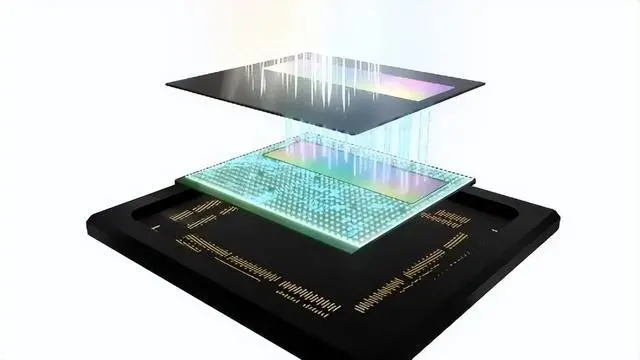
After achieving such a huge leap in capabilities, the debate about whether to use lidar for smart driving seems to have some clues again.
After all, the biggest problems that people complained about before about lidar were poor performance and high price. However, after being connected to the camera technology stack, not only the performance has achieved a huge leap, but the related software and hardware are also quite mature because of the camera industry, and there are still considerable advantages in cost and reliability.
So everyone can be mentally prepared. In the new cars we buy in the future, the number of lidar lines may double in a short while.
But just like a camera, no matter how powerful it is, it also requires a photographer with excellent skills. Although it is a good thing that the number of laser radar lines has increased, it still depends on whether the car companies have the ability to seize this wave of technological progress.
After all, the increase in hardware performance always requires software adaptation to maximize performance. The biggest challenge brought by the skyrocketing resolution of lidar at the software level is how to fit it with the image information seen by the camera.
This is easy to understand, right? On one side is a point cloud with a very high resolution, and on the other side is an image with a very high resolution. Only when these two are perfectly stacked can we provide the best reference for intelligent driving.
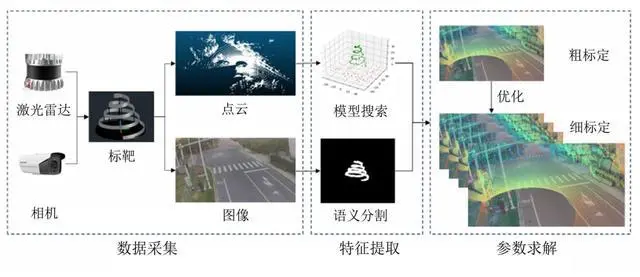
If it is stacked crookedly, the smart driver may see a car flying in the sky or something. If the stacking time is not synchronized well, there may be a conflict where the image shows the rear of the car but the point cloud shows the front of the car, which will affect the intelligent driving's decision-making in various situations and affect the safety of everyone using the car.
So if a car company uses a high-line-count radar but the smart driving performance is still poor, it can basically be determined that it is just for the numbers themselves.
Judging from the current situation, it seems that several companies have already experienced similar symptoms.