Scientists at the University of Texas at Austin released the latest research results, pointing out that volcanic activity on early Mars may have released large amounts of reactive sulfur gas, thus warming the planet and creating conditions suitable for microbial survival. The scientific community has been committed to exploring the true appearance of Mars in its early days, and this latest study proposes that the sulfur gas released by volcanic eruptions may help heat Mars through the greenhouse effect, making its atmosphere potentially capable of nurturing life.
This research was completed by a team at the University of Texas at Austin and published in the journal Science Advances.
By analyzing the composition of Martian meteorites and conducting more than 40 computer simulations, the team examined the amounts of carbon, nitrogen, and sulfide gas that early Martian volcanoes might have released under different temperatures, chemical environments, and gas concentrations. The results challenge climate models that previously thought sulfur dioxide (SO₂) dominates. Simulations show that 3 to 4 billion years ago, volcanic activity on Mars was more likely to release large amounts of "reduced" sulfur gas, including hydrogen sulfide (H₂S), disulfide (S₂), and sulfur hexafluoride (SF₆), which may have a strong greenhouse effect.
Lead author Lucia Bellino, a doctoral student in earth sciences, pointed out that the presence of these reduced sulfur may cause greenhouse gases and haze on Mars, helping to retain heat and liquid water. Such gases and redox environments also support diverse microbial life in Earth's hydrothermal systems.
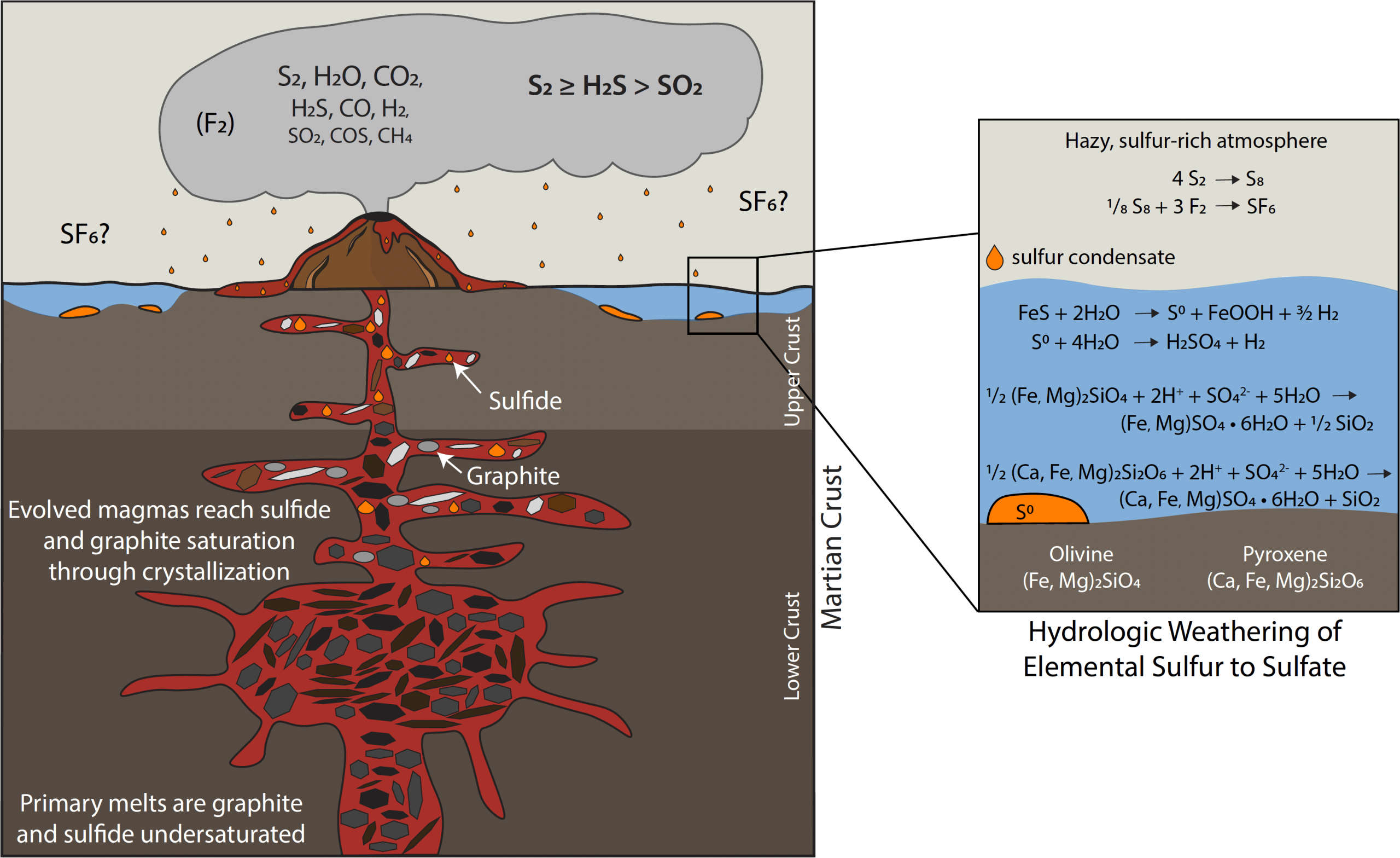
Rather than focusing solely on surface gas releases, the study also modeled how sulfur is transformed during geological processes, specifically how it separates from other minerals after being incorporated into underground magma layers. This transformation process is extremely important for understanding the chemical state of the gas before being released to the surface, and is of more practical significance for modeling the early climate of Mars.
The study also found that sulfur on Mars frequently transforms into different forms. Most of the sulfur in meteorites is reduced sulfur, while the surface of Mars is mostly sulfur combined with oxygen. This suggests that the "sulfur cycle" - the transformation between different forms of sulfur - may have been dominant on early Mars.
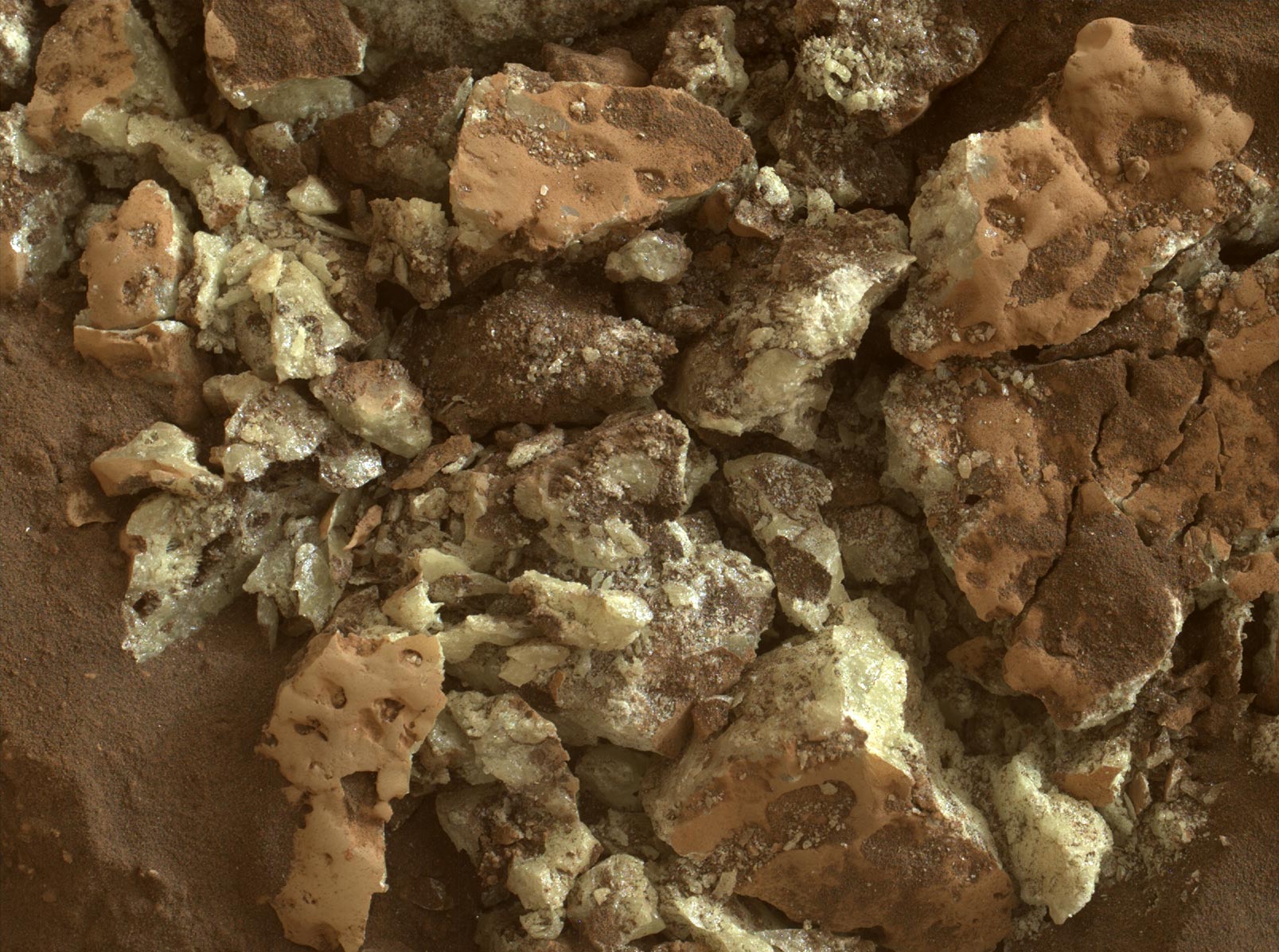
Last year, NASA's Curiosity rover accidentally crushed a rock and discovered the element sulfur, a discovery that supports the team's model. For the first time, pure sulfur minerals that are not combined with oxygen have been directly discovered on Mars, verifying the team's inference about the release of disulfides and the precipitation of pure sulfur.
The team plans to use models to further study the source of water on Mars in the future and explore whether volcanic activity may provide large amounts of water on the planet's surface. They also hope to learn whether reduced sulfur could have served as "food" for microbes on early Mars to support life in an environment similar to Earth's hydrothermal systems.
Today's Mars is far away from the sun, and the average temperature is about minus 80 degrees Celsius. Bellino hopes that climate modeling experts can use the team's research to predict the temperature of early Mars and estimate how long microorganisms may survive in a warm climate.
The research was funded by the Center for Planetary Systems Habitability at the University of Texas at Austin, the National Science Foundation, and the Heising-Simons Foundation.