Within three months, the fresh food store run by her father in Jiaxing encountered nine "refund only" incidents in a row, which alarmed Chen Xiaowei, who works in Shanghai. During the holiday in October this year, she made a special trip back to her hometown to carefully check her father's mobile phone records and try to figure out the reason. "My father's shop specializes in 'pick and grow now' and has been operating for five years. Before each shipment, he will record a box sealing video to clearly record the color, diameter and packaging order number of the citrus." Chen Xiaowei told CCTV.com's "Front" reporter.
However, when she logged into the backend of the online store to check, she found that the buyers who had "refunded only" in these cases had all provided pictures of unboxing - the citrus in the box was either rotten, dehydrated, or even showed signs of insect infestation.
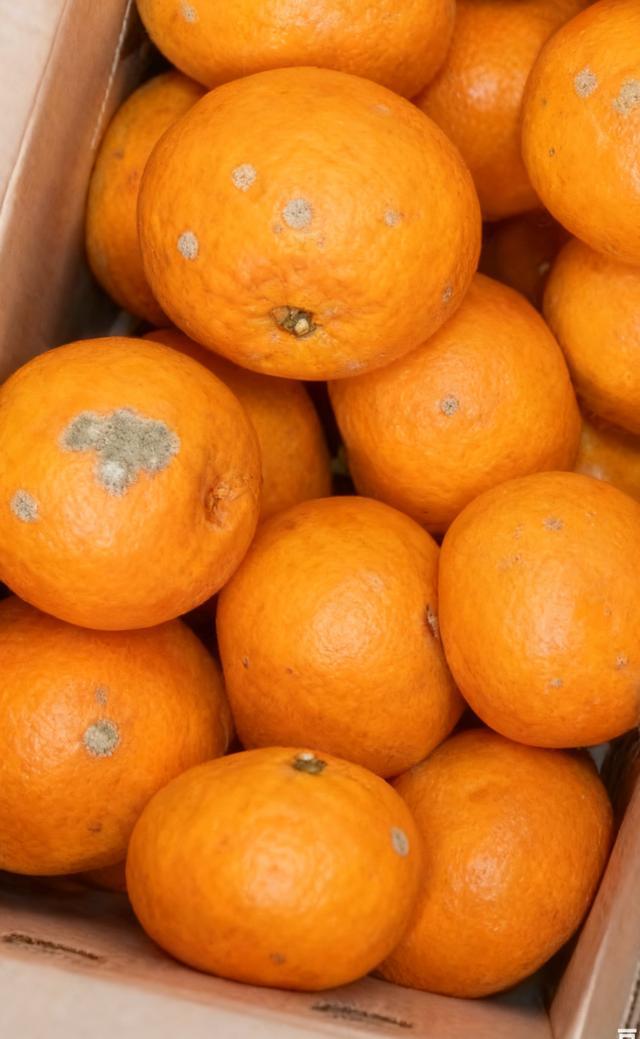
Photo provided by interviewee
At first, Chen's father thought there was a problem with the express delivery link, and he agreed to refund applications for the first few orders. But as similar situations became more and more common, he failed to communicate with the express company many times, so he had to ask his daughter for help. "I looked carefully at each picture one by one and noticed that there were traces of suspected watermarks in the corner of one of the pictures, as if it had been cropped." Chen Xiaowei thought of the "refund-only" phenomenon of AI picture editing recently reported in the media, and suspected that the store had encountered an organized and malicious refund.
Through a simple search, Chen Xiaowei found that the use of AI technology to tamper with pictures, falsify product quality issues and apply for refunds is no longer an exception. She immediately submitted a complaint to the platform about the sealed video and the suspected AI-modified pictures, but they were rejected due to "insufficient credentials." The platform suggested that she negotiate with the buyer to resolve the issue. "But such buyers have usually blocked us and cannot be contacted at all." Chen Xiaowei said helplessly.
She further called the platform's customer service, and the other party replied that "it was impossible to determine whether the image was generated by AI." Since the total amount of the order involved was less than 1,000 yuan, it did not meet the standards for filing a fraud case, and it was difficult to go to the police. Chen Xiaowei lamented that watermarks generated by AI can be easily removed, and the platform lacks an effective detection mechanism. In the end, small businesses like her father who operate with integrity are often the ones who suffer.
It is worth noting that on March 14, 2025, the Cyberspace Administration of China jointly issued the "Measures for Labeling of Synthetic Content Generated by Artificial Intelligence" on March 14, 2025, which clearly stipulates that AI-generated content needs to be marked compulsorily, such as adding prompt symbols to text, embedding watermarks in pictures and videos, etc. This measure was officially implemented on September 1 this year.
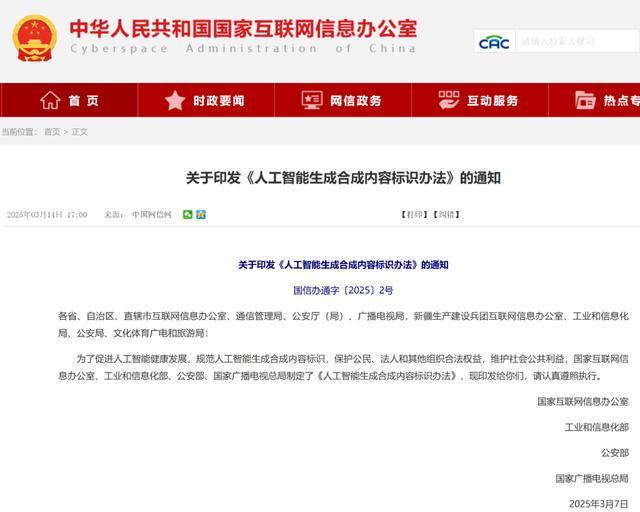
Source: Website of the Central Cybersecurity and Information Technology Commission Office
However, a reporter from "Front" found that on the one hand, there is still a large amount of newly generated AI content that has not been marked as required; on the other hand, even if watermarks have been added, they can be easily removed through technical means. This brings new challenges to the implementation of the “mandatory labeling” policy.
The go and stay of “watermark”
In fact, since the rise of generative AI technology, "fighting counterfeiting" and "identifying authenticity" have become unavoidable topics in the process of technological development.
"Currently relevant regulations mainly divide AI content identification into explicit and implicit identification. Explicit identification requires labeling AI-generated content in a way that users can clearly perceive." Lu Lei, an independent AI developer, pointed out that the current controversy is mainly focused on the implementation level of explicit identification.
"But the mainstream 'watermark' method has a fatal flaw - it is easily tampered with or removed." Lu Lei gave an example. "For example, most AI drawing tools place the watermark in the corner of the picture. Users only need to use the cropping function of the phone to easily remove the watermark without affecting the overall effect of the picture."

Remove AI watermarks by cropping pictures
The reporter's investigation found that there are a large number of "picture and video watermark removal" services on e-commerce platforms, with a single fee of only a few yuan to more than ten yuan. Some merchants revealed that the operation of removing watermarks from pictures is simple and can even be completed using basic photo editing software. Removing watermarks from videos is relatively complicated and requires frame-by-frame repair and calibration. However, those that do not require high image quality can be directly cropped and removed.
In this way, videos or pictures can easily get rid of the label of "AI generated" and achieve the effect of being fake and real. "After removing the watermark, not only will it be difficult for ordinary users to identify it, but some professional detection tools will also become ineffective," Lu Lei said.

At the same time, the creator group is faced with the problem of "over-identification". Illustrator Li Muyang complained: "I used 72 layers and more than 30,000 hand-drawn strokes to complete the work. Just because I used AI to fine-tune local light and shadow, the system labeled it as 'AI generated'." Not only was his work automatically tagged after it was released on social platforms, but it also encountered traffic restrictions. The exposure was less than one-tenth of the usual amount, and he even received negative comments about "being lazy with AI."
"Everything from the hair strokes to the folds of clothing has been carefully polished, and AI currently cannot achieve this level of creative accuracy." Li Muyang said helplessly that he contacted the platform's customer service, but was refused manual intervention and correction on the grounds of "automatic identification by the system."
On the one hand, consumers are struggling to identify tampered AI content, and on the other hand, creators are trapped by the platform’s mechanized identification mechanism. The "mandatory marking" of AI watermarks encounters two seemingly contradictory but actually common embarrassments.
Platform Difficulties
According to the "Generative Artificial Intelligence Industry Development Report (2025)" released by the China Academy of Communications, the number of generative AI users in my country will reach approximately 380 million in 2024. At the same time, the "China Online Audiovisual Development Research Report (2025)" shows that in 2024, the average number of new video contents per day will exceed 100 million.
Faced with such a huge amount of data, the platform is stuck in a resource dilemma where it is difficult to implement “one-by-one review”.
According to Lu Lei’s observation, current “misjudgments” like what Li Muyang encountered mainly stem from the AI recognition model commonly used by platforms. "These models establish judgment standards by learning massive amounts of AI-generated content, but they can easily misjudge high-quality features in human creations as AI products." For example, the brushstrokes and color combinations that the painter has repeatedly polished, and the logical expressions in academic papers may be marked by the system as AI works. The more sophisticated the works, the easier it is to be misjudged, forming a technical paradox.
Feng Zixuan, a professor at the School of Artificial Intelligence of Southwest University of Political Science and Law, further pointed out: "The content generated by artificial intelligence covers multiple forms such as text, short videos, live broadcasts, and virtual scenes. The technical architecture and communication logic of different scenarios are hugely different. There is no way for a single technical solution to adapt to all scenarios."
However, even using implicit identification embedded in code still faces the challenge of inconsistent technical standards. Zhang Xiao (pseudonym), an AI architect at a leading Internet company, revealed that the implicit identification formats generated by different AI tools vary greatly: some embed specific characters, and some use digital watermark encryption. "It is difficult for the platform to adapt to dozens or even hundreds of identification rules. In the process of cross-platform communication, problems such as identification loss or unrecognizability often occur."
Zhang Xiao also said that multi-modal AI recognition requires strong computing power support. At present, in order to control costs, companies cannot conduct comprehensive testing of all uploaded content, and can only simplify the work through random inspections, keyword filtering, etc.
Therefore, the platform is caught in a double dilemma: on the one hand, it is difficult to cope with the massive amount of generated content every day; on the other hand, it must balance between "maintaining the creator experience and platform traffic" and "fulfilling the verification obligations of AI-generated content."
Li Muyang believes that the current platform has not yet established a complete complaint mechanism. "I can accept a miscarriage of justice, but I cannot accept that there is no way to appeal." He tried to communicate with the platform many times, but failed to solve the problem. "Today, as AI becomes more and more popular, misjudgments will inevitably occur on the platform, but special appeals channels must be set up."
In this regard, Lu Lei revealed that establishing a professional review team requires a large number of compound talents who understand both AI technology and creation. However, such talents are currently scarce and the cost of training is high. Therefore, situations like Li Muyang's "complaints that took 12 days to be resolved" will still exist for some time in the future.
Solving AI chaos cannot stop at “putting a watermark”
During the interviews, interviewees generally agreed that the original intention of mandatory labeling of AI content was reasonable. However, many experts and industry insiders have put forward their own opinions on how to ensure that AI does not deviate from the track in the direction of "technology for good".
Zhao Jingwu, associate professor at Beihang University School of Law, pointed out that mandatory labeling is not the "master key" to solve the AI chaos. What really needs to be established is a governance system covering the entire chain.
So, how to build norms that are both penetrating and broadly applicable? In Feng Zixuan’s view, the basic framework should be built by combining “bottom line” and “elasticity”: “That is, a unified identification standard should be established by law, and at the same time, adaptation space should be reserved for different application scenarios. The dual requirements of ‘explicit identification’ and ‘implicit identification’ should be clarified, and different scenarios should be matched through a responsibility layering mechanism.” For example, service providers bear the “source identification obligation”, and platforms perform “verification and supplementary obligations” and clarify legal responsibilities for users who intentionally delete identification.
Faced with the phenomenon that "the cost of counterfeiting is low and compliance leads to losses," Feng Zixuan advocated increasing the price of illegality: "Content creators should bear the primary responsibility and must complete labeling in accordance with the law. Once fraud occurs, they should bear the legal consequences as the first responsible party. Platforms must not only provide labeling technical support, but also establish a real-time verification mechanism. If illegal content is spread on a large scale due to platform negligence, it should bear corresponding supplementary responsibilities."
In response to the problem of "accidental injury" that may be caused by AI logos, Feng Zixuan suggested distinguishing between commercial and non-commercial scenarios and setting differentiated labeling requirements for originality. "Non-commercial content can use lightweight and explicit logos, while commercial content needs to ensure that the logo is clearly visible, and establish a misjudgment review mechanism to allow creators to apply for error correction and compensation from the platform."
In fact, in addition to mandatory labeling, AI-related regulations are still being improved. Professional lawyer An Yuhua pointed out that the current "Interim Management Measures for Generative Artificial Intelligence Services" and the "Measures for the Labeling of Artificial Intelligence Synthetic Content" are departmental regulations, with low legal effectiveness and fragmented content, lacking a high-level coordinating law. "Take the AI face-changing incident that Wen Zhengrong encountered as an example. Rights protection can only rely on scattered clauses such as portrait rights and privacy rights. It is difficult to quantify large-scale reputational damage and lacks strong high-level legal support."
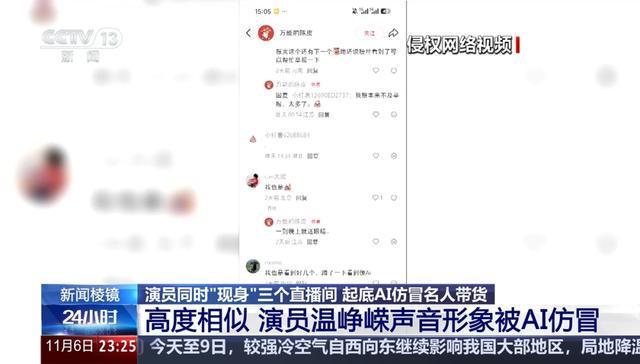
While the overall coordination of the rules is insufficient, the specific details also need to be further clarified. Feng Zixuan believes that the current dual-track marking mechanism standards are vague and the penalty rules are not clear enough. It is necessary to introduce more detailed implementation rules. "For example, based on mandatory national standards, ensure that implicit logos can be traced and verified across platforms; link the amount of fines to illegal gains, layer penalties according to the circumstances of violations, increase penalties for malicious tampering with logos, batch counterfeiting, etc., and clarify the boundaries of responsibilities of creators, platforms and technology providers."
It is foreseeable that the promulgation of the "Measures for Labeling of Synthetic Content Generated by Artificial Intelligence" is only the starting point of the governance process. Improving mandatory labeling is only the foundation. Building comprehensive AI information governance may be the real solution to the problem.