Elon Musk has once again warned of the risks of artificial intelligence and listed three key elements that he believes will ensure the technology brings a bright future to mankind. The billionaire, who is also the CEO of Tesla, SpaceX, xAI, X Platform and The Boring Company, participated in Indian billionaire Nikhil Kamat's podcast on Sunday.
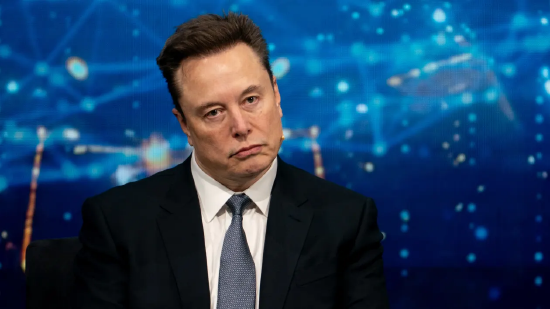
Musk said on the show: "There is no guarantee that artificial intelligence will bring a bright future to mankind. When you create a powerful technology, there are risks - this technology may be destructive."
Musk co-founded OpenAI with Sam Altman but quit the company's board of directors in 2018. After OpenAI launched ChatGPT in 2022, Musk publicly criticized the company for departing from its founding mission of "safely developing artificial intelligence in a non-profit model." In 2023, Musk’s xAI company developed its own chat robot Grok.
Previously, Musk warned that "artificial intelligence is one of the biggest risks facing human civilization in the future" and emphasized that the rapid development of artificial intelligence makes its risk to society greater than that of cars, airplanes or drugs.
In this podcast, the technology billionaire emphasized that artificial intelligence technology must "pursue the truth" rather than repeat misinformation. "(Spreading misinformation) can be extremely dangerous," he told Nikhil Kamath, who is also the co-founder of retail stockbroking firm Zerodha.
“Truth, beauty and curiosity, I think these are the three most important things for artificial intelligence.” Musk said.
He pointed out that if it does not strictly follow the truth, when artificial intelligence obtains information from online sources, it "will absorb a lot of lies and make it difficult to reason rationally - because these lies are contrary to reality."
He added: "If you force an AI to believe false information, it can go 'off the rails' because this will lead it to reach the same incorrect conclusions."
“Illusion” is one of the main challenges currently facing artificial intelligence. Earlier this year, an artificial intelligence feature Apple rolled out on its iPhone models generated fake news alerts.
This included an erroneous excerpt from a BBC News app notification about the PDC World Darts Championship semi-finals, which incorrectly stated that British darts player Luke Littler had won the tournament. But in fact, Littler won the championship in the final the next day.
Apple told the BBC at the time that it was working to resolve the issue with an update that would clearly indicate that the text displayed in notifications was generated by Apple Intelligence.
Musk also mentioned that “a certain awareness of beauty is important” and “this beauty can be recognized at a glance.”
He believes that artificial intelligence should aspire to learn more about the nature of reality because humans are more valuable for exploration than machines.
"Even if we don't pursue human prosperity, just looking at the survival and development of human beings is more meaningful than the elimination of human beings." Musk said.
Jeffrey Hinton, a computer scientist known as the "father of artificial intelligence" and former vice president of Google, said on the "CEO Diary" podcast earlier this year that artificial intelligence "has a 10% to 20% chance of wiping out the human race." Among the short-term risks he cited were problems with artificial intelligence "hallucinations" and the automation of entry-level jobs.
Hinton added: "Our hope is that if enough smart people put enough resources into research, we can eventually find the right development methods to ensure that artificial intelligence never intends to harm humans."