New NASA Administrator Jared Isaacman said Thursday that the agency will choose the company that builds the fastest lunar lander, Bloomberg reported.Whether it's Elon Musk's SpaceX or Jeff Bezos' Blue Origin, the goal is to land humans on the lunar surface for the first time in more than 50 years.
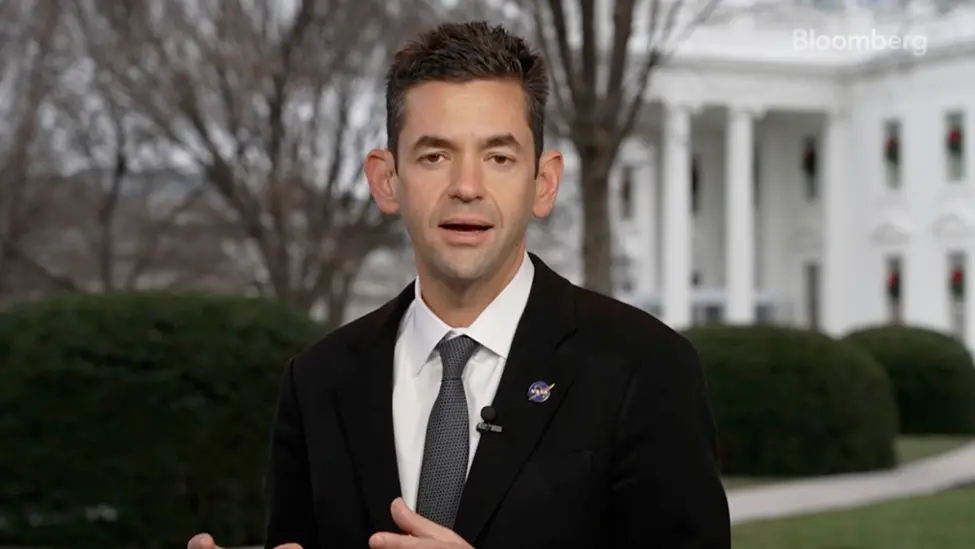
Isaacman interviewed by Bloomberg
Isaacman is a former financial technology executive and an astronaut on SpaceX missions who has a close relationship with Musk. Musk had actively supported Isaacman as the new NASA administrator and was furious when Trump withdrew his nomination.
On Thursday, Isaacman spoke to Bloomberg Television on his first day on the job.In the interview, he emphasized the urgency of landing on the moon before China and establishing a permanent U.S. lunar base there.
"I believe both companies understand that whoever can be the first to provide a lander to ensure that the United States achieves its strategic goals on the moon is who we will choose," Isaacman said shortly after meeting with President Trump in the Oval Office.
Both SpaceX and Blue Origin have contracts with NASA to build lunar landers for the agency's Artemis program. SpaceX signed a contract worth more than $4 billion with NASA and plans to use its giant "Starship" spacecraft to send astronauts to the moon. The company is currently designated to carry out the first manned lunar landing.
But in October this year, NASA's then acting administrator Sean Duffy (Sean Duffy) was dissatisfied with SpaceX's slow progress and announced plans to "open" SpaceX's lunar lander contract to competition. In the past year, SpaceX's "Starship" rocket has faced many technical challenges and setbacks. Critics worry that the company's lengthy development process will result in China landing on the moon before NASA is done by the end of this decade.
Isaacman takes over as NASA administrator this time at a time when the agency is facing multiple challenges such as staff reductions and budget cuts. Isaacman stressed that the budget proposed by the president and Congress will be fully utilized.
"I think whether it's $20 billion or $25 billion a year, this is a very meaningful budget," Isaacman said.
Isaacman also praised Trump's recent executive orders. The executive order reiterates support for NASA's Artemis lunar exploration program and calls on the agency to return astronauts to the lunar surface by 2028 and establish a lunar base by 2030.