If you don’t drop out of school, it will be too late to change the world! The CEO of a company was shocked to find that all the 18-year-olds around him were dropping out of school. What’s even more frightening is that there is a group of CEOs born in 2005 and 10, who received millions of dollars in financing before they even got their driver’s licenses.American college students are setting off a wave of dropouts. Recently, Box CEO Aaron Levie said in an interview with a16z that he was shocked by a special group of entrepreneurs. "I look at the 19- and 20-year-old college students around me, and almost everyone is dropping out of school!" Why?
Because with AI, they can create companies hundreds of times faster. Many of them dropped out of prestigious schools such as MIT and Stanford, and used AI tools to create products in a few weeks that traditional companies took months to create.
The CEO said directly: These young people are reshaping the world at a speed that is unimaginable for our generation.
College students collectively “defected”
AI is so cool
The wave of dropouts among American college students has intensified this year.

A founder posted on LikedIn that the rules of the world have changed.
The New York Times has long reported that a large wave of young people in their twenties are dropping out of school and gathering in Silicon Valley to start businesses, because if they hesitate for a moment, they will miss the wave.
Forbes also reported that in 2025 alone, dozens of students from Harvard and MIT will choose to drop out.
For example, 22-year-old Chinese-American Steven Wang successfully founded the follow-up investment platform Dub eight months after dropping out of Harvard.
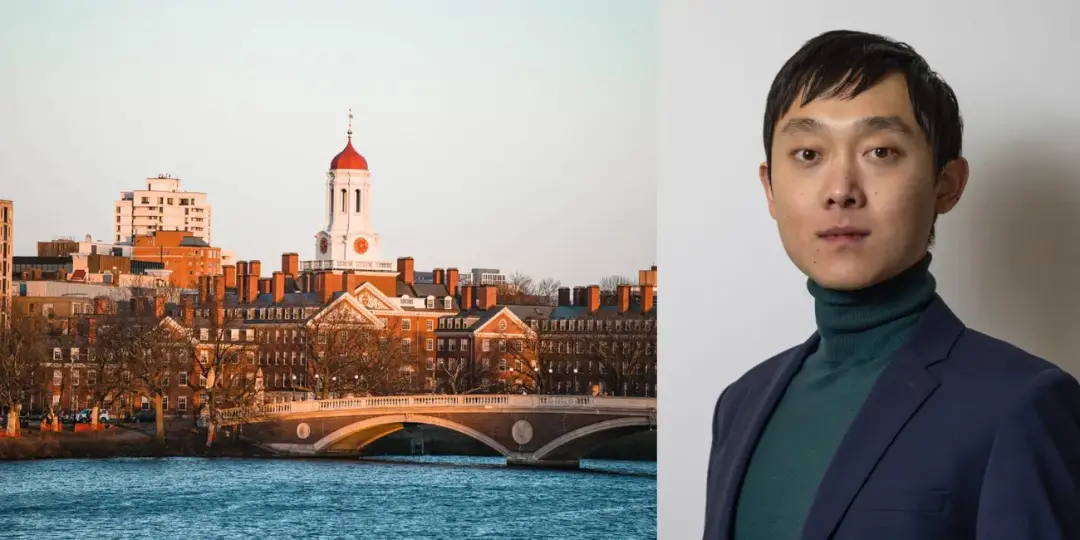
Now, Dub has received more than $17 million in financing, and investors include Silicon Valley heavyweights such as Uber CEO.
Regarding dropping out of Harvard, he said, "It was the best decision I ever made."
In high school, the VR wave was on the rise. At the age of 16, he co-founded the VR education company Realism with two friends and dropped out of high school.
"We got support from the MIT accelerator program, raised money and moved to Boston, where three teenagers lived in a one-bedroom apartment for a year."
In 2019, 17-year-old Steven went to Apple for an interview, bringing with him the model design drawings he made for the new Apple Watch, and then received an offer as a full-time engineering project manager.
After eight months at Apple, he decided to go back to high school. After graduation, he was admitted to Harvard.
While at Harvard, he was fascinated by his philosophy classes and wanted to explore the academic world more deeply. However, that period coincided with an exciting time for the stock market, with the meteoric rise of meme stocks and cryptocurrencies, rekindling his interest in investing.
During his second semester in college, he developed a project in a business class that allowed retail investors to automatically copy the trades of other investors.
On the day of the demo, he invited investors from Realism. The latter said, "Whatever you do next, we will invest in it."
In June 2021, after only 8 months of studying at Harvard, Steven decided to drop out. Today, Dub has a team of 25 people.
Give up Ivy League schools, these post-00s earn back 100 billion
Dropping out of a prestigious school to start a business is nothing new in the United States. To create a unicorn worth tens of billions in a college dormitory, sometimes all it takes is a flash of heat.
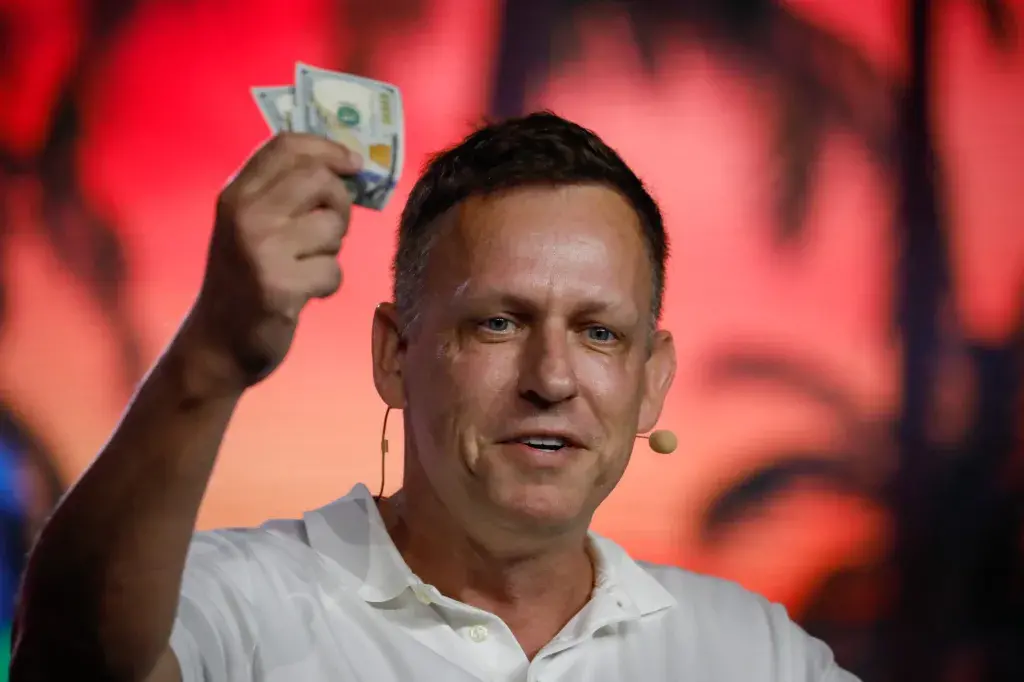
I'll give you $200,000 on the condition that you drop out of school and start a business. Are you willing?
After Silicon Valley investment tycoon Peter Thiel issued this invitation, the "Thiel Scholarship" has given away more than US$100 million from 2011 to today.
These young people in their early 20s gave up degrees from prestigious schools such as Harvard, Brown, and Carnegie Mellon, but founded companies with a total value of more than 100 billion U.S. dollars, including Figma worth 40 billion U.S. dollars, Scale AI, Ethereum and Plaid worth 29 billion U.S. dollars.
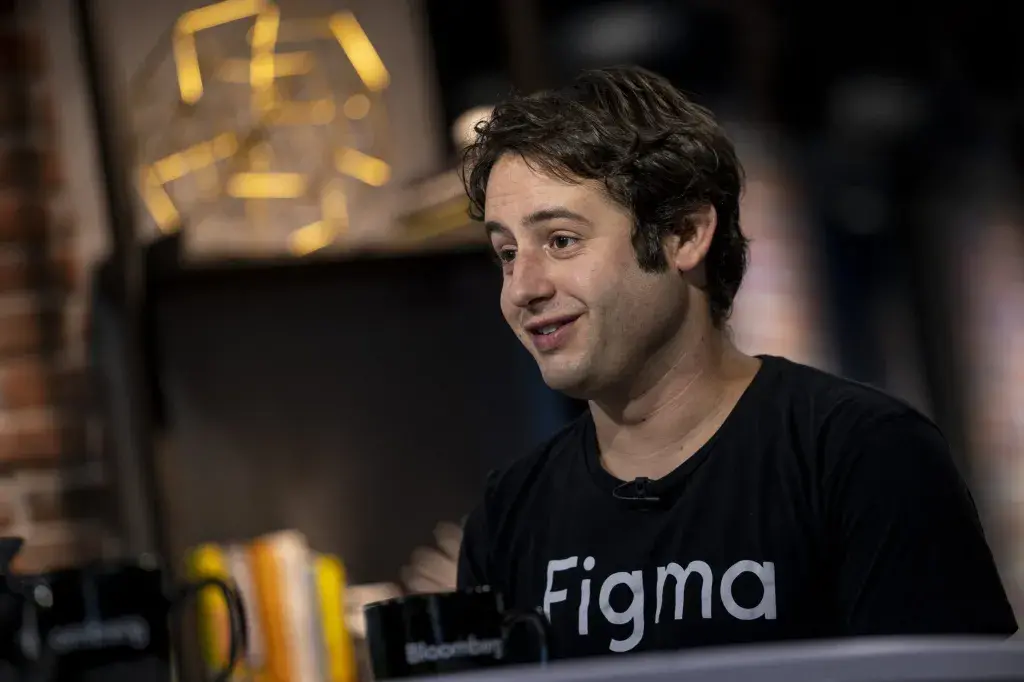
In 2012, 19-year-old Dylan Field sat in his dorm room at Brown University, dreaming up an idea for a collaborative design tool. Later, this product, called Figma, became a strong competitor to Adobe.
Recently, Figma successfully went public, and Field's net worth soared to US$5 billion.
When he first decided to drop out of school, his mother was very anxious, worried that not having a degree would affect her son's career prospects.
When she was an undergraduate student at CMU, Lucy Guo was very dissatisfied with the school's teaching methods. "There were more programming competitions in a few days than the professor taught."
In 2014, she decided to drop out of school and co-found Scale AI with Alexandr Wang, whom she met while working at Quora. When Meta acquired the company for $14 billion, its valuation soared to $29 billion.
Lucy Guo became the youngest self-made female billionaire in history, while Alexandr Wang recently turned Meta upside down with Xiao Zha.

The other three young people - Brendan Foody, Adarsh Hiremath, and Surya Midha - are co-founders of the AI recruitment platform Mercor. In February this year, the company's valuation soared to $2 billion.
“I feel an extreme sense of urgency and existential fear about missing out on the AI boom,” Midha said. Hiremath felt the diminishing returns after spending a year at Harvard University.
For them, waiting four years after graduation to start a business may miss the window to change the world.
Drop out of school and write Prompt!
This post-10 generation CEO is going crazy
You don’t even need to wait until college!
As long as you can write prompts, you can manage a start-up company with 50,000 users during high school breaks.
This Wall Street Journal article takes stock of a group of high school students who have not yet taken the driver’s license test but already have their own company.
Like other dedicated technology founders, Nick Dobroshinsky is racing against time every day.
But his timetable is very different——
From 8 a.m. to 2:55 p.m., he had to sit in his high school classroom in Sammamish, Washington, and listen to his teacher.
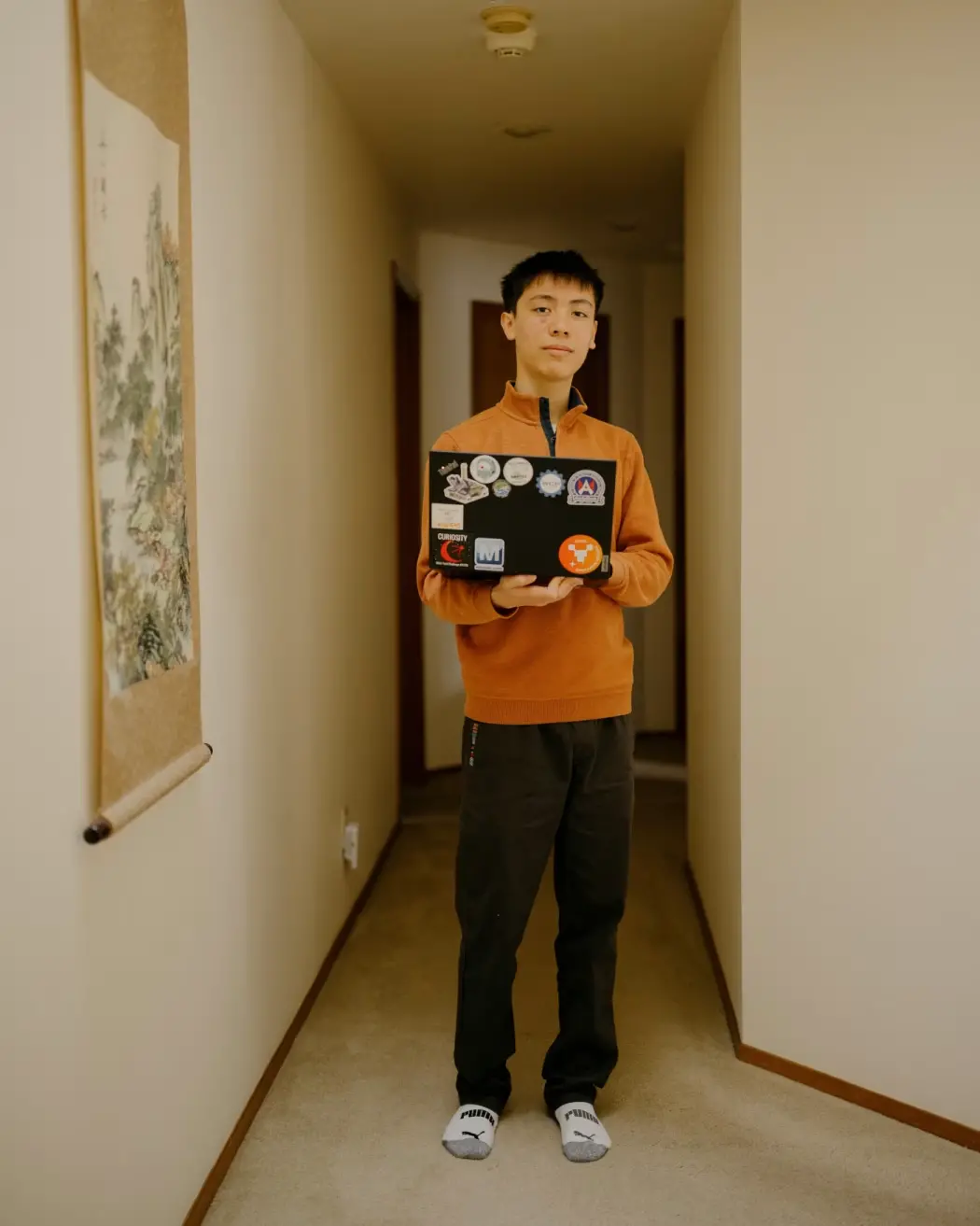
Dobroshinsky, 15 years old this year, is not only a freshman in high school, but also the helmsman of the AI financial tool BeyondSPX.
This tool has more than 50,000 monthly active users (MAU) and has even received active endorsements from listed companies.
The starting point of all this stems from a thought at the end of eighth grade:
What problems can AI be used to reduce dimensionality?
The school bell rings and you become a CEO
Turn the clock back twenty years, and 19-year-old Bill Gates is working all night for Microsoft, and the equally young Zuckerberg is still typing the prototype of Facebook in his Harvard dormitory.
In that era, the ticket to the top of Silicon Valley was "genius programming ability."
Today, Dobroshinsky represents a new paradigm in the AI era.
He does not need to be proficient in C++ or Java, because he has the strongest "outsourcing team" on the planet: Anthropic's Claude, OpenAI's ChatGPT and Google's Gemini.
He didn't hire any employees or build a technical team. What he does is direct the AI model to generate code and build the architecture——
In the entire project, Dobroshinsky wrote only 10 lines of code himself!
Even marketing has been left to AI.
Dobroshinsky wrote a set of Reddit robots (Bots) that lurk in major investment forums.
If someone posts a post asking "What is the best small and medium-capitalization stock analysis tool", the robot will immediately rush to Amway BeyondSPX.
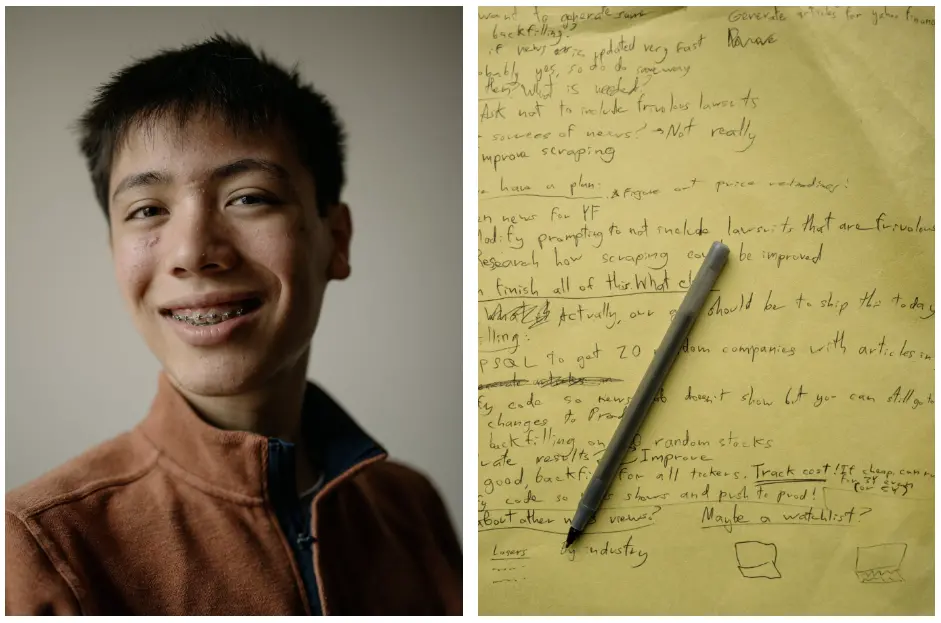
Notes taken by Dobroshinsky during the early development of BeyondSPX
This minimalist style of play is really effective.
BeyondSPX focuses on generating research reports on small and medium-sized listed companies, filling the market gap that large investment banks look down upon.
Publicly traded company Greystone Logistics was even so impressed by the independent AI-generated analysis that it published it as an official press release.
Greystone consultant Brendan Hopkins recalled: "The report was so good that we had to send it out!"
He had no idea at the time that the trader behind this report was still worrying about tomorrow's geometry test.
Yesterday I was reselling hard candies, today I am subverting the supply chain
San Francisco venture capitalist Kulveer Taggar keenly discovered:
The age curve of entrepreneurs is falling off a cliff, and this turning point coincides with the explosive period of ChatGPT and Claude.
Today's AI gives teenagers extremely high learning and execution leverage, making them feel that since they can play with the TikTok algorithm, it is not difficult to distribute software.
Raghav Arora, 17, is another prime example.
His entrepreneurial inspiration was reselling scarce American candies to classmates while studying in Singapore, and earning 50% of the price difference by controlling the supply chain.
This business made him earn a lot of pocket money, but the price was that he was detained by the school for three days.
This experience also taught him two things: the secrets of distribution, and the huge profits brought by "disintermediation".

Today, Arora has dropped out of high school and settled in Southern California.
The new company GetASAP no longer resells candy, but uses AI to predict agricultural product inventory, purchase fruits and vegetables directly from farmers, and deliver them to stores in the United States and Asia.
Currently, this 48-person startup has received $3.4 million in pre-seed financing led by General Catalyst.
You go panning for gold, and I'll be responsible for selling shovels.
While most of his peers are still addicted to games, 14-year-old Australian eighth grader Alby Churven has already seen through the nature of games.
At first, he sold football socks online and developed Roblox games.
"Honestly, at first it was just to make money. But as I kept doing it, I really fell in love with this business."
Churven's first project, Finkle, was a gamified educational app, but he soon discovered that the idea was difficult to scale, so he abandoned it decisively.
Like any seasoned serial entrepreneur, he quickly pivoted to a backup plan:one can generateAppand website codeAItool.
If AI programming tools really do spawn a whole generation of new founders in the near future, Churven hopes to be the one “selling shovels.”
A video of his recent Y Combinator application received millions of views on X.
Although the result of the application is pending, he has flown to San Francisco alone, chatting and laughing with venture capitalists.
"I want to seize this opportunity and make a lot of money," Churven said, making no secret of his ambition.
VC’s new worries: If you want to invest in a genius, you have to get through your parents first
Faced with this group of CEOs who may still have braces on their mouths, Silicon Valley capitalists are in an unprecedented tangle.
Ali Partovi, the founder of well-known venture capital Neo, once led the investment in the popular AI programming tool Cursor, but he maintains a cautious attitude towards high school students starting their own businesses.
Sure, high school is a great time to come up with ideas, but college is the battleground for building connections—the co-founders and early employees who are critical to a startup's success.
After all, a startup needs more than just code, it also needs to be able to attract people smarter than you to join.
In this regard, Partovi's strategy is: pay close attention, keep in touch, and then wait until he starts his second business before investing again.
A partner at Google Ventures recently interviewed a team of two 20-year-olds and a 17-year-old.
He realized that this investment required not only business due diligence but also a "home visit."
He was even thinking that if he really wanted to invest, he would have to talk to the minor's parents first to confirm whether the child was emotionally ready to bear the cruel pressure of starting a business.
Today, empowered by AI, age is no longer a barrier to experience, but has become a kind of "native advantage."
This group of teenagers holding learner driver's licenses are using the intuition unique to this generation and the super leverage given by AI to launch a charge against the old order of Silicon Valley.
Final exams may be scary for them, but disrupting an industry?
That's just a matter of a few prompts.