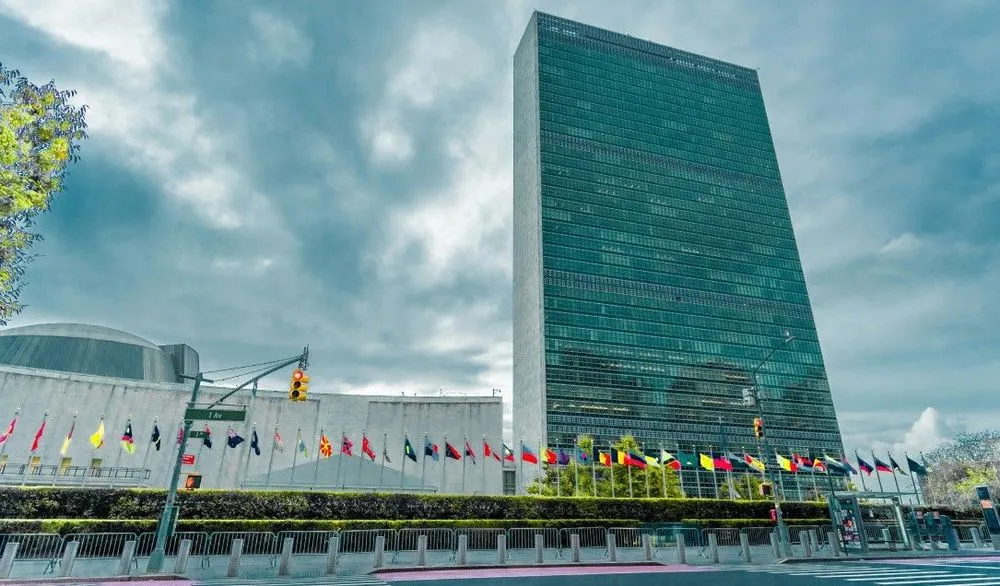
The United States recently called on member states at the United Nations Headquarters in New York to take a tougher stance on North Korea's evasion of sanctions through overseas IT labor programs and cryptocurrency theft, and based the discussion on a 140-page Multilateral Sanctions Monitoring Group report released last fall. The report systematically combed through Pyongyang's methods of raising funds for its nuclear and ballistic missile projects through cyber attacks and covert employment, directly linking the "North Korean IT labor program" to billions of dollars in cryptocurrency theft activities.
The report pointed out that the so-called "IT labor plan" refers to North Korean citizens stealing the identities of others and being employed by Western companies, especially high-paying technical positions that allow remote work, thereby generating income for North Korea under a superficially compliant labor relationship. At the same time, North Korean hackers have launched intrusions into global cryptocurrency platforms. Last year alone, the amount of related cryptocurrency thefts exceeded US$2 billion. These two types of activities and various other means together constitute a financial network that bypasses multiple United Nations Security Council resolutions and is used to simplify weapons procurement and circumvent export controls.
According to report statistics, more than 40 countries have been affected by the theft of crypto assets or the concealment of North Korean IT workers within their borders. Jonathan Fritz, the US principal deputy assistant secretary of state for international organization affairs, told the media before the meeting that the goal of the report and this meeting is to put pressure on countries that passively implement sanctions or even provide space for related activities, emphasizing that "too many countries have failed to implement United Nations sanctions that should prevent such behavior."
The report specifically named China, Russia, Cambodia, Laos, Equatorial Guinea, Guinea, Nigeria and Tanzania, saying that these countries either provide a foothold for North Korean IT workers or facilitate money laundering in their own financial systems. The United States estimates that about 1,500 North Korean IT personnel are based in China, and about 500 others are scattered in Russia, Laos, Cambodia, and several African countries. They earn high incomes through cross-border remote employment platforms, and then return to North Korea through complex financial networks.
The report also pointed out that at least 19 Chinese banks were used to launder stolen funds, and that China’s infrastructure and financial institutions played a key role in the entire chain. In this process, Chinese traders are responsible for converting stolen cryptocurrency into legal tender, while middlemen serving the North Korean regime live locally and are responsible for fund transfer and laundering. Some countries even acquiesce to North Korea's direct use of stolen cryptocurrency to purchase weapons, fuel and other materials, including armored vehicles, Russian oil, and copper materials used for ammunition production.
The United States has pointed out that North Korea's operations through overseas labor and cryptocurrency funding networks have violated at least two United Nations Security Council resolutions, which prohibit member states from issuing work visas to North Korean citizens and require countries to repatriate those who generate income for North Korea. Fritz mentioned that since the release of the report in October last year, Argentina and Pakistan have begun to take action. Among them, Pakistan has captured a person named in the report who was involved in assisting North Korea's IT labor activities, showing that some countries are gradually responding to relevant warnings.
At this special meeting of the United Nations, representatives from many countries and private sector witnesses gave speeches to introduce their respective responses to North Korea's online financial activities. The South Korean delegation mentioned that since the release of the report, a cryptocurrency company in South Korea has suffered a hacker attack, resulting in a loss of more than 30 million U.S. dollars, and the investigation points to the involvement of North Korean hackers; the freelance platform Upwork disclosed that there are cases showing that a compliance employee appears to be working in the office, but the actual work content is completed remotely at night by a North Korean personnel, highlighting the difficulty of identity verification.
Although various parties put forward many suggestions at the meeting, governments and business representatives still lack quantifiable performance indicators on how to effectively protect the security of encryption companies and help companies identify North Korean IT practitioners who are pretending to apply for jobs. When asked whether recent law enforcement actions and sanctions have had an actual impact on North Korea-related activities, Fritz also admitted that it is still difficult to assess the effect.
Representatives from technology companies such as Google suggested strengthening background checks and offline interviews in the recruitment process, and introducing a more stringent identity verification process to improve the ability to screen potential North Korean IT personnel. But they also warn that North Korea has quickly integrated artificial intelligence into its disguise methods, using AI to change the appearance, voice and even accent of applicants during video interviews, making traditional verification methods easier to bypass.
In response to this meeting and related accusations, North Korea's Permanent Mission to the United Nations issued a statement, strongly criticizing the United States for exploiting the issue and abusing the United Nations platform, and accusing the United States of "arbitrarily withdrawing from United Nations agencies it deems unnecessary" while using the United Nations to advance its geopolitical interests. The statement stated that the "most important unresolved issue" that the United Nations should really discuss is the "ugly criminal behavior" of the United States "through the unscrupulous use of force, grossly violating the United Nations Charter and the spirit of international law, and trampling on the international order." It criticized Washington for "contempting the existence of the United Nations and abandoning its obligations as a member state."