Clusters of faint "red dots" scattered in images of the early universe have puzzled astronomers since the James Webb Space Telescope was put into scientific observation. The latest research gives an unexpected and extreme answer: These small red dots are actually young black holes wrapped in a cocoon of dense gas, swallowing matter at a high speed and growing rapidly. The hot radiation they release penetrates the gas "cocoon" and shows a unique red glow in the field of view of the Webb telescope.
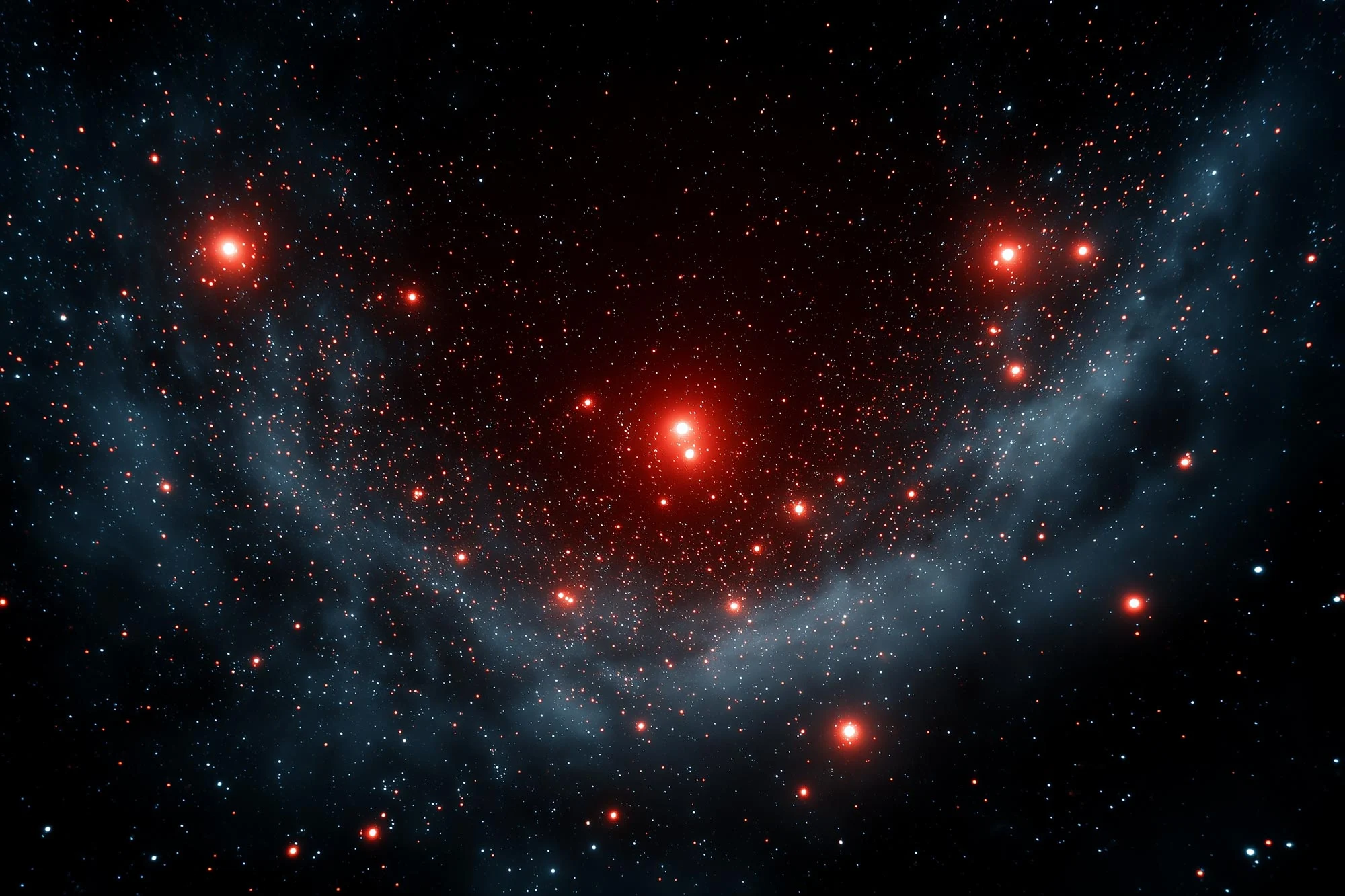
This study, led by a team from the "Cosmic Dawn Center" at the Niels Bohr Institute at the University of Copenhagen, was published in the journal "Nature" on January 14. It provides key clues for understanding the origin of the earliest black holes in the universe. The study pointed out that these red dots appeared only a few hundred million years after the birth of the universe, and then "faded" from view during the evolution about a billion years later. Their short and bright existence was once suspected to represent "abnormally huge early galaxies." However, this hypothesis conflicts with mainstream models of galaxy formation, because according to existing theories, such huge galaxies should not have appeared so early.
After two years of systematic analysis of Webb images, the team came to a new explanation: these red dots are not super-large galaxies, but young black holes with masses hundreds of times smaller than previously estimated, hiding in a "cocoon" made of dense ionized gas. Professor Darragh Watson, one of the leaders of the study, pointed out that when the black hole swallows the surrounding gas, it will heat it to millions of degrees and produce extremely strong radiation. This radiation penetrates the gas cocoon layer and forms a distinctive red signal in the infrared band. This is the source of the "red dot".
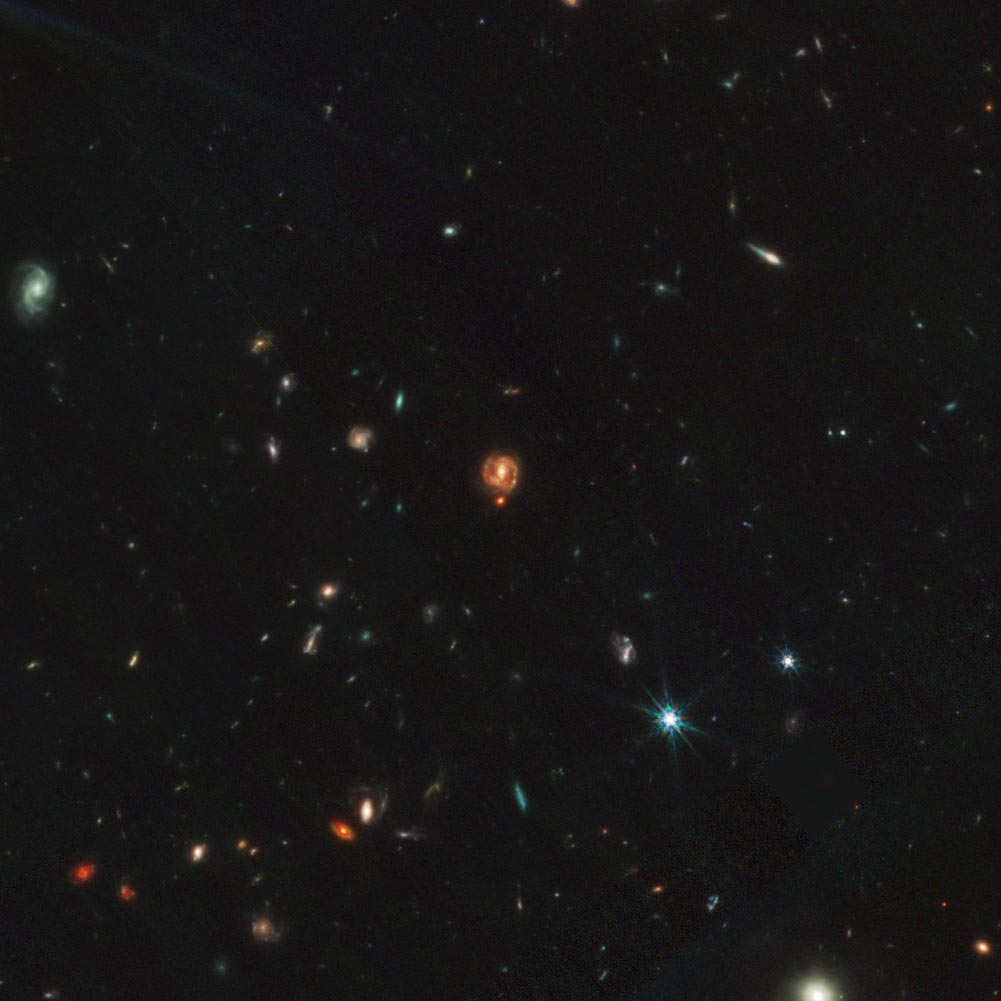
Although called "young", the scale of these black holes is still astonishing, with a mass of up to 10 million times that of the sun and a diameter of about 10 million kilometers. However, they are still among the smallest types of supermassive black holes currently observed. The "eating" behavior of black holes is also quite inefficient: the gas falling into the gravitational potential well is squeezed and accelerated as it approaches the black hole, heats up and glows in the disk-shaped or funnel-shaped structure, releasing almost incomparable energy. The intense radiation also "blows away" most of the gas from the poles of the black hole, and only a very small part of it is actually swallowed. Therefore, the research team vividly calls the black hole a "sloppy eater."
Before this, the astronomical community has been difficult to explain why there are already supermassive black holes in the universe with a mass of one billion times the sun only about 700 million years after the Big Bang. The latest results show that these "red dots" are in the extremely short but violent growth period of the black hole. The stage when they are wrapped in dense gas has never been directly captured in the past, and now they have been "caught on the spot" for the first time by the Webb telescope. The research team believes that this stage provides the "fuel supply channel" required for the rapid growth of black holes, providing a feasible path for supermassive black holes to quickly grow into behemoths in the early universe.
So far, astronomers have identified hundreds of these red dots in the Webb data, all of which have been classified as young black hole candidates. Its mass is much lower than the "monster" black holes assumed by previous models, which means that these observational signals can be explained within the existing framework without introducing completely new exotic objects or physical processes. This work not only turned the "red dot" from a mystery to a paradigm, but also put the team responsible for the research at the Cosmic Dawn Center on the cover of Nature, highlighting its important position in the field of early universe and black hole research.
Compiled from /ScitechDaily