There have been recent reports that the relationship between Nvidia and OpenAI is becoming increasingly tense, and Nvidia CEO Jensen Huang said that the company's investment plan for OpenAI is still "progressing step by step." In an interview with Jim Cramer of the American Consumer News and Business Channel on Tuesday, Huang Jensen said: "There are no disturbances in this matter, and everything is progressing as planned." The complete content of this interview will be broadcast on the "Mad Money" program later that day.
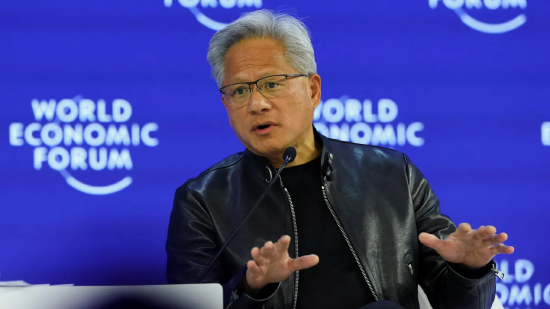
Last September, Jen-Hsun Huang and OpenAI CEO Sam Altman appeared together and announced that the two parties had signed a letter of intent for cooperation, and Nvidia would invest up to $100 billion in the artificial intelligence laboratory in phases. Under the agreement, OpenAI will build an artificial intelligence infrastructure based on Nvidia's technology, with power requirements of up to 10 gigawatts.
But Nvidia’s filing with the U.S. Securities and Exchange Commission in November showed that the deal has not yet been finalized. In the months that followed, concerns grew that the cooperation announcement was nothing more than a formal announcement. Over the weekend, reports emerged that the deal had been "on hold."
Nvidia shares fell more than 3.4% today, driving the technology sector overall lower. The stock price is now down 13% from its high in October last year.
Jensen Huang said on Tuesday that Nvidia would participate in OpenAI's next round of financing, which he called "the largest private equity financing in history." The media reported last month that OpenAI was negotiating for a new round of financing that could reach up to $100 billion.
Huang Renxun said: "There is no doubt that we will participate in the next round of financing."
He also said that Nvidia would consider participating in all future financing rounds of OpenAI and hopes to participate in OpenAI’s eventual initial public offering.
Since its inception, OpenAI has used Nvidia's graphics processors to develop and run its artificial intelligence models.
But in recent months, Altman has repeatedly said that OpenAI’s chip reserves cannot meet the market demand for products such as ChatGPT, and that the increase in computing power will bring more revenue to the company. Currently, OpenAI has reached chip cooperation agreements with Nvidia’s competitors such as AMD, Broadcom, and Xilinx.
Altman posted a post on the X platform on Monday, responding to various speculations about the partnership between OpenAI and Nvidia.
He wrote: "We are very happy to cooperate with NVIDIA. They have created the world's top artificial intelligence chips. We hope to become NVIDIA's core customer for a long time. We really can't understand where these false rumors come from."