According to market data compiled by DigiTimes, memory chip spot prices surged across the board in February 2026, with NAND flash memory wafers performing particularly aggressively. DigiTimes warns,The widening gap between storage supply and demand is driving rapid increases in spot prices and pressure on procurement funds. If it continues, it may lead to a collapse of the industry cycle.
In the past February, the spot price of 1Tb TLC flash memory wafers soared 25% to US$25, setting a record for the largest single-month increase in this category.
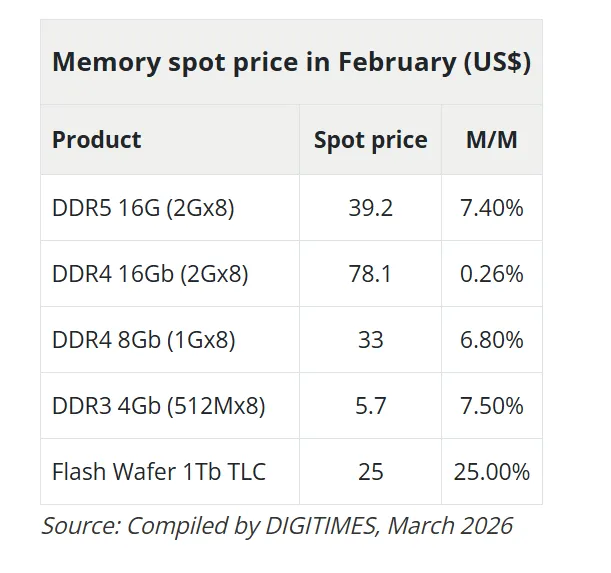
In terms of DRAM, the average price of DDR5 16Gb (2Gx8) chips rose to US$39, a month-on-month increase of 7.4%; DDR4 performance was divided, with the 16Gb specification rising slightly by 0.26% to US$78.10, and the 8Gb version rising by 6.8% to US$33; DDR3 4Gb chips rose by 7.5% to US$5.70.
The Spring Festival holiday in mid-February briefly cooled down trading activities, and the spot market rebounded quickly after the holiday. DigiTimes pointed out that,The increase in DDR4 has declined from the 20-30% monthly increase in January, but this is "only a seasonal factor and not a signal of easing structural pressure."
The background of the spot increase is a sharp increase in contract price forecasts. At the beginning of the month, TrendForce raised its Q1 2026 conventional DRAM contract price forecast from 55-60% to 90-95%. PC DRAM is even expected to double from the previous quarter, setting a new quarterly increase record; NAND flash memory contract price increases were also revised up from 33-38% to 55-60%.
AI infrastructure is the core reason for this round of price increases. North American cloud service providers have locked orders in advance since the end of 2025 and prioritized production capacity for server DRAM and high-bandwidth memory, resulting in a serious shortage of conventional DRAM and consumer-grade NAND supplies.
Even though Tier 1 PC OEMs have fixed supplier quotas, inventory levels continue to decline.
The long-term trend in the NAND field is more severe,DigiTimes cited Chinese flash memory market data as saying that 1Tb QLC/TLC flash memory wafer prices have increased approximately three times since October 2025, and 512Gb TLC prices have increased nearly five times during the same period.
Suppliers continue to shift production capacity to enterprise-level SSDs with higher profit margins, limiting the wafer supply of module manufacturers, creating continued upward pressure on the entire category.