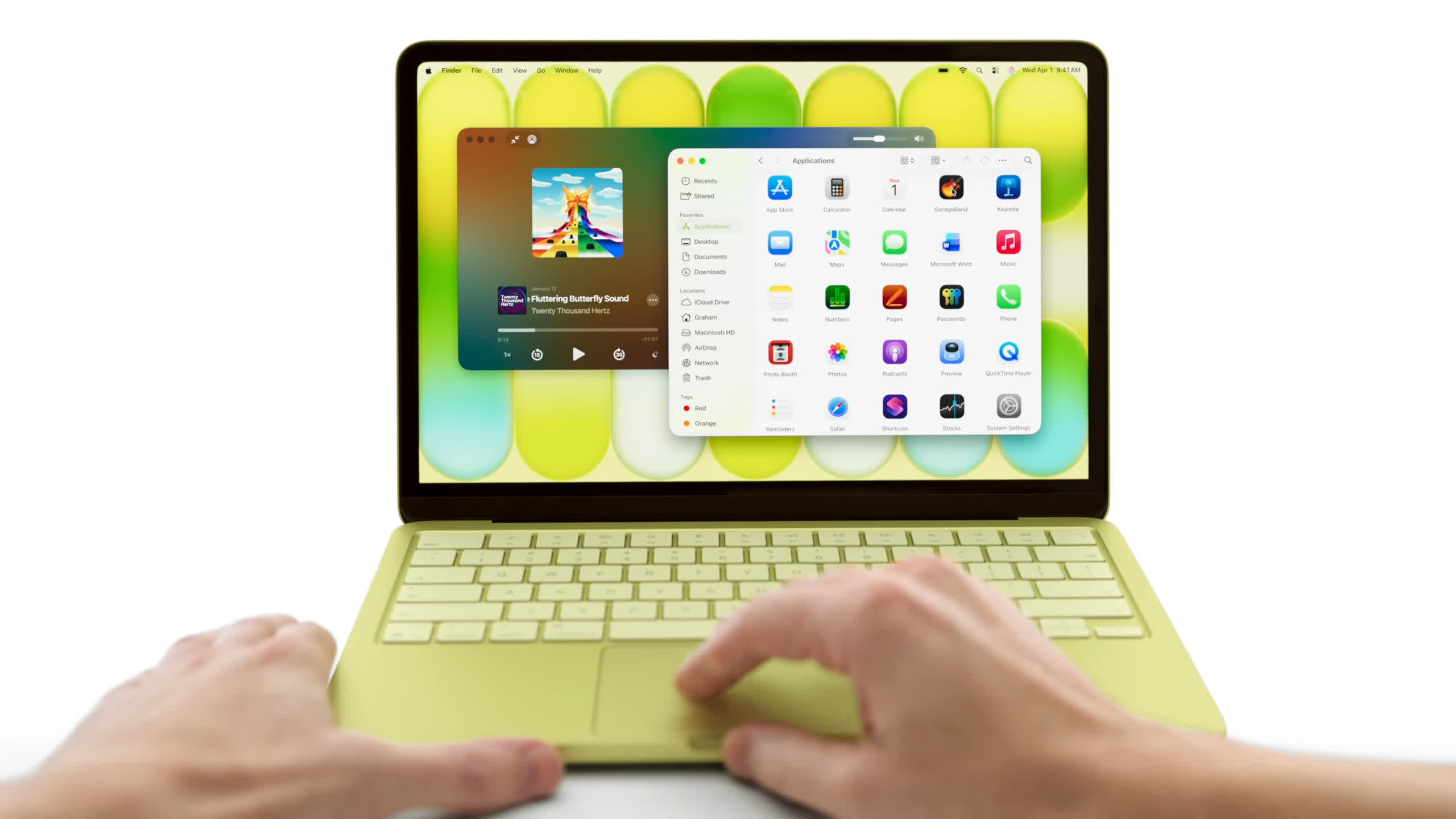
For players who often visit hardware forums, install their own machines, understand PCIe specifications, and can study thermal paste and benchmark scores, the MacBook Neo with a locked 8GB of memory, no Thunderbolt, and only a maximum of 512GB of storage is obviously not a "right" product.But the mainstream devices that really change the market structure are often not prepared for enthusiasts from the beginning, and this MacBook Neo, which starts at $599 (student price is $499), may be the most profound new product release on the notebook market since the original MacBook Air nearly 20 years ago. It is aimed at the low-priced laptop range of $500 to $800, which has long been dominated by Windows manufacturers.
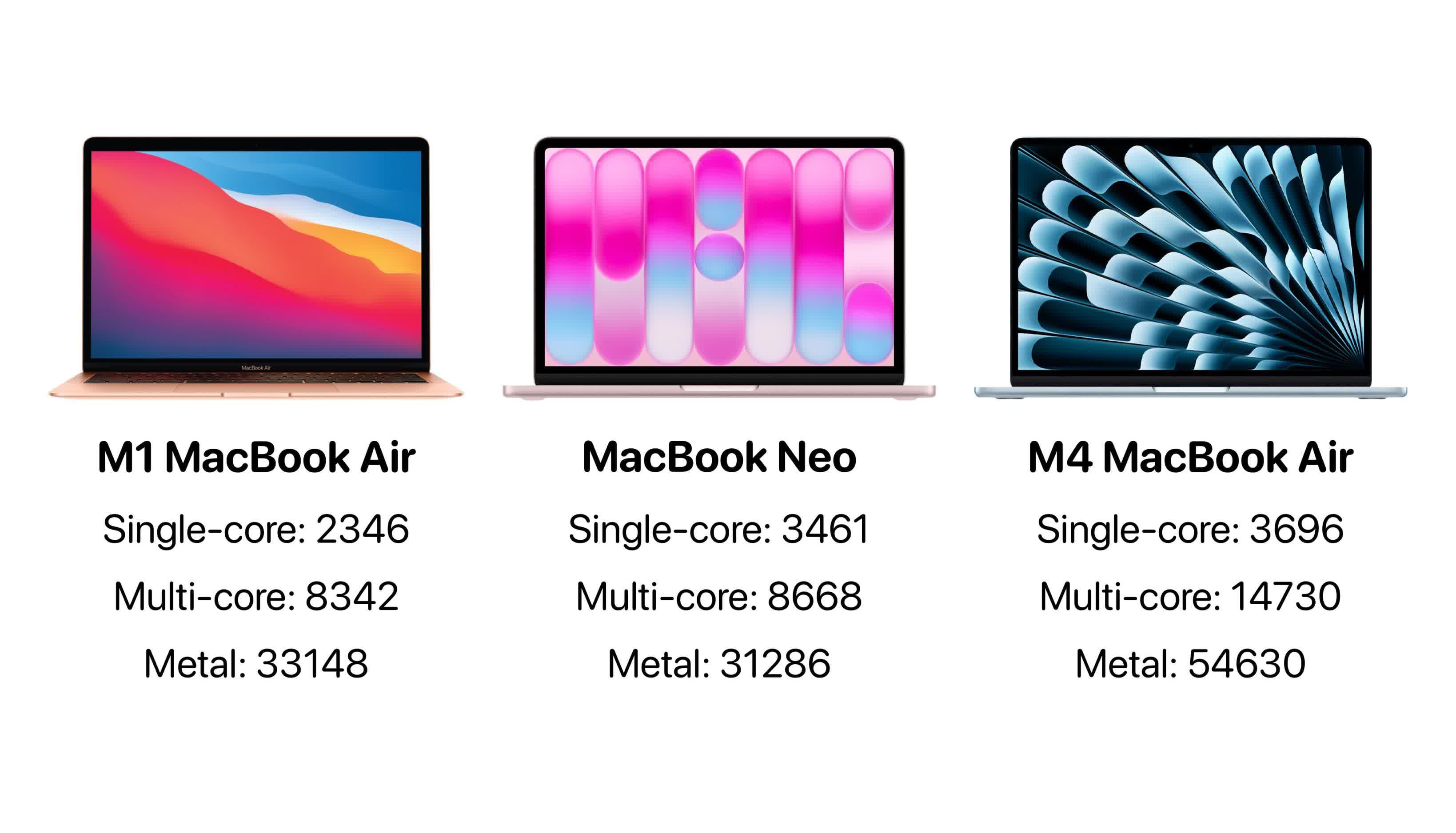
Looking at the specs, the Neo isn't a "bang for the buck": You can get a Windows laptop with 16GB of RAM and 512GB of storage for about $550, while the Neo only has a non-upgradeable 8GB of RAM and starts with just 256GB of storage. However, actual running scores based on the A18 Pro chip, which is the same as the iPhone 16 Pro, show that its Geekbench single-core score is about 3461 and multi-core score is about 8668. The overall multi-core performance is close to the M1 MacBook Air, and the single-core is close to the M3 stage level. Apple’s claim that the A18 Pro is 50% faster than the best-selling Intel Core Ultra 5 notebook in “everyday tasks” is radical, but it’s not groundless. For the actual user scenarios this machine faces—browsing the web, processing documents, online videos, and daily applications—an efficient architecture and strong single-core performance are more important than paper configurations.
More importantly, MacBook Neo puts pressure on Windows laptops at the same price in terms of experience dimensions beyond many specifications. First of all, it is a thin and light notebook with a fanless design and will not suddenly "take off" in the classroom or conference room. However, many low-priced Windows models are often hot and noisy due to their extremely thin bodies and cost-compressed cooling solutions. Secondly, Apple Silicon devices can achieve almost "secondary wake-up". Compared with many x86 Windows laptops that still have unstable sleep and wake-up experiences, this is a difference that can be felt every day for students who frequently open and close their laptops between classes and commuting.
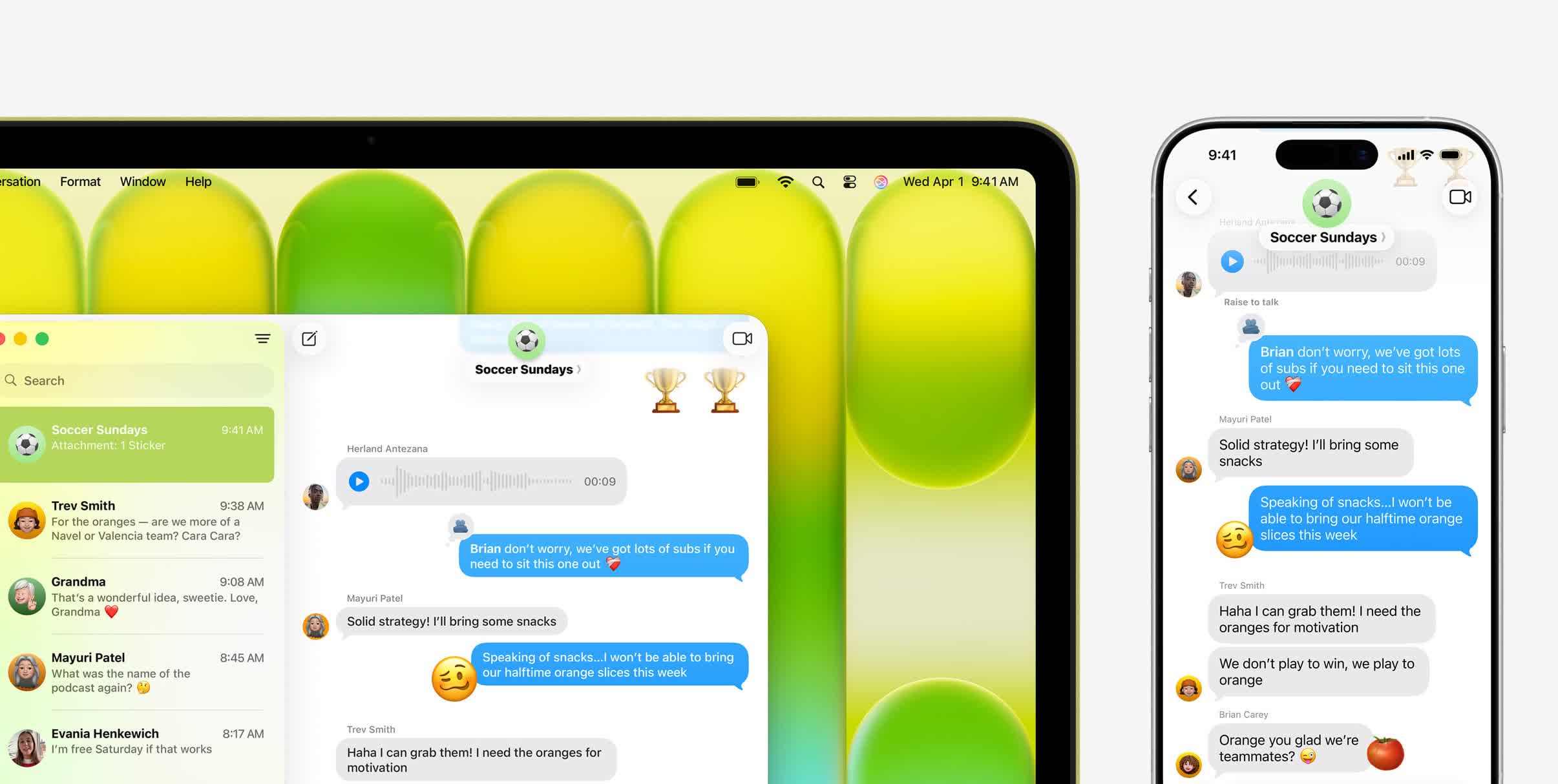
Another point is something that almost all users can feel: the system is clean and there is no pre-installed "rogue software". Many Windows laptops under $700 are packed with anti-virus trial versions, cloud storage promotions, manufacturer toolboxes and even game icons when shipped from the factory. Technical users will uninstall them immediately, but ordinary users often "make do with them", resulting in a drag on the entire life cycle experience. In contrast, the ecosystem formed by Neo paired with the iPhone: In the United States, the iPhone's share of the smartphone market exceeds 55%, and it is even higher among young people. These users can directly enjoy a complete set of seamless experiences such as information synchronization, automatic photo transfer, clipboard sharing and AirDrop on Neo. This is an advantage that is still difficult to fully replicate in the current cross-platform collaboration between Android and Windows.
In addition to hardware, software and hardware services and channels also add points to Neo. For mainstream users who don’t understand computers, Apple retail stores in major cities mean more convenient after-sales support and a unified service experience. The system update rhythm is relatively gentle, and there are fewer update "rollovers"; coupled with the aluminum alloy body, stronger hinges and generally good screen quality, in the $600 price range, it is not easy for the Windows camp to provide a complete machine with the same quality.
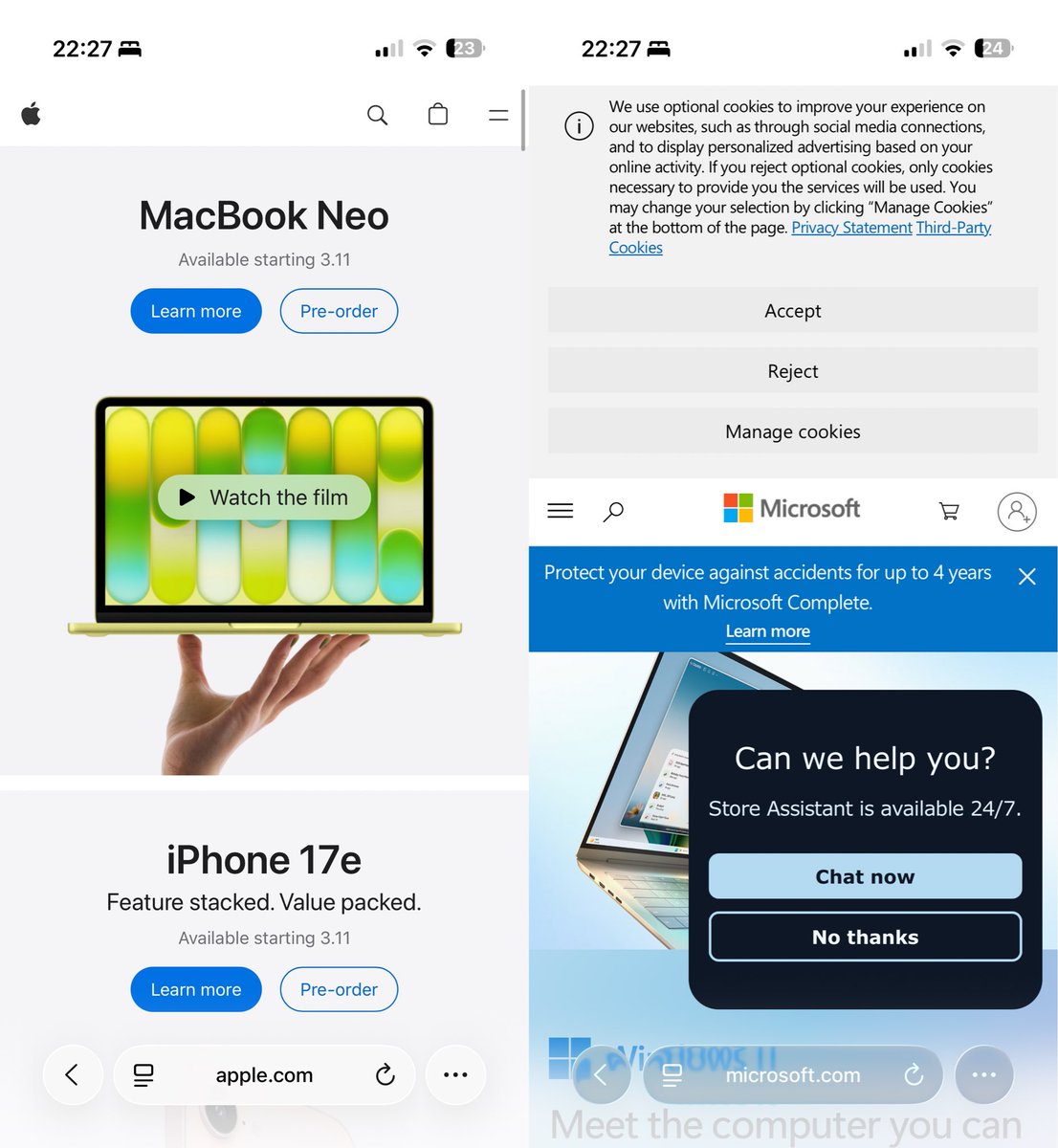
Meanwhile, the Windows camp is in a bad situation of its own. Windows 11 has been slow to upgrade due to strict hardware thresholds. A large number of old Windows 10 models have been "left ashore". These users happened to enter the replacement cycle when MacBook Neo was launched. While Microsoft is high-profile promoting AI-first strategies such as the so-called "agent operating system" (agentic OS) and Copilot+, it has repeatedly caused problems with basic components such as the system shell due to updates, causing concerns among corporate customers. At this point in time, it’s hard to argue with a complex AI vision against a “clean, stable, $599” MacBook.
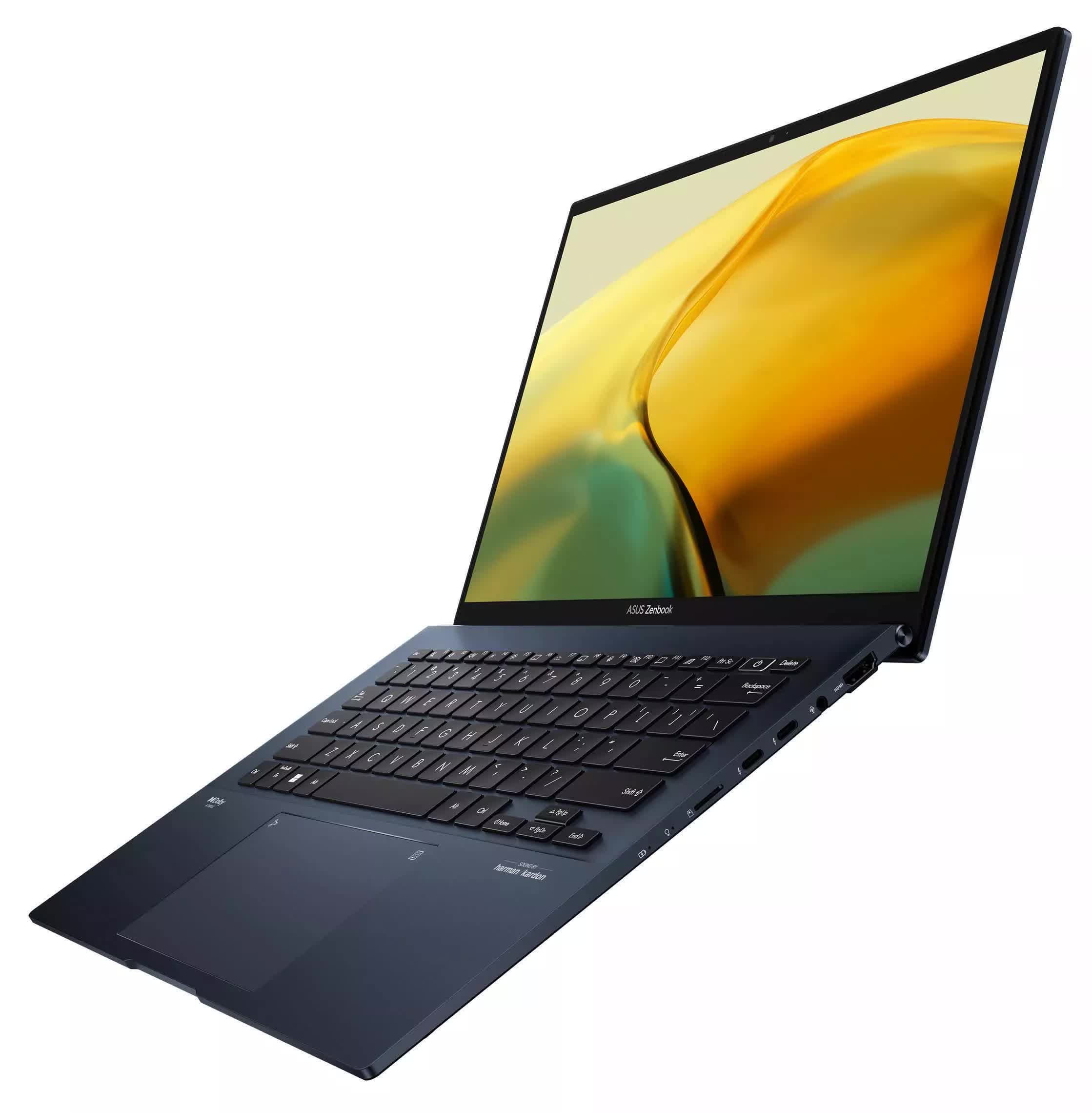
Of course, the $600 price point is not without excellent Windows players. For example, the ASUS Zenbook 14 OLED is a cost-effective model recommended in its recent buying guide, and the price can be close to $600 during promotions. However, such products are rare. For a long time, entry-level Windows laptops have relied more on "just usable" plastic bodies, average or even deviated screens, worrying battery life and noise control, and poor experience of stacked software. They have been "rolled to the bottom" in terms of price, while "laying flat" in other dimensions.
In the student market, Apple obviously has a longer-term vision than just a machine or an order. A college student who buys a $499 MacBook Neo when enrolling is likely to stay in the Mac camp for the next ten years; the M1 MacBook Air is still widely recognized as a "can still play" productivity device five years later, which to some extent has proven the feasibility of this route, and the A18 Pro is likely to tell the same durability story. At the same time, analysts continue to warn that due to the memory supply pressure brought by AI data centers, notebooks under $500 may gradually disappear. Some ultra-low-price Windows devices have begun to use eMMC, SD cards and even packaged cloud storage trials to "make up" capacity. Against this background, Apple went in the opposite direction and launched the Neo with uncompromising workmanship and ecology in the $599 segment. This is undoubtedly reshaping the "bottom line standard" of low-priced laptops.

For enthusiasts, MacBook Neo is still not the "dream machine": the 8GB memory limit, limited local storage, colorful shell and closed ecology may put you off. But TechSpot suggests that what really deserves attention is how the Windows notebook market under $800 will respond in the next 18 months: whether OEM manufacturers will be forced to raise standards in terms of workmanship, cooling, software cleanliness, and battery life authenticity; whether Microsoft will return the focus of Windows to stability rather than AI concept promotion; whether Qualcomm's Snapdragon X platform can take the opportunity to gain wider deployment and more mature software optimization. MacBook Neo will not "kill" Windows notebooks, nor can it persuade players to give up gaming notebooks, but it has clearly marked the lower price limit of notebooks with "solid workmanship, good support, and deep integration into the ecosystem" at the $599 range. The rest depends on how the entire PC industry responds.