FCC Chairman Brandon Carr said overseas call centers cause delays in customer service support for U.S. consumers and pose security risks. The Federal Communications Commission (FCC) voted Thursday to put a proposal to bring outsourced call center jobs back to the United States for public comment, paving the way for formal implementation later this year.
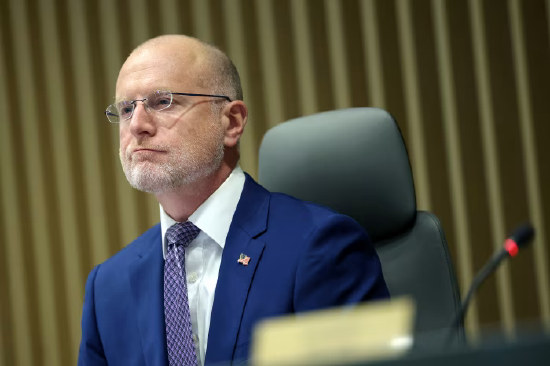
Federal Communications Commission Chairman Brandon Carr at the FCC meeting.
The new rules, proposed by the FCC earlier this month, would require phone, internet and cable companies to disclose where customer service personnel work, set a cap on the proportion of calls handled by overseas agents, require overseas agents to meet English fluency standards and give consumers the option to be routed to U.S.-based customer service.
"Overseas call centers have repeatedly brought chaotic customer service experiences, lagging support services, and even security risks." FCC Chairman Brandon Carr said at a meeting that unanimously approved the proposal. "American consumers deserve to have call centers with fluent English, clear answers, and located in the United States rather than on the other side of the world."
Although Carr said he hopes to bring call center jobs back to the United States, industry analysts warn that these new regulations may instead prompt companies to more aggressively adopt artificial intelligence and completely replace these positions with automation.
According to market research firm Precedence Research, U.S. companies will spend approximately $23.5 billion on call and contact center outsourcing in 2025. As technology advances, artificial intelligence has taken over more and more call center tasks, and companies are also expanding the application of voice-based intelligent customer service to help customers solve problems.
The Communications Workers of America (CWA), which represents many telecom employees, believes the FCC's proposal is insufficient. "Today, high-quality customer service and call center jobs are threatened not only by offshoring but also by companies using AI customer service to cut costs." Claude Cummings Jr., president of the association, said earlier this month.
Rich Sanders, a senior analyst at Forrester Research, said there may be drawbacks to expanding AI customer service. “Hasty or poorly executed AI deployments can create the very problems regulators are trying to solve.”
A March 2025 Forrester survey showed that nearly 40% of U.S. consumers said they did not trust customer service chatbots. Many consumers complain that this type of technology fails to understand problems, gets stuck in a loop of invalid options, and even causes costly mistakes.
Thursday's vote opens a 30-day public comment period, followed by a 60-day response period. The FCC can then vote to formally adopt the proposed rules.