According to the latest survey data from Consumer Intelligence Research Partners (CIRP), in the quarter ending March 2026, 87% of US iPhone buyers upgraded from the previous generation iPhone.This proportion has reached its highest level in the past three years, up from 84% in 2025 and 85% in 2024. At the same time, the proportion of users switching from Android smartphones to the Apple camp is 12%, which is lower than 14% in 2025 and basically the same as 13% in 2024. The remaining 1% of buyers come from feature phone users, first-time smartphone buyers or other categories.
The current smartphone market pattern shows that most consumers have selected their respective operating system platforms many years ago. While Apple can still attract some Android users, its bigger market opportunity lies in convincing hundreds of millions of existing customers to switch to the latest iPhone models.
In the current smartphone stock market, platform migration often means migrating data accumulated over the years, replacing applications and accessories, and re-adapting to a set of operating procedures, which poses a considerable threshold for user switching. In contrast, there is almost no friction cost for existing iPhone users to upgrade to a new model, and photos, information, passwords, apps and settings can all be seamlessly migrated to the new device.
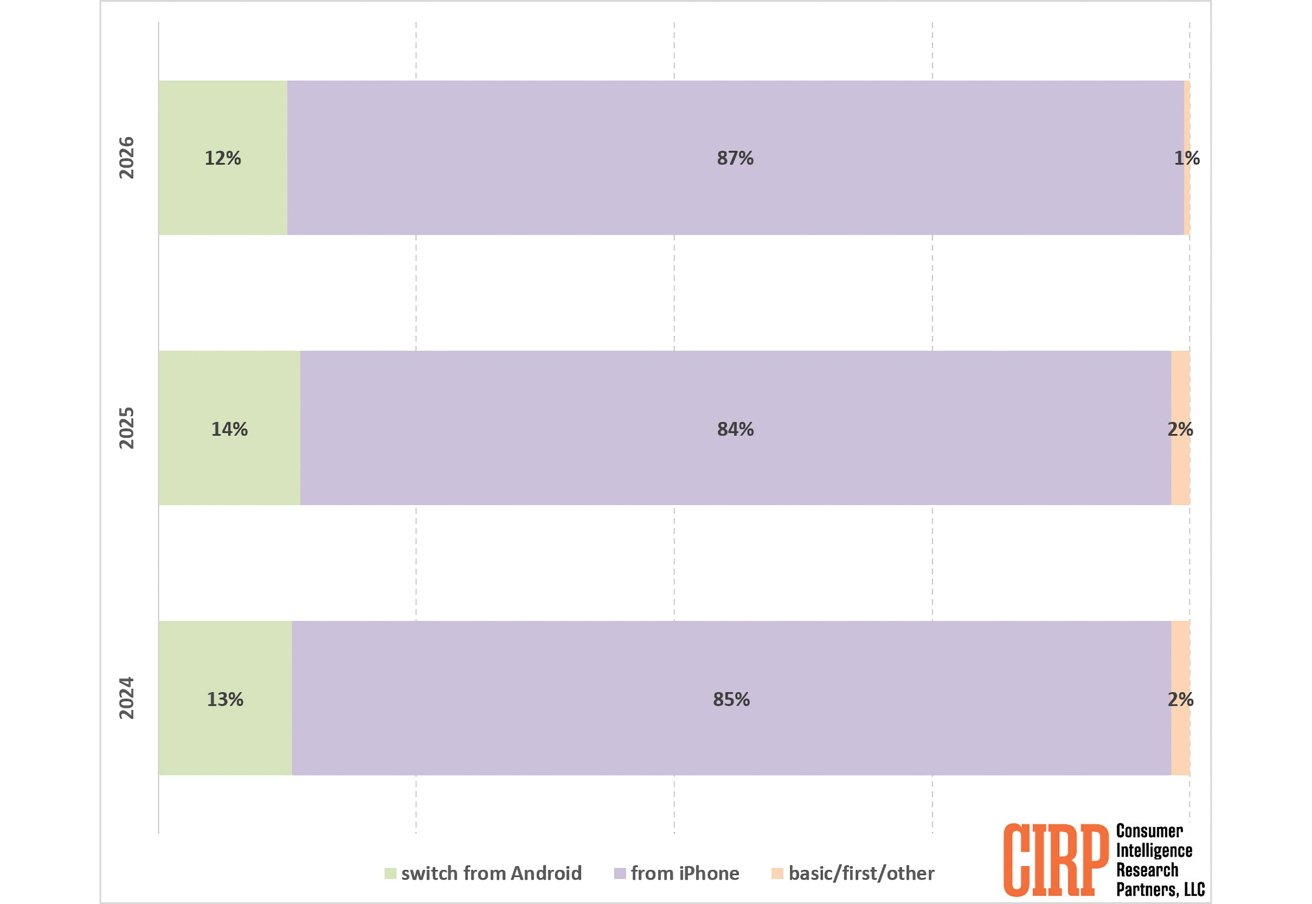
Statistics show that the proportion of Android conversion users among recent iPhone buyers is usually between 11% and 15%, and this quarter's 12% data is within this normal fluctuation range. From a business perspective, the iPhone's strong performance does not solely rely on platform conversion, but also benefits from its deep customer base. Operators' promotional activities and trade-in policies make continuing to choose iPhone the most convenient choice financially and technically for users.
Due to existing users' dependence on the iOS ecosystem and their continued use of supporting devices such as Apple Watch, AirPods, Mac, and iPad, as well as Apple Services, Apple has established a solid business moat. As of January 29, 2026, Apple has more than 2.5 billion active device installations worldwide.
Although the absolute number of Android converters is still commercially significant, looking at the overall market, both Apple and Android manufacturers are currently mainly competing for existing users who already own smartphone devices. For Apple, winning new customers means convincing them to move away from a familiar platform, while retaining existing customers ensures future hardware sales and continued revenue from software services. As the iPhone buyer base grows, Apple's existing loyal user base remains the core cornerstone of sustainable business growth.