On March 27, Bloomberg opinion columnist Juliana Liu published an article on Friday saying that BYD should own an F1 team, a move that is expected to increase its global popularity and give its brand emotional value.The following is the main content of the article:
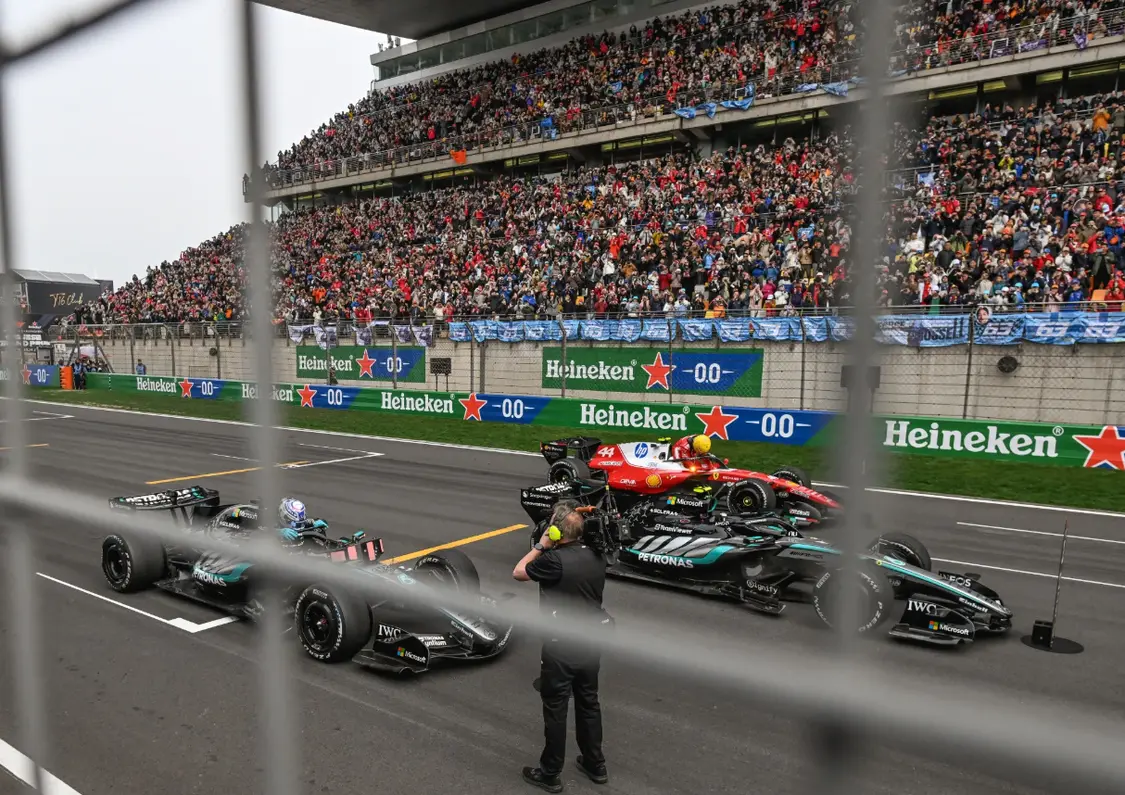
F1
BYD should become the first Chinese automaker to enter F1. Having a grid seat would immediately boost its global profile, and a successful entry would give the brand something it lacks: emotional value.
BYD executive vice president Li Ke confirmed to Bloomberg earlier this month that it was exploring options to enter the highly competitive motorsport sector. If BYD fails in this effort, it could pose a reputational risk. Once it joins the race, however, the world's largest electric-car maker has a chance to achieve what it has eluded through 30 years of iteration and cost-cutting: building truly global appeal for its car brand. Like most Chinese cars, BYD models are seen at home and abroad as technologically advanced and cost-effective, but the brand itself lacks appeal. This perception is what companies should work to reverse.
The costs of inaction are already clear. Since Tesla started cutting prices in China at the end of 2022, the entire automobile industry has been in a state of involution, and profit margins have been continuously diluted. According to my data analysis, BYD's average selling price seems to be only able to achieve a slight increase next year.
therefore,Like its peers, BYD is betting heavily on overseas markets, where the same model can be sold for more than twice as much as domestically.According to data from the China Passenger Car Market Information Joint Conference, BYD's overseas car exports reached about 1 million units last year, up from 430,000 units in 2024. The company has started or is about to start factory production in Brazil, Indonesia and Hungary, and plans to establish a foothold in Mexico have now been restarted.
But if international markets are going to be BYD's main growth driver for the foreseeable future, it needs to improve its marketing capabilities. BYD founder Wang Chuanfu's legendary journey from being a penniless orphan raised by his brother and sister-in-law to achieving engineering greatness is well known in China. In foreign countries, it may be difficult for consumers to recognize him from the crowd.
David Vaucher, managing director of consulting firm Vaucher Analytics, said that racing can create myths, and myths can bring mass appeal, allowing brands to charge a premium for products with the same specifications.

Chinese local driver Zhou Guanyu
Since its first race in 1950, F1 has been known for its club-like coterie culture, often with disagreements among various stakeholders.The sport has 827 million global fans, growing 12% last year, helped in part by the promotion of the F1 movie starring Brad Pitt. Although some teams are losing money, their valuations remain high.
It can take years of negotiations for a new team to join F1, as is the case with General Motors' luxury brand Cadillac, which did not make its debut at the Australian Grand Prix until March this year as the 11th team. However, there are good reasons to believe that there is room for a Chinese team to enter F1.
Mohammed Ben Sulayem, the head of F1's governing body, said in multiple interviews last year that the addition of a Chinese team would be a natural next step as it would expand the sport's influence and, in turn, its earnings. The rise of Zhou Guanyu has also further stimulated Chinese people's interest in F1. He is from Shanghai and is currently a reserve driver for the Cadillac team. He has appeared on Netflix's "The Fast" program. Earlier this month, the F1 Shanghai Grand Prix attracted 230,000 spectators over three days, 16% of whom came from overseas, and ticket sales increased by more than 30% compared with 2025.
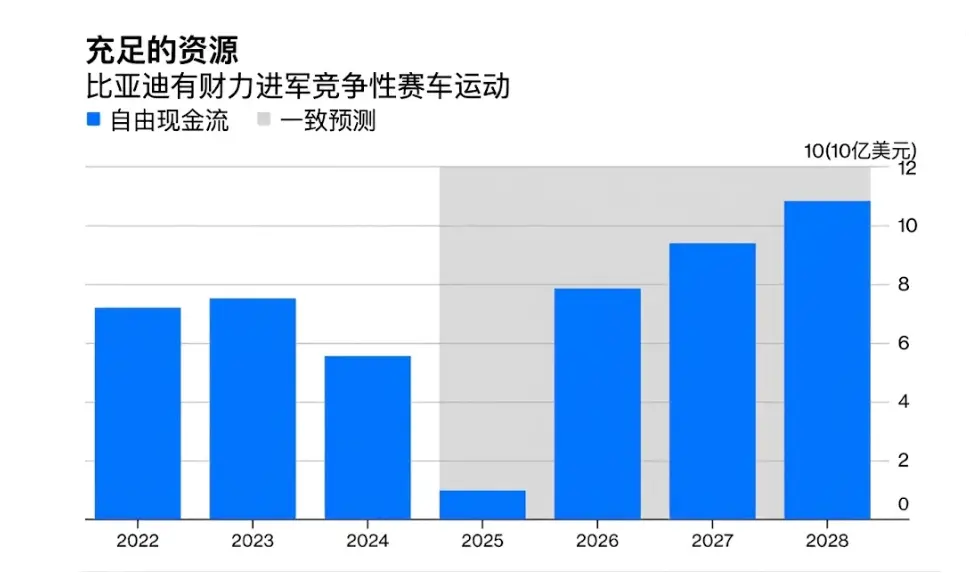
BYD has plenty of cash
There are many ways for BYD to enter F1. It can build its own fleet around its high-end brands, potentially spending as much as $500 million per season. Another option is to acquire an existing fleet, as Audi did last year for a reported 600 million euros ($693 million).For BYD, less demanding alternatives include forming partnerships to provide technical support, or simply sponsoring a racing team. However, in order to benefit from F1's influence, BYD should seriously consider only the first two options. This is an investment that automakers with sufficient resources should make.
Investors expect the automaker to unveil plans for technology upgrades or model changes to revive sales when it reports earnings on Friday. But there is a more attractive, albeit riskier, path worth exploring.
Since F1 was first held in Shanghai in 2004, the sport has become extremely popular in China and has been held as scheduled every year except for interruptions during the epidemic. Twenty years later, it’s time for a Chinese team to join the grid. This is an opportunity that BYD should seize to become a coveted global brand.